

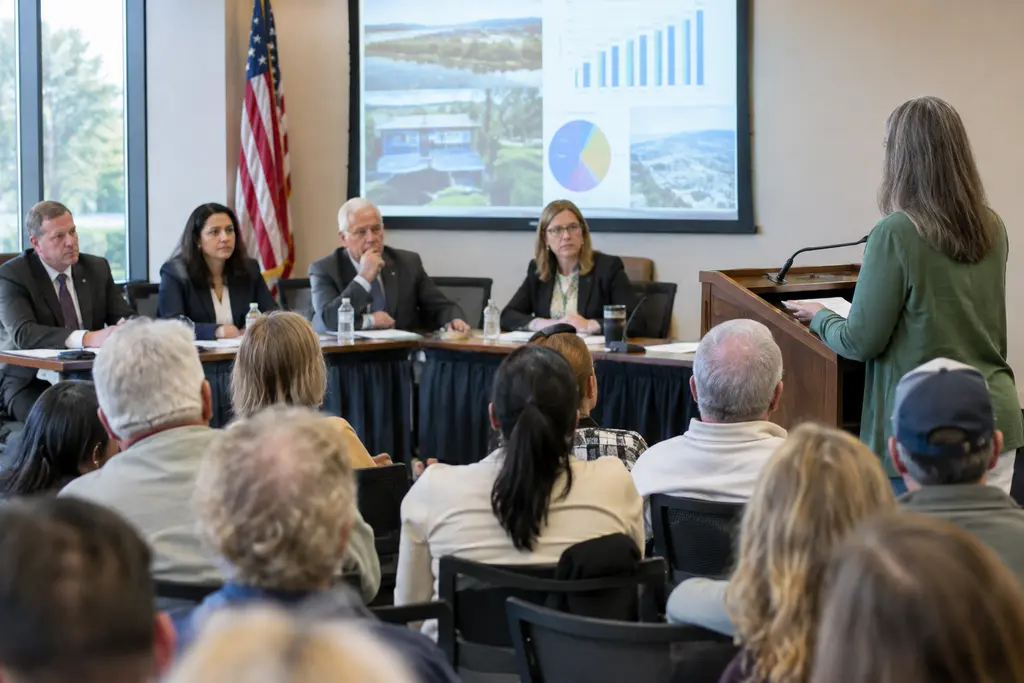
Salt Lake Impact Fees changed on October 6, 2026, when the Salt Lake City Council voted 7-0 to raise utility impact fees for water, sewer, and stormwater for the first time since 1999, according to the official OpenUtah meeting record for the Council action OpenUtah Council record. The same official record states that the fees apply to new construction, not existing homes or businesses. For residents, builders, and neighborhood groups, the practical question is narrower than a general tax debate: how Salt Lake City is assigning infrastructure costs to future development, and how related zoning actions move through the Council process.
Salt Lake Impact Fees Approved On October 6
Salt Lake Impact Fees Apply To New Construction
The October 6, 2026, vote is the clearest documented change in the official records available for this report. OpenUtah identifies the Council vote as unanimous, with all seven Council members voting to raise utility impact fees for water, sewer, and stormwater. The record also states that the change was the first update to those utility impact fees since 1999. Because the official record describes the fees as applying to new construction, the action is best understood as a development-related charge rather than a direct charge on already-built properties.
That distinction matters for residents reviewing project costs, housing proposals, or neighborhood development filings. A homeowner who is not building a new structure would not be affected in the same way as a developer seeking approvals for a new project. A property owner considering a new building, expansion, or redevelopment should verify the applicable fee category with Salt Lake City before relying on general estimates, because the official records cited here do not provide a project-by-project cost calculator.
What The Council Vote Changed
According to the official Council record, the affected systems are water, sewer, and stormwater. Those are public utility systems that must be sized and maintained to serve development. The official record does not state that the October 6 action funds unrelated municipal programs. It identifies the action as a utility impact fee increase, which means the policy discussion is tied to infrastructure capacity for new development.
For applicants, Salt Lake Impact Fees are likely to become part of early project budgeting. For nearby residents, the change may appear indirectly in development proposals, because infrastructure fees can affect how project teams discuss construction costs and project feasibility. The official record does not say how any one private project will respond to the new rates, so any claim about a specific project outcome would require a project filing or direct city documentation.
What The Phase-In Means For New Construction
Two Dates Set The Fee Schedule
The Salt Lake City Council Office stated in its August 18, 2026, meeting recap that the fee update was planned with a phase-in schedule: 70% of the full new rate would take effect in January 2027, and the full rate would apply on July 1, 2028 Council Office recap. That schedule gives applicants two official dates to check when timing a permit, financing package, or construction schedule.
The Council Office recap preceded the October 6 vote, while the OpenUtah record documents the final Council action. Read together, the two official records show both the schedule discussed by the Council Office and the later adoption of the fee increase. For residents, the practical effect is that the fee change was not written as a single immediate jump to the full rate on the date of the vote. The official schedule identifies a partial rate beginning in January 2027, followed by the full rate on July 1, 2028.
Why The Timing Matters For Applicants
Project timing can affect which fee level applies, but the official materials cited here do not explain every permit scenario. Applicants should confirm with Salt Lake City staff which date controls a particular project, such as application submittal, approval, permit issuance, or another administrative step. Without that confirmation, it would be premature to state how the phase-in will apply to a specific development.
For neighborhood organizations, the phase-in also gives a clear way to frame public questions. Instead of asking whether fees generally increased, residents can ask which projects fall under the January 2027 level, which projects fall under the July 1, 2028, full rate, and how the city will explain those determinations in public records.
Zoning Items Documented In Official Records
Senior Center Rezone Was Adopted
The official OpenUtah record for October 6, 2026, also states that the Council adopted a senior center rezone. The record title confirms that the zoning item was part of the same meeting in which the Council voted on utility impact fees. The official source available for this article does not provide enough detail to describe the parcel boundaries, zoning map amendment language, or development conditions tied to that senior center rezone.
Because the available official source is limited, this article does not assign effects to nearby parcels beyond what the official record supports. Residents who live near the senior center site should review the final ordinance, staff report, and meeting materials from Salt Lake City before drawing conclusions about allowed uses, height, parking, or site design. Those details are typically found in the ordinance packet or planning staff materials, not only in a short meeting record.
Residential Zoning Proposals Need Official Ordinance Text
The research packet for this report included references to broader residential zoning proposals involving smaller dwellings, yard space, and changes to development standards. The official source links authorized for this article, however, do not include the Planning Commission staff report, the proposed ordinance text, or final Council-adopted language for those broader residential zoning proposals. Under this site’s sourcing rules, those specific claims are treated as not verified for publication here.
That does not mean the proposals did not exist or were not discussed. It means the public record available for this report is not sufficient to state the exact lot sizes, parcel counts, citywide percentage effects, or design standards as established facts. Residents following Salt Lake City zoning changes should rely on the official Planning Division file, Council agenda packet, and adopted ordinance language before making property decisions.
What Residents Can Verify Before Commenting

Questions For Utility Fee Review
Residents and applicants can use the official records to ask specific questions. The October 6 Council action establishes that the fee increase passed. The August 18 Council Office recap identifies the phase-in dates. What remains project-specific is how Salt Lake City applies those fees to individual permit applications and utility service needs.
- Ask whether a proposed project is classified as new construction for utility impact fee purposes.
- Ask which phase-in date applies to the project and which administrative milestone controls that date.
- Ask for the applicable water, sewer, and stormwater fee categories in writing before relying on a budget estimate.
- Ask whether any zoning approval and utility fee review are moving on separate tracks.
Those questions are narrow, but they are useful because they connect public comment to verifiable records. They also help separate adopted policy from assumptions about how a private project may respond. Readers who follow regional civic and chamber developments across the same publishing network may also find related business-community context at Richland Chamber, a related site in the same network.
Questions For Zoning Review
For zoning items, residents should ask for the ordinance number, the zoning map amendment, the staff report, and any conditions of approval. If a proposal is still under review, residents should ask whether the Planning Commission has made a recommendation and whether the City Council has scheduled a public hearing or vote. If the Council has already acted, residents should ask for the adopted ordinance rather than a draft summary.
This approach is especially useful for Salt Lake City residents because impact fees and zoning changes can appear in the same civic conversation while operating through different legal and administrative channels. A utility impact fee can affect development costs, while zoning determines what may be built and under which standards. The official records cited here show both types of action appearing in Council business, but they do not merge them into one policy.
Salt Lake Impact Fees And Zoning Changes Next Steps
Use Adopted Records Before Making Property Decisions
Salt Lake Impact Fees are now documented through the October 6, 2026, Council vote, with phase-in dates identified in the Council Office’s August 18, 2026, recap. The official records available for this article support three core points: the Council approved the utility impact fee increase by a 7-0 vote, the affected systems are water, sewer, and stormwater, and the phase-in schedule runs from January 2027 to July 1, 2028.
For zoning, the official record cited here confirms adoption of a senior center rezone at the same October 6 meeting, but it does not provide enough detail to report wider residential zoning standards as final facts. Residents should treat draft proposals, planning recommendations, and adopted ordinances as different stages of the process. The safest civic step is to match every claim to the specific Salt Lake City record that supports it before commenting, budgeting, or making a property decision.