

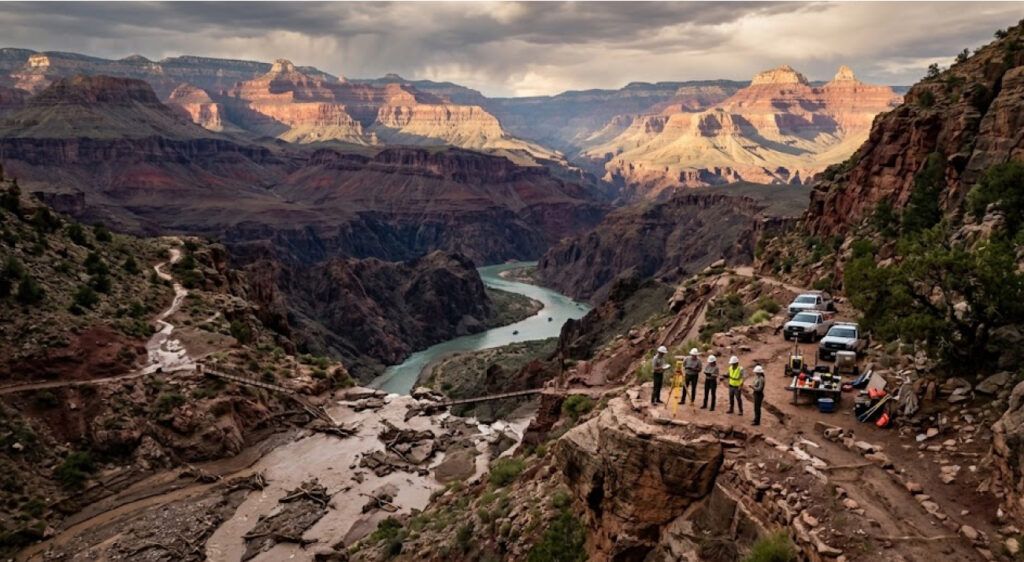
The recovery at Grand Canyon National Park has moved beyond emergency evacuation and initial damage assessments and into a difficult infrastructure phase following the deadly August 29 flash flood in Bright Angel Canyon. The event killed three hikers, damaged trails and bridges, disrupted the Transcanyon Waterline and forced the park to operate under severe water restrictions while crews work to rebuild critical systems. The National Park Service is now targeting November for the beginning of restored water pumping to the South Rim, although the agency stresses that the schedule remains tentative.
The flood struck the Bright Angel Canyon and Phantom Ranch areas at approximately 2:30 p.m. on August 29. More than 80 people were eventually rescued or evacuated from affected areas. The victims were identified as John Giusti, 46, and Brent Rosenkranz, 42, both from Granbury, Texas, and Timothy Allen Smith, 53, whose remains were identified later in September.
The human toll has been accompanied by an infrastructure problem that extends far beyond a damaged trail. The flood destroyed a water intake pump, damaged approximately 40% of the legacy Transcanyon Waterline between Phantom Ranch and the North Rim, and affected the Bright Angel Creek and Roaring Springs intake areas. The result has been a park-wide operational challenge involving water storage, visitor services, lodging, sanitation and access to some of the canyon’s most heavily used routes.
The August Flood Changed The Recovery Timeline
Before the flood, Grand Canyon was already in the middle of a major water infrastructure project. The National Park Service had been replacing the aging Transcanyon Waterline, a 12.5-mile system originally constructed in the 1960s that supplies potable water and fire suppression services to the South Rim and portions of the inner canyon.
The existing system had already become a recurring maintenance problem. According to the NPS, it experienced more than 85 major breaks since 2010, each disrupting water delivery. Some individual repairs cost more than $25,000, while the canyon’s extreme terrain makes maintenance particularly difficult and dangerous for workers.
The broader replacement project was awarded a $208 million construction contract in 2023. It includes a new water treatment plant at the South Rim, improvements around Havasupai Gardens, new electrical infrastructure and a redesigned water intake near Phantom Ranch. The new system is intended to provide reliable service for more than 50 years.
That timing became especially important after August 29. The new pipeline infrastructure on the south side of the canyon was not damaged by the flood, and the park had been just over a month away from beginning operation of the new system. Instead of simply continuing the original construction schedule, the NPS accelerated testing, commissioning and related work so the new infrastructure could become part of the emergency recovery effort.
For visitors interested in the broader relationship between infrastructure and outdoor access, ITPR’s park infrastructure coverage provides additional context on how major repairs increasingly shape the experience and availability of public recreation areas.
Water Has Become The Central Recovery Challenge
The most immediate infrastructure problem is the loss of a reliable water supply.
The South Rim continues operating with stored water while crews work on a temporary intake at Bright Angel Creek. The temporary system was originally designed to pump approximately 500 gallons per minute, matching the capacity available before the flood. Once operational, it is intended to move water into the new Transcanyon Waterline system and replenish South Rim storage while permanent infrastructure work continues.
The park announced on September 19 that the current construction schedule points toward November 16 as the tentative date when pumping could begin from the Bright Angel Creek intake to the new water treatment plant. The NPS estimates that distribution to residents could begin by Thanksgiving, allowing concessionaires to begin a phased return of overnight guest services around the same period.
Those dates are important, but they do not represent an immediate return to normal operations.
Once pumping begins, the NPS estimates that it could take approximately 45 days to fully refill the storage tanks. The park is therefore trying to bridge a substantial period between construction completion, the start of pumping and the return of normal water reserves.
The park has also been evaluating an agreement to haul approximately 200,000 gallons of water per day to replenish storage tanks. That proposed supply would exceed current South Rim potable-water consumption, which has been reduced to approximately 137,000 gallons per day through conservation measures.
| Recovery Measure | Current Figure |
|---|---|
| Temporary intake target | 500 gallons per minute |
| Potential supplemental water delivery | 200,000 gallons per day |
| Current reduced potable-water use | 137,000 gallons per day |
| Estimated pumping start | November 16, 2026 |
| Estimated time to refill storage after pumping begins | About 45 days |
| Stage of water restrictions | Stage 4 |
The scale of the conservation effort shows why water infrastructure has become the defining issue of the recovery. Portable water tanks, bottled drinking water, handwashing stations, portable showers, laundry facilities and portable toilets have been deployed to reduce pressure on the South Rim system. The park has also asked visitors and residents to arrive prepared with drinking water when possible.
A Second Flash Flood Complicated The Recovery
The recovery plan suffered another setback on September 16 when a second flash flood moved through Bright Angel Canyon.
The event did not cause reported injuries, but it damaged portions of the temporary water infrastructure being constructed after the August 29 disaster. The NPS specifically reported damage to the temporary Bright Angel Creek intake and associated infrastructure.
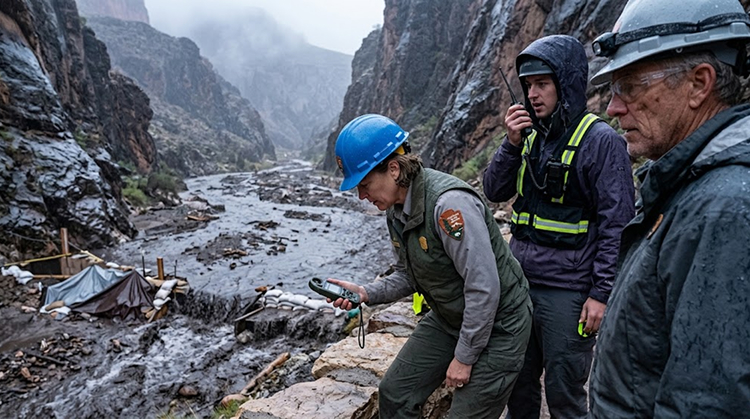
That second event illustrates why rebuilding inside the Grand Canyon cannot be treated like a conventional construction project.
Crews were working in an environment where weather conditions could rapidly change access, water levels and the safety of construction personnel. The NPS had reduced the number of workers in the canyon as severe weather approached and flash-flood warnings were issued. The remaining personnel were able to reach safety before the flood arrived.
The second flood also demonstrates a broader problem facing infrastructure managers in steep canyon environments: the same natural processes that damaged the original facilities can interfere with the temporary systems built to restore them.
The NPS has continued to emphasize the influence of the North Rim’s Dragon Bravo Fire burn scar on flood and debris-flow risks. Several watersheds affected by the fire drain toward the Colorado River, including Bright Angel Creek. In steep terrain, the park warns that runoff can produce flash flooding within minutes and can carry water, ash, mud, rocks and trees into downstream areas.
For an outdoor recreation system that depends on trails, bridges, pipelines and electrical infrastructure crossing this terrain, natural hazards are therefore part of the engineering equation rather than an isolated emergency.
Trail And Bridge Damage Has Reshaped Inner-Canyon Access
Water is only one part of the recovery.
The August 29 flood destroyed or damaged numerous pieces of infrastructure throughout Bright Angel Canyon. Footbridges were washed away, trails were damaged and key crossings were affected. The NPS has kept several areas closed while crews assess conditions and begin stabilization work.
The North Kaibab Trail remains closed from the North Kaibab Trailhead to Phantom Ranch, while Phantom Ranch, Bright Angel Campground, Black Bridge and Silver Bridge also remain closed because of flood damage. There is currently no estimated reopening date for these areas.
On September 3, the park expanded restrictions to include the South Kaibab Trail below the Tip-Off and the Bright Angel Trail below the Tonto Trail intersection. The NPS said reopening decisions would depend on conditions on the ground and the ability to safely restore access.
This creates a different kind of recovery challenge from simply repairing a damaged building. The Grand Canyon’s inner-canyon trail network is interconnected. A bridge, trail section or water facility can affect access to destinations much farther away.
The Grand Canyon’s current conditions therefore remain essential for visitors planning hikes, overnight trips or other activities in the affected areas.
The closures also demonstrate why trail infrastructure has become an increasingly important component of park management. Visitors tend to think of a trail as a line through the landscape, but major routes such as the North Kaibab and Bright Angel Trails depend on bridges, drainage structures, water stations, retaining features and other infrastructure that must withstand both daily use and extreme weather.
The New Water System Could Change The Park’s Infrastructure Future
One of the more significant aspects of the current recovery is that the disaster occurred while the park was already replacing its aging water system.
The new Transcanyon Waterline project was designed to address decades of failures rather than simply replace individual broken sections. The project relocates the South Rim water intake from Roaring Springs to Bright Angel Creek near Phantom Ranch and reduces the length of pipeline exposed to some of the system’s most persistent failure problems.
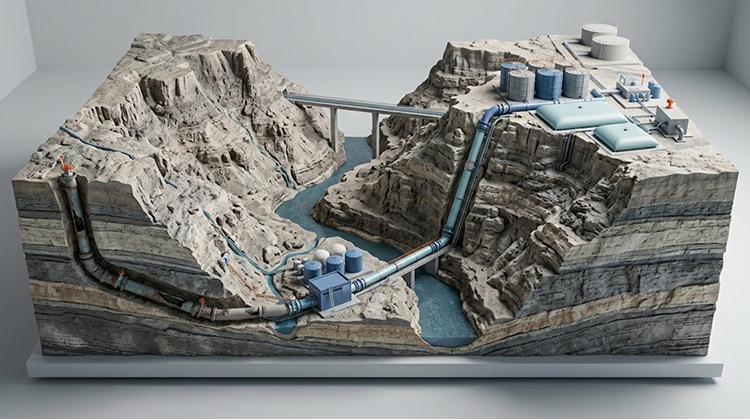
The project also includes a 1.8-million-gallon-per-day South Rim water treatment plant, a smaller treatment plant at Phantom Ranch, improvements at Havasupai Gardens and replacement of approximately three miles of waterline between Havasupai Gardens and Phantom Ranch.
That means the flood has accelerated the importance of infrastructure that was already scheduled to come online.
The distinction matters. The park is not building an entirely new water system from scratch because of the August disaster. Instead, the emergency has forced the NPS and its contractors to adapt an existing multiyear capital project to address an immediate operational crisis.
This approach may ultimately reduce the time required to restore reliable service, but it also shows how vulnerable large infrastructure programs can become when construction overlaps with extreme weather.
Visitor Services Are Tied Directly To Infrastructure Recovery
The water shortage has affected more than drinking water.
The South Rim’s hotels and concession operations depend on reliable water for bathrooms, kitchens, laundry, showers, cleaning and other services. Overnight accommodations were suspended following the flood as the park implemented Stage 4 water restrictions.
The September 19 projection offers a potential path toward phased restoration. If the November schedule holds, water distribution could begin by Thanksgiving, allowing concessionaires to gradually restore overnight services. But the NPS has emphasized that the dates are estimates and could change as construction conditions develop.
This is where infrastructure becomes directly connected to the visitor economy.
Grand Canyon is one of the country’s most heavily visited national parks, and the services surrounding visitor access depend on a complex network of utilities and facilities. A failure in a remote canyon water intake can eventually affect hotels, restaurants, employees, residents and visitors many miles away.
The flood therefore created an unusual situation in which the park remained open while some of its most important visitor services were substantially reduced.
That distinction is important for understanding the recovery. Grand Canyon has not simply “closed.” Instead, different portions of the park are operating under different conditions depending on whether they were affected by flood damage, water restrictions or ongoing construction.
The Recovery Will Extend Beyond The Immediate Emergency
The next stage of the Grand Canyon recovery will involve several overlapping timelines.
Emergency water measures must continue until a dependable supply is restored. Temporary intake construction has to be completed and modified after the second flood. The new treatment plant must be tested and commissioned. Damaged trails and bridges require assessment before reopening. Meanwhile, the larger Transcanyon Waterline project continues as part of a multiyear infrastructure program.
The park’s September 19 projection puts the beginning of pumping in November, but the estimated 45-day tank-refilling period means full water-system recovery will extend well beyond the first day of restored pumping.
The trail system presents an even longer uncertainty. The NPS has not provided reopening dates for several major inner-canyon areas because crews must first determine the extent of damage and whether visitor access can be safely restored.
For visitors, that means the recovery cannot be measured by a single reopening announcement.
A successful recovery will require water service, trail access, bridges, visitor facilities and emergency-response capabilities to return to stable operation together. The park’s infrastructure must also be capable of functioning in an environment where heavy rainfall can quickly transform narrow canyon corridors into dangerous flood channels.
The August 29 disaster exposed the consequences when several of those systems are disrupted simultaneously. The September 17 flood then showed that the recovery itself remains vulnerable to the same environmental forces that caused the original damage.
Grand Canyon’s current recovery is therefore becoming a test of how national park infrastructure can be rebuilt while the landscape remains active and unpredictable. The immediate priority is restoring water and making damaged areas safe. The longer-term challenge is ensuring that the systems supporting recreation, public safety and year-round operations can withstand the conditions they were built to serve.
As construction continues, the November water target will provide an important milestone, but the larger measure of recovery will be whether the Grand Canyon can restore reliable visitor access without compromising safety in one of the country’s most demanding natural environments.