

Data Center Moratoriums Shift County Planning Timelines
Data Center Moratoriums Move From Project Review To Rulemaking
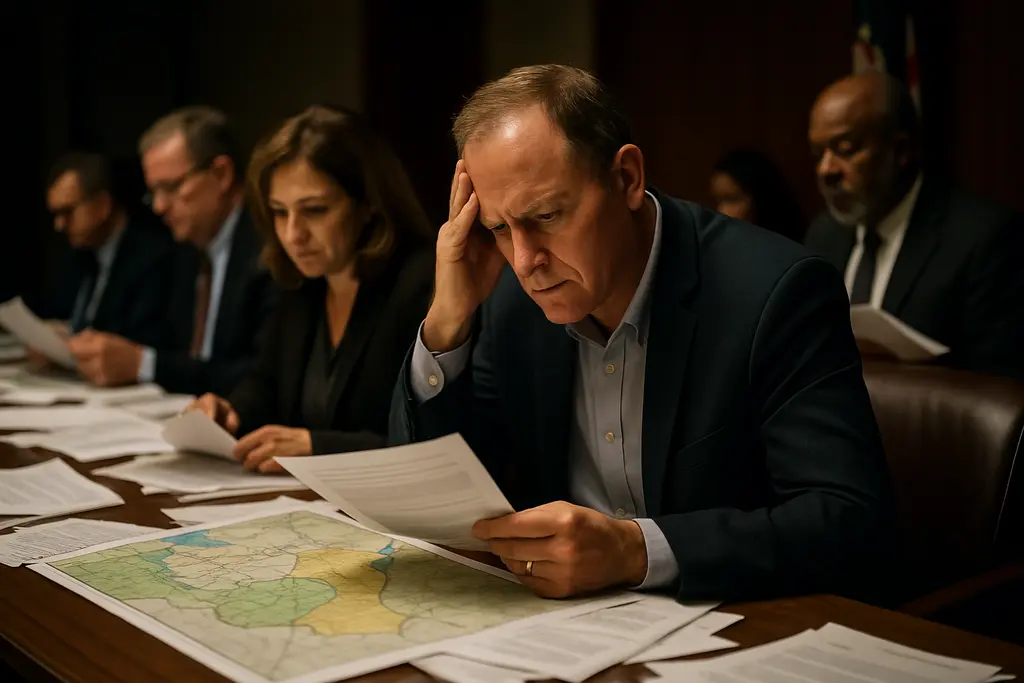
Data center moratoriums have become a local government tool for counties trying to pause new approvals while they review infrastructure capacity, resource impacts and zoning standards. As of October 22, 2026, the clearest documented actions in the provided record come from Indiana and Santa Fe County, New Mexico, where officials and public reporting point to a shift from case-by-case project review toward broader local rulemaking.
In Indiana, WFYI reported on October 21, 2026, that more than half of the state’s counties had introduced restrictions on data center development, including 32 county moratoriums, 14 regulatory ordinances and four explicit bans. The same report said Marshall County had made its restriction permanent, according to WFYI’s statewide report.
Santa Fe County, New Mexico, used a different structure. The county said its Board of County Commissioners approved an 18-month moratorium on data centers on July 2, 2026, and that the action was adopted through Ordinance No. 2026-07. The county said the measure was intended to give staff and elected officials time to study standards tied to environmental justice, noise, waste heat and water and energy use, according to the Santa Fe County announcement.
Those two examples show why residents’ stake in the issue is practical rather than abstract. County decisions on permit pauses affect how quickly projects can move, what infrastructure studies may be required, and whether future local rules will address utility demand, land use, noise and community review before a project reaches final approval.
Why County Action Matters To Residents
County governments often control zoning, land-use approvals and local permit processes outside city limits. A moratorium does not by itself settle whether a data center should be allowed, restricted or prohibited. It changes the timing of government review and creates a public window for drafting standards. For residents, that window can be the main opportunity to ask county officials how a proposal would affect public infrastructure and nearby properties.
The record provided for this article identifies repeated resident concerns: electricity demand, water use, noise, pollution, waste heat, utility costs, grid strain and quality-of-life effects. Those concerns are not identical in every county. A rural county with limited transmission capacity may focus on electric infrastructure. A water-stressed area may focus on withdrawals and cooling systems. A county with homes near an industrial parcel may focus on noise and hours of operation.
The local-first question is whether county rules are specific enough to match local conditions. A temporary pause can allow planning staff to compare current ordinances with the scale of proposed facilities. It can also allow elected boards to ask whether existing industrial zoning language is sufficient for projects that may require large utility connections.
Infrastructure And Resource Questions Behind Data Center Moratoriums
Power, Water And Site Review
The infrastructure questions behind data center moratoriums tend to start with electricity and water. WFYI reported that Indiana counties had adopted a mix of moratoriums, ordinances and bans in response to data center development pressure. Santa Fe County said its temporary ordinance was connected to oversight of environmental justice, noise and waste-heat impacts, along with the need to study development standards.
Santa Fe County’s action is especially instructive because the county said it reduced the threshold for covered data center facilities from 100 megawatts to 1 megawatt. That change matters because thresholds determine which projects face the moratorium and which projects may continue under existing rules. A high threshold can leave smaller facilities outside the review process. A lower threshold can bring a wider range of projects into county oversight.
For residents, the practical issue is not only whether a data center is large. It is whether county staff have enough information to evaluate water sources, wastewater handling, emergency access, energy connections, noise attenuation and heat management. Those are planning questions that may require coordination between zoning staff, utilities, public works departments and elected boards.
Noise, Waste Heat And Nearby Land Uses
Santa Fe County specifically named noise and waste heat among the topics to be reviewed during its 18-month pause. Those are local land-use issues because they affect the relationship between an industrial or utility-intensive site and neighboring properties. A facility can comply with general industrial zoning and still raise questions about equipment sound, backup power systems, outdoor mechanical units and distance from homes or community sites.
The public record supplied here does not provide technical measurements for individual projects, so those impacts should not be overstated. What can be stated is narrower: Santa Fe County identified noise and waste heat as topics for further regulatory review, and Indiana counties, according to WFYI, have responded through a range of local restrictions. That pattern points to a governance issue: counties are using pauses to decide what must be measured before permits are issued.
A county moratorium can also clarify which agencies are responsible for each question. Zoning boards may address setbacks and permitted uses. Public works officials may review roads and drainage. Utilities may examine connection capacity. Environmental staff may review water-related questions where local authority applies. A permit pause gives those offices time to develop a coordinated review path, if local law allows.
How Local Governance Changes During A Permit Pause
Moratoriums Are Temporary Governance Tools
Data center moratoriums are not the same as permanent bans. The provided record includes both temporary pauses and more restrictive actions. WFYI reported that Indiana’s county-level responses included 32 moratoriums, 14 regulatory ordinances and four explicit bans, with Marshall County making its restriction permanent. Santa Fe County described its own action as an 18-month moratorium adopted on July 2, 2026.
The distinction matters for public participation. During a moratorium, a county may be drafting new definitions, application requirements, performance standards or hearing procedures. Residents who want to follow the process should track public meeting agendas, planning commission sessions and county board votes. The key documents are usually staff reports, draft ordinance language, meeting packets and adopted minutes.
County officials may also use the pause to decide whether data centers belong in existing industrial districts or need separate use classifications. A separate classification can make rules more specific. It can define thresholds, require conditional-use review, set setbacks or require studies before approval. Whether a county adopts those tools depends on its local legal structure and the scope of authority under state law.
What Residents Can Ask Local Officials
Residents do not need to resolve every technical issue to participate effectively. They can ask county staff what standards are being reviewed, which departments are involved and whether outside utility information will be required before permits are issued. They can also ask whether proposed rules will apply only to new applications or to projects already in the review pipeline.
- Which county office is leading the data center ordinance review?
- Will draft rules address power demand, water use, noise and waste heat?
- Will projects require public hearings before approval?
- Will utility capacity studies be part of the application record?
- Will the county publish staff reports and draft ordinance language before votes?
These questions keep the discussion centered on local government procedure. They also help residents distinguish between confirmed county action and claims that have not been adopted in an ordinance or permit record.
For readers comparing local infrastructure debates across regions, ITPR has also covered a related Raleigh data center moratorium hearing, where the public process centered on a proposed pause in new applications. Regional civic readers can also find broader community coverage through One United Michigan, which offers insights into similar issues at One United Michigan.
County Examples Show Different Paths To Data Center Rules
Indiana Counties Use A Mix Of Restrictions
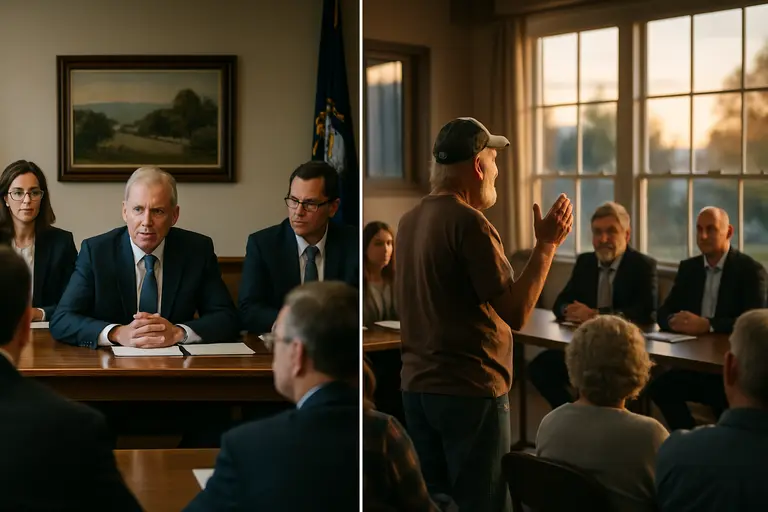
Indiana’s pattern, as reported by WFYI, shows that counties are not all choosing the same legal tool. Some have adopted moratoriums. Others have passed regulatory ordinances. A smaller group has adopted explicit bans. WFYI reported at least 50 Indiana counties had introduced restrictions, meaning the issue has moved beyond isolated project disputes in that state.
That range of responses is significant for residents because each tool produces a different civic process. A moratorium usually creates a deadline for further action. A regulatory ordinance sets operating rules that may remain in place after the pause. A ban removes the use from permitted local development categories, subject to the exact language adopted by the county.
The available record does not identify every Indiana county’s text or each local vote. For that reason, residents should rely on their county’s own adopted ordinances, agendas and minutes when determining what applies locally. A statewide count can show scale, but the controlling rules are the ones adopted by each county board or commission.
Santa Fe County Sets A Defined Study Period
Santa Fe County’s public notice provides a more detailed example of a defined study period. The county said the 18-month moratorium was approved on July 2, 2026, and that it was intended to give the county time to study land-use and environmental standards. The county also said it lowered the applicable threshold from 100 megawatts to 1 megawatt, bringing more facilities within the moratorium’s reach.
The Santa Fe County notice also identified public and Tribal opposition as part of the context for the action. That point is important because local infrastructure decisions can affect communities differently depending on location, water access, existing industrial burdens and proximity to utility corridors. The county’s stated review topics place environmental justice within the rulemaking process rather than treating it as a separate public comment issue.
For county governments elsewhere, the Santa Fe example shows one possible framework: define the covered facilities, set a time limit, identify the topics to be studied and pause approvals while standards are drafted. Whether that framework fits another county depends on local law, state authority and the specific infrastructure questions presented by proposed sites.
Resident Stakes In County Data Center Moratoriums
The Public Record Is The Main Civic Tool
The central resident stake in data center moratoriums is access to a clear public record before infrastructure commitments are made. Residents need to know what is being proposed, which permits are required, what utility connections are anticipated and which local standards will apply. Without that information, public debate can become disconnected from the actual decisions before county officials.
The record available here supports a cautious reading. Indiana counties, according to WFYI, have adopted a broad range of restrictions. Santa Fe County, according to its own notice, adopted an 18-month pause with specific review topics. Those actions show that counties are taking time to reassess rules, but they do not prove that every proposed data center will have the same effects or require the same response.
The next civic step for residents is local and document-based: review county agendas, read draft ordinance language, compare staff recommendations with adopted votes and submit comments tied to specific standards. For county officials, the policy task is to state plainly what the moratorium is meant to answer, when the pause ends and what evidence will be used to decide the permanent rules.
Handled that way, a permit pause can give residents, staff and elected boards a structured process for weighing infrastructure capacity and resource management before new approvals are issued.