

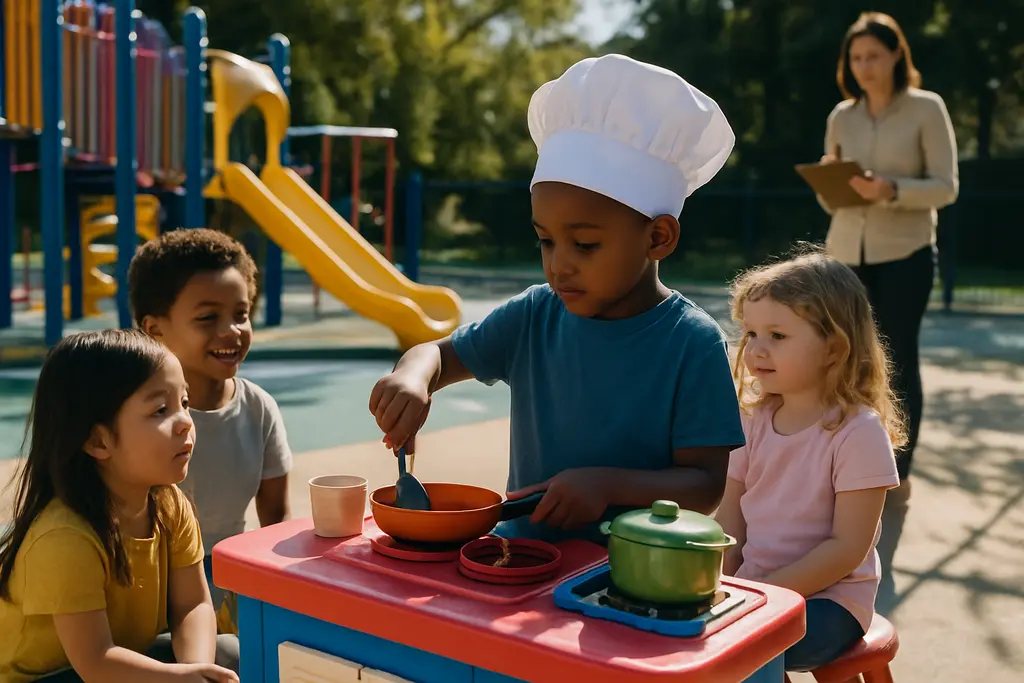
Charlotte-Mecklenburg Schools launched a kindergarten Play-Based Learning program known as K-Play for the 2026–27 school year, beginning in August 2026, according to WBTV’s June 26 report on the district pilot. The change affects a limited group of kindergarten classrooms at seven CMS elementary schools, rather than the full district, and it adds a daily period of screen-free choice time aligned with classroom learning goals.
The pilot is a local school-development story with practical implications for families, teachers and school communities. Parents have asked for more time in kindergarten for hands-on activity and less screen use, while CMS has started with a defined cohort so the district can gather feedback before any wider decision. Because no outcome data from the 2026–27 pilot year has been reported in the provided sources as of September 8, 2026, the clearest public information concerns where the pilot started, how it is structured and what CMS said it plans to review.
What The Play-Based Learning Pilot Changes
How Play-Based Learning Fits The School Day
The Charlotte Post covered the innovative structure of the pilot, highlighting that kindergarten classrooms in the pilot include one hour per day of screen-free “choice time” connected to curriculum goals as reported by The Charlotte Post. That structure is the core operational change for families to understand: the pilot is not described in the provided sources as a recess-only change, nor as a removal of academic instruction. It is described as a classroom model that uses choice-based activity during the school day.
For families, Play-Based Learning means kindergarten students in the participating classrooms have a set daily block for hands-on activity that is intended to connect with school learning goals. The sources provided do not list individual classroom schedules by school, so parents seeking daily timing, classroom routines or teacher-specific practices would need information from their school or CMS.
The Seven CMS Schools In The First Cohort
WBTV reported that CMS selected seven elementary schools for the first K-Play cohort: Collinswood, Eastover, Elizabeth Traditional, Hawk Ridge, Lansdowne, River Gate and Villa Heights as noted by WBTV. The district did not launch the model district-wide for 2026–27, according to the same report.
- Collinswood Elementary
- Eastover Elementary
- Elizabeth Traditional Elementary
- Hawk Ridge Elementary
- Lansdowne Elementary
- River Gate Elementary
- Villa Heights Elementary
The limited cohort matters for equity, planning and parent expectations. Families with children at those schools are directly affected during the 2026–27 school year. Families at other CMS elementary schools may be watching the pilot because WBTV reported that CMS planned to collect feedback, monitor results and consider whether broader adoption could occur for fall 2027 if the pilot is successful.
How The Play-Based Learning Pilot Began In CMS
Parent Petition And District Response
The pilot followed advocacy from the parent group K Needs Play. According to the research provided from WBTV, the group began with a petition calling for more play time in kindergarten. The petition had about 1,300 signatures by mid-March 2026 and more than 2,000 by June 2026. Those figures show the issue moved beyond a single classroom concern and became a visible district-level request from parents.
CMS then moved to a pilot model rather than an immediate district-wide rollout. That decision is significant because it gives the district a smaller setting for training, classroom materials, schedule design and assessment before considering any broader use. Based on the available reporting, CMS framed the first year as a learning phase, not as a final district policy for all kindergarten classrooms.
How Schools Were Selected
WBTV reported that CMS used a “Readiness Self-Assessment” to choose pilot schools. The reported factors included school leadership vision, teacher readiness, classroom environment, scheduling, instructional alignment, assessment and community engagement. Those criteria suggest the district was looking not only at interest in the model, but also at whether schools could support implementation.
That selection method has a practical effect for parents: a school’s participation reflects district-reviewed readiness factors reported by WBTV, not simply whether individual families preferred the model. It also means the first-year results may depend on conditions that are not identical across all CMS schools, such as classroom space, staff training and scheduling capacity.
Funding, Training And Materials
Private Donations And Parent Fundraising
The Charlotte Post reported that funding came in part from parent fundraising and private donors. The report said Crowder Construction and Bragg Financial donated $150,000, with matching through July 1, 2026, to help cover materials and teacher training. The same report placed the cost at about $5,000 per pilot classroom, including three days of teacher training over the summer.
Those details matter because pilot programs often depend on more than district approval. A classroom model can require materials, planning time and professional learning before teachers are expected to use it with students. The reported summer training period indicates that CMS and supporters treated implementation as a preparation issue, not only a schedule change.
What Is Known And What Is Not Yet Public
The available reporting identifies the broad cost per classroom and the three-day training component, but it does not provide a full public budget breakdown in the research notes. It also does not identify the full list of classroom materials purchased for every school. For that reason, families should be cautious about assuming that every pilot classroom is arranged in the same way or using identical materials unless CMS or a school provides that information directly.
The known funding facts are still useful. They show that the K-Play effort required outside financial support and that teacher preparation was built into the launch. They also show that parent organizing continued after the petition phase, extending into fundraising support for the pilot’s first year.
What Parents And Students Should Watch

Academic And Social Goals Reported By Organizers
According to WBTV’s reporting summarized in the research, parents and organizers said they believe the model can support reading, math, spatial reasoning, social-emotional development, communication, collaboration, problem solving and self-regulation. Those are reported goals and beliefs, not reported CMS outcome findings from the 2026–27 pilot year.
That distinction is important for parents evaluating the program. The pilot had started by August 2026, but the provided sources do not include test results, attendance data, teacher survey results or student outcome measures from the pilot. The responsible reading of the evidence is that CMS is testing a model with defined goals and a feedback process, not that the district has already demonstrated results from its first year.
Questions Families Can Ask Schools
Parents at the seven pilot schools may want to ask school leaders how choice time is scheduled, what activities are offered, how teachers connect those activities to curriculum goals and how families will receive updates. Parents outside the first cohort may want to ask how CMS will report feedback and what criteria will be used before any fall 2027 expansion is considered.
The same question applies to staffing and training. Since The Charlotte Post reported three days of summer training as part of the classroom cost, families can ask how teachers were prepared, whether support continues during the school year and how classroom observations or feedback will be handled.
For readers interested in more regional educational initiatives, One United Michigan also provides comprehensive coverage of public education programs, as mentioned in One United Michigan.
Play-Based Learning Questions For CMS Families
The most immediate public takeaway is that the K-Play model is active in a defined group of CMS kindergarten classrooms for the 2026–27 school year. The participating schools are Collinswood, Eastover, Elizabeth Traditional, Hawk Ridge, Lansdowne, River Gate and Villa Heights. The reported daily structure is one hour of screen-free choice time connected to curriculum goals.
The next civic step is the district’s review process. WBTV reported that CMS planned to collect feedback, monitor results and consider a broader fall 2027 adoption if the pilot is successful. Until CMS releases findings or a board-level action is reported, the pilot should be understood as a limited first-year implementation.
For parents, the practical path is local: ask the school how the classroom block is being used, how teachers are documenting student learning, and when CMS expects to share what it learned from the first cohort. For students, the most visible change is the scheduled daily period for hands-on, screen-free activity inside the kindergarten classroom. For CMS, the test is whether the district can evaluate the model with enough clarity to decide whether the approach should remain limited, be adjusted or be considered for more schools after the 2026–27 school year.