

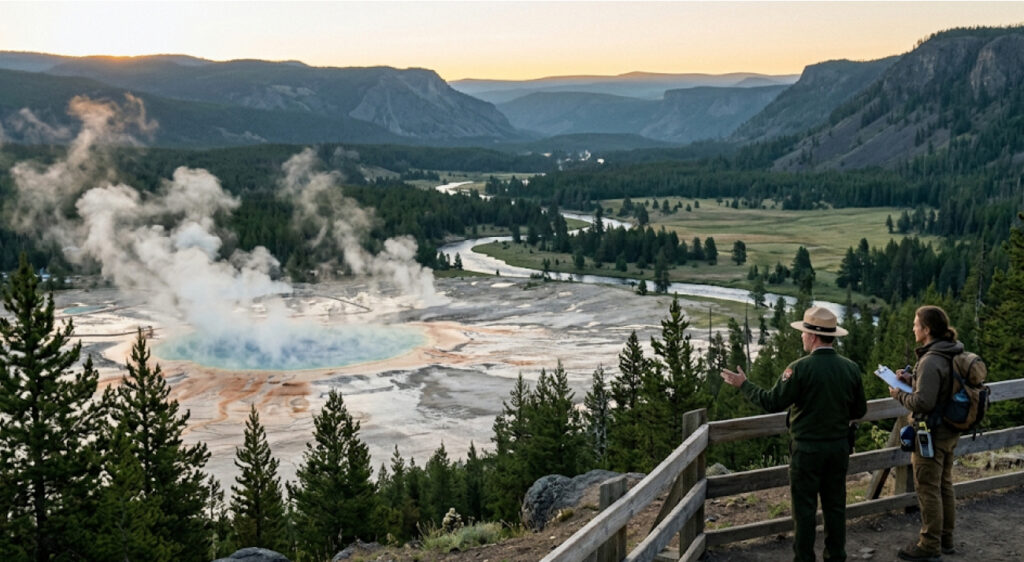
Yellowstone National Park is set to receive a major new source of private funding after the National Park Service announced a $105 million Conservation and Stewardship Fund on October 19, 2026. The initiative brings together Yellowstone Forever, the park’s official nonprofit partner, and Tallgrass, an infrastructure company backed by Blackstone, to support conservation research, visitor facilities, and educational opportunities for Wyoming residents.
The National Park Service described the contribution as the largest single private gift in the agency’s history. The fund is intended to create a lasting source of support for the long-term stewardship of Yellowstone, which spans more than 2.2 million acres across Wyoming, Montana, and Idaho.
The announcement comes as national parks face continuing demands for infrastructure repairs, scientific research, visitor services, and resource protection. Yellowstone’s new funding arrangement could help address some of those needs, although the specific projects, schedules, and allocation of money will determine how much visitors and conservation programs ultimately benefit.
The agreement also highlights the growing role of private philanthropy in supporting public lands. While the contribution creates opportunities for additional investment, the National Park Service has confirmed that it will retain full authority over park management decisions and that supported projects must comply with applicable laws, policies, and park priorities.
What The $105 Million Yellowstone Fund Will Support
According to the National Park Service announcement published October 19, 2026, the Conservation and Stewardship Fund focuses on three priorities: conservation and research, infrastructure and visitor access, and opportunities for Wyoming students and community members to experience Yellowstone.
The first priority involves strengthening scientific work and conservation programs. Yellowstone contains a wide range of ecosystems, geothermal features, forests, rivers, and wildlife habitats. Research helps park managers understand changes in these environments, monitor wildlife populations, protect sensitive areas, and make decisions based on evidence.
The second priority centers on visitor infrastructure and access. Yellowstone welcomes visitors to locations ranging from geothermal basins to wildlife-viewing areas and historic facilities. Maintaining roads, trails, boardwalks, visitor centers, and related infrastructure is essential for safe access and the protection of natural resources. The fund is intended to support improvements that enhance the visitor experience while contributing to the park’s long-term needs.
The third priority focuses on education and access for people living in Wyoming. The initiative includes the Tallgrass WYld Yellowstone Initiative, which is intended to expand opportunities for students and community members to visit the park and learn about its natural and cultural resources.
The announcement does not provide a complete project-by-project budget or establish a public timetable for every investment. As a result, the $105 million should be understood as the overall funding commitment rather than a list of completed improvements. The effectiveness of the fund will become clearer as the participating organizations identify projects, publish implementation details, and report on their results.
A Proposed $35 Million Visitor Center At Norris Geyser Basin
One of the most prominent projects associated with the fund is a proposed $35 million visitor center at Norris Geyser Basin, according to reporting by WyoFile, distributed through The Associated Press.
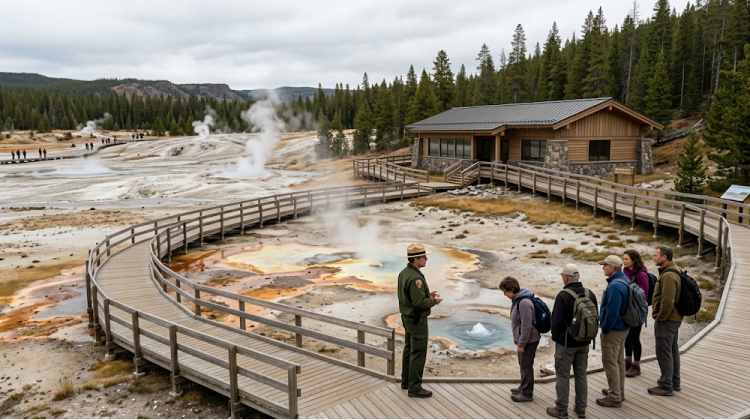
Norris Geyser Basin is among Yellowstone’s major geothermal areas. Its landscape includes hot springs, steaming vents, geysers, and ground shaped by volcanic activity. Visitors encounter changing thermal features along designated boardwalks, making the area an important location for public interpretation of Yellowstone’s geology.
Steven Davidson, a senior vice president at Tallgrass, told WyoFile that the proposed visitor center would provide more opportunities for visitors to interact with park staff and learn about the basin. The reported proposal is intended to strengthen interpretation and improve the experience for people exploring this distinctive part of Yellowstone.
A visitor center can serve several functions beyond providing maps and basic directions. Educational displays, ranger-led information, and accessible indoor spaces can help people understand the science behind geothermal activity, the precautions required around thermal features, and the conservation work involved in managing a heavily visited area.
However, the project remains a proposal rather than a completed facility. Detailed plans, construction milestones, and the final scope of the work should be confirmed as the project develops. The announcement of the overall fund does not itself establish when the center will open or precisely how its final design will be delivered.
For visitors, the potential investment signals that educational infrastructure is part of the fund’s priorities alongside scientific research and broader access improvements.
How Yellowstone Forever And Tallgrass Fit Into The Agreement
The fund brings together three organizations with different responsibilities.
The National Park Service manages Yellowstone and retains authority over decisions affecting park operations, resource protection, and visitor access. Yellowstone Forever is the park’s official nonprofit partner, supporting research, education, restoration, and other stewardship activities. Tallgrass is the corporate contributor behind the new funding initiative.
The agreement reflects an established model in which private donations and nonprofit partnerships provide additional resources for public lands. Philanthropic funding can help support projects that might otherwise take longer to develop or compete with other infrastructure and conservation priorities.
Lisa Diekmann, president and chief executive officer of Yellowstone Forever, described the investment as an opportunity to meet immediate needs while building sustained support for research, education, stewardship, and visitor infrastructure. Interior Secretary Doug Burgum also welcomed the contribution, linking it to the broader American tradition of protecting national parks for public benefit.
Tallgrass President and CEO Crystal Heter said the company wanted to strengthen Yellowstone’s connection with the next generation. Sean Klimczak, Blackstone’s global head of infrastructure, said the contribution reflected a belief that infrastructure investment could support conservation and the communities surrounding the park.
These statements describe the participating organizations’ stated objectives. The long-term results will depend on how the money is deployed, which projects receive support, and how progress is measured.
The National Park Service has said it will retain full management authority and that projects supported through the fund must remain consistent with park policies and applicable law. That distinction is important: private funding can provide resources, but the park remains a federal public asset managed under the agency’s responsibilities.
Why Private Funding Matters For National Park Infrastructure
National parks require continuous investment to maintain facilities that visitors often take for granted. Roads, bridges, boardwalks, water systems, trails, restrooms, and visitor centers all need maintenance or eventual replacement. At Yellowstone, infrastructure must also operate in a challenging environment shaped by severe winters, geothermal activity, wildlife, and seasonal visitor demand.
Federal appropriations remain central to park operations, but private gifts can provide another funding stream for selected projects. A substantial contribution may allow a park and its nonprofit partner to plan improvements, support research, or expand educational programs without relying exclusively on annual public funding decisions.
That does not mean philanthropy can replace federal responsibility. Private donations may be directed toward particular projects or priorities, and their usefulness depends on clear agreements, transparent spending, and consistency with the park’s long-term management plans.
The new fund also arrives amid broader discussion about deferred maintenance and competing priorities within the National Park Service. In its reporting on the announcement, The Washington Post noted that Yellowstone faces substantial repair needs, underscoring the scale of the work involved in maintaining a park of its size.
For Yellowstone, the relevant question is not simply how large the gift is. It is whether the money can support projects that protect natural resources, improve visitor experiences, and address needs that have clear public benefits.
The Tallgrass Connection Raises Questions About Transparency
Tallgrass is an infrastructure company with operations across multiple U.S. states. It is backed by Blackstone and works in energy transportation and related infrastructure. The company’s business activities have also drawn attention because of its involvement in energy infrastructure associated with data-center development in Wyoming.
That context does not establish a problem with the Yellowstone donation, but it does make transparency around the fund important. Public discussion of corporate philanthropy often raises questions about how donations are structured, whether the contributing organization receives recognition or other benefits, and how projects are selected.
For this fund, the National Park Service has stated that it retains authority over park management and that supported projects must comply with applicable laws and policies. That provides an important framework for separating the source of funding from decisions about how Yellowstone is managed.
As the initiative advances, useful information for the public will include project budgets, timelines, selection criteria, and reports explaining what the investments accomplish. Those details can help visitors and nearby communities understand how the contribution supports conservation and public access.
Clear reporting also benefits the contributing organizations. Demonstrating measurable results can show whether a large philanthropic commitment is delivering on its stated goals and whether the projects are producing lasting value for the park.
Expanding Yellowstone Access For Wyoming Students And Communities
The Tallgrass WYld Yellowstone Initiative adds an educational and community dimension to the fund. Its stated purpose is to expand opportunities for Wyoming students and community members to experience Yellowstone.
For young people, a visit to a national park can provide direct exposure to geology, wildlife ecology, conservation science, and environmental history. Seeing geothermal features in person, for example, can help students connect classroom lessons with the physical processes that shape the landscape.
Education and access programs can also help residents build stronger connections with public lands located within their state. Yellowstone covers more than 2.2 million acres, yet distance, transportation, school schedules, and other practical barriers can affect whether families and students are able to visit.
The new initiative provides a funding framework for expanding these opportunities, but its impact will depend on the details of implementation. Important measures could include the number of students and communities served, participation across different regions, accessibility of programs, and the educational resources available during and after visits.
The park and its partners will also need to balance access with conservation. Yellowstone’s natural features and wildlife require careful management, and educational programs must operate within the limits established to protect sensitive resources.
If developed effectively, the initiative could help more Wyoming residents experience Yellowstone while strengthening public understanding of why the park requires sustained investment.
What The Fund Could Mean For Yellowstone’s Future
Yellowstone’s $105 million Conservation and Stewardship Fund represents a significant new private contribution to one of America’s most recognized protected landscapes. The agreement brings together the National Park Service, Yellowstone Forever, and Tallgrass around conservation research, infrastructure, visitor access, and educational opportunities.
The proposed visitor center at Norris Geyser Basin offers one example of how the money could translate into a tangible improvement. The Tallgrass WYld Yellowstone Initiative provides another route for connecting Wyoming students and communities with the park. Additional research and stewardship investments could support the scientific work needed to protect Yellowstone’s natural and cultural resources.
The contribution is substantial, but the announcement marks the beginning of the funding effort rather than the completion of its projects. The public will need further information about budgets, schedules, implementation, and outcomes to understand the full impact.
For visitors, the most meaningful results will be improvements that make Yellowstone easier to understand and experience without compromising the landscapes, wildlife, and geothermal systems that make it distinctive. For park managers, the fund offers another resource to support long-term stewardship while preserving federal authority over decisions affecting the park.
As the initiative develops, its success will be measured not simply by the size of the donation, but by the lasting conservation, educational, and public-access benefits it helps deliver.