

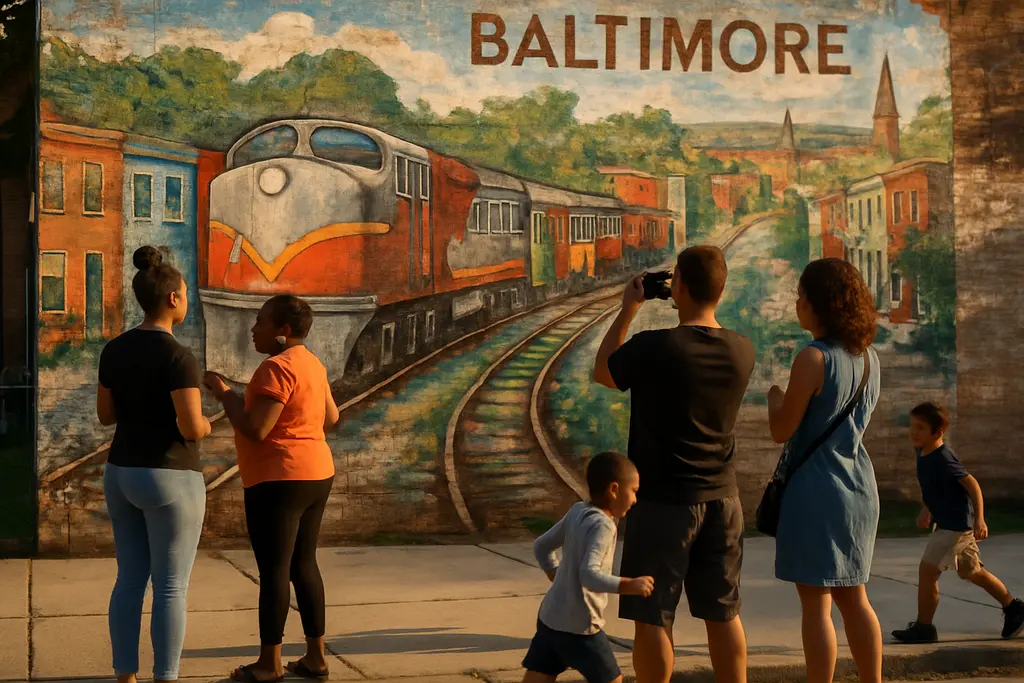
The Baltimore Amtrak Grants announced on September 30, 2026, marked the first round of community awards tied to the B&P Tunnel Replacement Program, with Amtrak reporting more than $4.1 million for 11 organizations in West and Central Baltimore. According to Amtrak’s grant announcement, the awards were made through the rail agency’s community investment work connected to the tunnel project.
The announcement affected neighborhood organizations, school-based programs, recreation groups, workforce providers and preservation efforts near the rail corridor. Amtrak said the awards remained preliminary as of the announcement date, with final amounts and organizations subject to change during grant agreement negotiations. That status matters for residents and civic groups tracking when money moves from announcement to signed agreement, procurement and project delivery.
What Baltimore Amtrak Grants Changed In Neighborhood Services
Baltimore Amtrak Grants Reached 11 Organizations
Amtrak said the first awards totaled more than $4.1 million and went to 11 organizations serving West and Central Baltimore. The grants were part of a larger Community Investment Program connected to the B&P Tunnel Replacement Program, also known as the Frederick Douglass Tunnel project. Infraday reported that the $4.1 million round sits within a planned $50 million Community Investment Program intended to run across the approximately 10-year construction period for the tunnel replacement, according to Infraday’s infrastructure report.
The funded work, as described in the research provided from Amtrak and related official program materials, was not limited to one type of service. It included recreation space repairs, schoolyard improvements, youth workforce programming, community park development and historic preservation. That range indicates that the first grant round was structured around neighborhood service capacity rather than a single capital facility.
Amtrak identified the grant program as a community benefit connected to a major rail construction project. In practice, that means the local awards should be read alongside the construction work itself: the grants are separate from the tunnel engineering, but they were announced as part of the broader program affecting communities near the corridor.
Why The Preliminary Status Matters
Amtrak stated that awards from this first round were preliminary and subject to change during agreement negotiations. For neighborhood organizations, that means the announcement did not necessarily equal immediate project start dates or final reimbursement terms. A schoolyard project, gym repair or park conversion still may require final agreements, schedules, permits or procurement decisions before residents see visible work.
For city residents, Baltimore Amtrak Grants should therefore be tracked through two lenses: the announced award purpose and the later administrative steps that turn an award into completed service improvements. That is especially relevant for public-facing spaces such as school recreation areas, vacant-lot conversions and community facilities, where residents may reasonably ask when access changes will occur.
Projects Named In The First Grant Round
School, Recreation And Open-Space Work
Several awards focused on places where residents, students or neighborhood groups use shared facilities. Baltimore Montessori Inc. was listed in the research as receiving $584,770 to renovate its yard, repave recreational spaces and expand after-school programming. The Bentalou Recreation Council was identified by Amtrak as a recipient for work to restore and resurface the gymnasium floor at Mary Ann Winterling Elementary and add basketball hoops.
The Edmondson Community Organization was also identified for a project to convert a vacant lot in Midtown-Edmondson into a park with walkways, landscaping, lighting, benches, bike racks and shade. As described, that project would change a vacant parcel into a maintained neighborhood space. The civic significance depends on execution: lighting, seating, shade and walkways each affect whether a space can serve regular neighborhood use rather than occasional access.
| Recipient Or Project Area | Service Area Identified In Research |
|---|---|
| Baltimore Montessori Inc. | Yard renovation, recreational paving and after-school programming |
| Bentalou Recreation Council | Gym floor restoration and basketball hoops at Mary Ann Winterling Elementary |
| Edmondson Community Organization | Vacant-lot conversion into a park in Midtown-Edmondson |
| Dent Education Inc. | Paid youth professional-skills programming in Charles North |
| Green Street Academy | Transportation infrastructure and skilled-trades career connections |
| Eutaw Place Non-Profit Corporation | Emerson Mansion restoration and community space |
These examples show how the first round linked physical improvements with service delivery. A resurfaced gym floor can support recreation programming. A renovated schoolyard can support after-school use. A converted lot can create space for public gathering if the final design, maintenance plan and access rules support that use.
Workforce And Preservation Awards
Amtrak’s announcement also included workforce development efforts. Dent Education Inc. was identified for an “earn-to-learn” program paying youth to build professional skills in Charles North. Green Street Academy was identified for work connecting community members to career opportunities in transportation infrastructure, construction, design, management and skilled trades in Carroll-South Hilton.
Those workforce projects connect local services to the construction economy surrounding the rail program. The research did not provide enrollment totals, completion targets or placement commitments, so those outcomes should not be assumed. The measurable next questions are how many participants are enrolled, what credentials or work experiences are offered, and how program operators report results.
The Eutaw Place Non-Profit Corporation was identified for restoration of the Emerson Mansion and community space. Historic preservation funding can have a local-service role when restored space is made available for community use, but the research did not specify operating hours, long-term maintenance funding or user agreements. Those details will determine how the restored property functions for nearby residents.
The Tunnel Program Behind The Grants
Rail Conditions Cited By Amtrak
Amtrak reported that the existing B&P Tunnel opened in 1873, is 1.4 miles long and limits Amtrak and MARC trains to 30 mph because of tight curves and deteriorating condition. Amtrak also stated that the tunnel serves about 15 million Amtrak and MARC customers. Those figures explain why a rail infrastructure project has generated a separate community investment program in the neighborhoods around the construction area.
Infraday reported that the broader tunnel replacement is expected to include two new electrified passenger-rail tunnels, a fully accessible West Baltimore MARC station, 10 miles of rail infrastructure upgrades, and local street and bridge improvements. Infraday also reported approximately $750 million in direct infrastructure benefits to the city beyond the $50 million Community Investment Fund, including utility systems, road bridges and the new station.
The rail work and grant work should not be treated as interchangeable. The tunnel replacement addresses passenger-rail constraints and related infrastructure. The community grants address local programs and neighborhood facilities. Both were tied to the same corridor program in the sources, but each has different timelines, oversight needs and public measures of success.
Connections To Access And Local Mobility
The West Baltimore MARC station element is significant because Amtrak and Infraday described it as fully accessible within the tunnel replacement package. Local transportation access has also been the subject of nearby civic coverage, including ITPR reporting on Baltimore wellness and transit access, where bus priority, safer walking routes and transit-oriented planning were discussed in relation to care access.
For residents, the grant program is one part of a larger set of public investments affecting how people reach services, schools, recreation space and jobs. The research does not establish that every grant project will directly improve transit access. It does show that the community awards were announced in the same program setting as station, bridge, street and rail improvements.
How Residents Can Track Civic Follow-Through

Agreement Negotiations Come Before Delivery
Amtrak said the next application window for the community grants will open in Spring 2027. That creates two immediate civic tracks: monitoring the first round as agreements are finalized, and preparing eligible applicants or community partners for the next round. Because Amtrak described the first awards as preliminary, residents and organizations should treat the September 30, 2026 announcement as a starting point rather than a completed service change.
Useful public questions include whether final grant agreements match the announced purposes, what project timelines are adopted, whether public-facing facilities will have stated access rules, and how workforce programs will report participation. For public spaces, residents may also look for maintenance responsibilities, safety lighting plans and long-term operating arrangements.
Community reporting on grant-funded public services often benefits from comparisons across regions. This can be demonstrated by examining the Houston LWS Forum, a related site in the same network, which tracks local program and civic developments in another metropolitan context.
What Is Not Yet Known From The Published Research
The research provided does not identify final signed grant agreements, construction start dates for each neighborhood project, procurement schedules, participant counts for workforce programs or operating plans for restored community spaces. It also does not provide maps of every eligibility area or parcel-level project boundaries. Those items should be verified through later Amtrak program notices, grantee communications or city permitting records before being reported as final.
This uncertainty does not reduce the significance of the first award round. It does set limits on what can be stated as of October 17, 2026. The record supports that Amtrak announced more than $4.1 million for 11 organizations on September 30, 2026, and that the grants were connected to a larger community investment program tied to the B&P Tunnel Replacement Program.
Baltimore Amtrak Grants And The Next Civic Step
The next measurable point for Baltimore Amtrak Grants will be whether the announced awards move through final agreements and into visible service improvements. For residents in West and Central Baltimore, that means watching school recreation spaces, gym upgrades, park conversion work, youth employment programming, skilled-trades connections and preservation-linked community space.
For civic organizations, the Spring 2027 application window provides a defined next step. Groups interested in later rounds will need to follow Amtrak’s eligibility rules and program notices rather than relying on the first-round announcement alone. For city agencies and neighborhood associations, the immediate task is coordination: matching grant-funded work with public-space maintenance, construction disruption communication and access planning near the rail corridor.
The first round of Baltimore Amtrak Grants did not complete the neighborhood projects by itself. It did create a documented funding commitment, subject to negotiation, for local services tied to one of Baltimore’s largest rail infrastructure programs. The public record now gives residents a basis to ask specific, trackable questions about delivery, access and outcomes.