

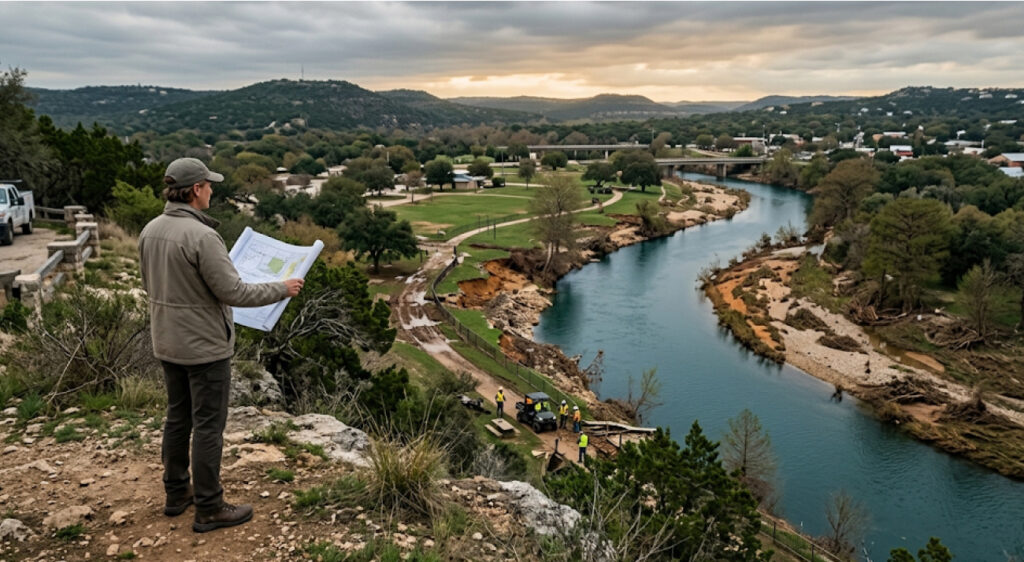
Kerrville, Texas, is reconsidering how it rebuilds its riverfront parks after devastating floods struck the Guadalupe River corridor in July 2025 and again in July 2026. The repeated damage has forced city officials to reassess the placement of park amenities, the cost of restoring damaged trails, and the long-term risks of investing in recreation facilities close to a river that can rise dangerously during extreme rainfall. Rather than immediately rebuilding every feature where it previously stood, Kerrville is considering a more cautious approach that puts public safety and long-term resilience ahead of a rapid return to normal operations. Recent reporting from the San Antonio Express-News identifies Parks and Recreation Director Jay Brimhall as a leading voice in the city’s evolving strategy. Read the latest coverage of Kerrville’s riverfront park plans.
Two Consecutive Flood Seasons Have Changed The Rebuilding Strategy
The July 2025 flood brought catastrophic destruction to Kerr County and other communities in the Texas Hill Country. The Guadalupe River inundated properties, damaged infrastructure, and disrupted access to parks that serve residents and visitors throughout the year. The river flooded again in July 2026, damaging sites that had already undergone cleanup or restoration work.
For Kerrville’s parks department, the second disaster changed the assumptions behind recovery. Repairs completed after one flood can become wasted investments when another event damages the same facilities before they have delivered much long-term value. The challenge is particularly serious along low-lying riverbanks, where trails, parking areas, playgrounds, and recreational amenities are exposed to fast-moving water, sediment, and debris.
Brimhall has described a slower rebuilding approach, with the city prioritizing recreation spaces outside the river corridor before returning to the most severely affected waterfront locations. That strategy gives residents access to other community facilities while officials assess which riverfront investments make sense.
The decision also raises a larger planning question: should a public park restore every former feature, or should repeated flood damage prompt a different arrangement? In Kerrville, the answer may involve moving selected amenities farther from the Guadalupe River, changing how vulnerable areas are used, and accepting that some riverside facilities may require a different design.
Louise Hays Park Remains A Central Part Of The Recovery
Louise Hays Park, located at 202 Thompson Drive, is one of Kerrville’s best-known public recreation areas. Its amenities include river access, picnic and parking areas, pavilions, restrooms, and trail connections. The park also hosts community activities such as Fourth on the River celebrations and the Kerrville Triathlon Festival.
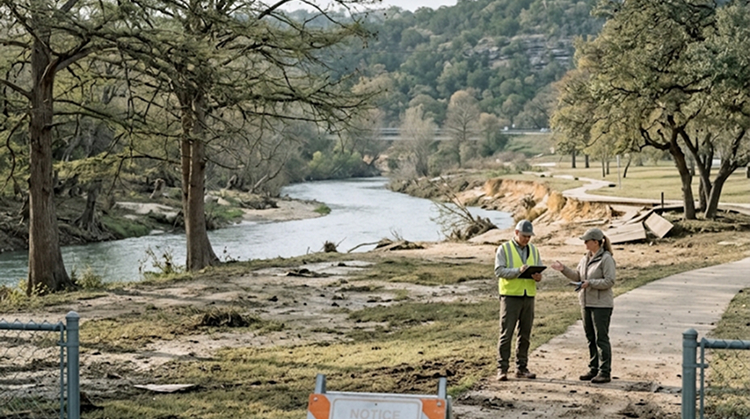
The site’s popularity makes its continued closure particularly significant. According to the City of Kerrville’s official Louise Hays Park page, the park remains closed until further notice because of flood damage and safety concerns. Its future therefore depends on more than removing visible debris: officials must evaluate damaged infrastructure and determine how to restore public access without exposing visitors to unresolved hazards.
The city had already been developing plans to reimagine the park before the second flood. Repeated damage has complicated that work and prompted officials to reconsider the placement and resilience of future amenities. Relocating certain facilities away from the river could reduce their exposure to floodwater, although the final approach depends on site conditions, design decisions, funding, and further assessment.
That process requires balancing several priorities. Residents want familiar gathering places and convenient river access. Park planners must also account for accessibility, maintenance costs, emergency access, and the likelihood that future high-water events could damage newly rebuilt facilities. The most practical design may preserve the park’s public character while placing its most vulnerable infrastructure farther from the river.
Guadalupe Park Faces Another Setback After Restoration
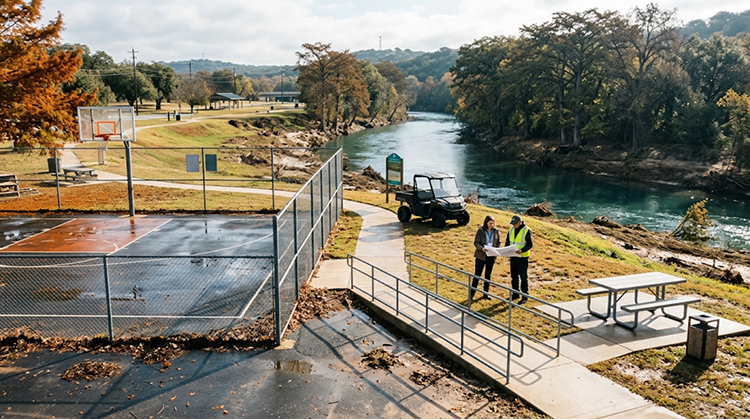
Guadalupe Park has also experienced an unusually difficult recovery. Following its closure after the July 2025 flood, the city and community partners worked to restore recreational amenities. A July 2026 city announcement scheduled a ribbon-cutting ceremony for August 7 to celebrate improvements, including a full-size basketball court with lighting and fencing, handrails, public art, four ADA-accessible tables, sidewalk connections, a drinking fountain, and an inclusive playground. The restoration partnership included the Community Foundation of the Texas Hill Country and NBA teams representing Houston, Dallas, and San Antonio. The City of Kerrville’s archived announcement describes the restoration work.
However, the 2026 flood caused additional damage just before the park’s planned reopening, according to recent reporting. That setback illustrates the financial and logistical difficulty of rebuilding riverfront recreation sites when severe flooding recurs within a short period.
The renewed damage also demonstrates why recovery cannot be measured solely by the completion of a construction project. Even well-intentioned improvements can be vulnerable if they remain exposed to the same flood conditions. Future work may require a fresh assessment of how equipment, paved areas, playground facilities, and other amenities can be protected—or whether some features should be moved to less exposed locations.
The city has not announced a definitive final design or comprehensive reopening date for all affected riverfront facilities. Until further plans are confirmed, visitors should rely on official municipal notices rather than assume that previously restored areas are accessible.
River Trail Reopening Shows Where Recovery Is Possible
Kerrville’s River Trail is a key connection between parks and neighborhoods along the Guadalupe River. Flood damage in both 2025 and 2026 has left sections requiring repairs, sediment removal, and safety inspections. The city’s official River Trail page says the system sustained significant damage during both floods and that repair planning includes debris and sediment removal, along with restoration of damaged trail sections.
There has been limited progress. On October 8, 2026, the city announced that two segments would reopen the following day: the section from Schreiner University Trailhead at 2100 Memorial Boulevard to G Street Trailhead at 124 G Street, and the section from G Street Trailhead to Birkdale Trailhead at 255 Birkdale Lane. The announcement credited volunteers who helped assess damage, remove debris, address hazards, and restore access where conditions permitted. Check Kerrville’s October 8 reopening announcement.
Those limited reopenings should not be interpreted as a full restoration of the trail network. The city continues to identify other sections as closed, including the stretch between Birkdale Trailhead and Kerrville-Schreiner Park Trailhead, where the bridge at Camp Meeting Creek is no longer in place. Trail conditions and access notices can change as repair work progresses.
The distinction matters for runners, cyclists, walkers, and families who use the trail as a daily recreation route. Visitors should verify the status of their intended segment before leaving home, respect barriers, and avoid damaged riverbanks or unstable ground. A trail that appears passable from a distance may still contain holes, exposed infrastructure, or other hazards that are difficult to see.
Flood Resilience May Mean Moving Amenities Away From The River
Kerrville’s rebuilding debate reflects a broader challenge facing communities with parks along rivers. Waterfront settings offer scenic views, shade, wildlife habitat, and convenient recreational access, but they can also expose public infrastructure to powerful floodwaters. Replacing damaged amenities in exactly the same locations may restore the former appearance of a park without addressing the conditions that made it vulnerable.
Moving selected facilities away from the river corridor could help reduce repeated damage. Depending on future site plans, that might mean placing playground equipment, picnic shelters, restrooms, storage areas, or other fixed infrastructure on higher ground while maintaining carefully managed river access where it is safe. Such choices require engineering evaluations and public input; the city has not confirmed that every type of amenity will be relocated.
Planning also has to consider natural river processes. Floodwater carries sediment, uproots trees, reshapes banks, and deposits debris across low-lying land. Trails and paved surfaces can be damaged even when buildings remain intact. Designs that account for these processes may be easier to maintain over time than facilities built without sufficient consideration of flood exposure.
The National Weather Service’s flood safety guidance offers useful context for understanding the danger posed by rapidly changing water conditions. In the Texas Hill Country, visitors should never assume a familiar riverfront location is safe simply because water levels appear manageable during a particular visit.
Funding And Partnerships Will Shape The Next Phase
The scale of the damage means Kerrville’s recovery depends on more than decisions made by the parks department alone. Construction costs, engineering assessments, accessibility requirements, and the availability of public or philanthropic funding will all affect the timing and scope of future work.
In April 2026, the Community Foundation of the Texas Hill Country announced $14 million in grants through the Kerr County Flood Relief Fund for park and river restoration projects along the Guadalupe River. More than half of that funding was designated for rebuilding Louise Hays Park, according to reporting by KSAT. That earlier commitment shows the importance of community partnerships, but the second flood created additional needs and uncertainty about the final scope of reconstruction. Read KSAT’s report on the $14 million restoration fund.
The city is also considering the future management of Kerrville-Schreiner Park, including a possible transfer back to Texas Parks and Wildlife, which has expressed interest in the arrangement, according to recent reporting. Any change would involve additional decisions about responsibility for park operations, riverfront facilities, and future investment. No completed transfer should be assumed without an official announcement.
For residents, the central issue is how available funds will be balanced between restoring familiar public spaces and making those spaces less vulnerable to future disasters. Transparent project updates, realistic schedules, and clear explanations of design decisions will be important as the city moves from emergency cleanup to long-term reconstruction.
What Visitors Should Know Before Returning To Kerrville’s Riverfront Parks
Park access remains uneven across the city, so visitors should check official notices before planning outdoor activities. Louise Hays Park remains closed, and several other parks and recreational facilities have been affected by flood damage. Some River Trail segments reopened in October, but other sections remain closed while the city assesses damage and prepares repairs.
Kerrville’s Parks and Recreation website provides park information and links to current closure updates. The city’s 2026 Flood Response and Recovery page also provides information on affected facilities and recovery activity. Visitors should follow posted signs, avoid entering barricaded areas, and never use closed trails as shortcuts around repair work.
The reopening of individual facilities will depend on safety assessments and the completion of necessary repairs. Until the city publishes further details, a specific date for the full return of Louise Hays Park, Guadalupe Park, or the entire River Trail should not be treated as confirmed.
Kerrville’s experience also offers a wider lesson for public recreation planners: restoring access after a disaster is only one part of recovery. The location, construction, and long-term management of facilities matter just as much when the same landscape has suffered repeated flooding. As the city revises its plans for the Guadalupe River corridor, its decisions could help shape how other Texas communities protect outdoor recreation while living with the risks of flood-prone waterways.
ITPR will continue covering developments in public recreation, park restoration, and conservation as communities determine how to protect access to important outdoor spaces. For Kerrville, the next phase will depend on the city’s assessments, funding decisions, and ability to rebuild in ways that better account for future floods.