

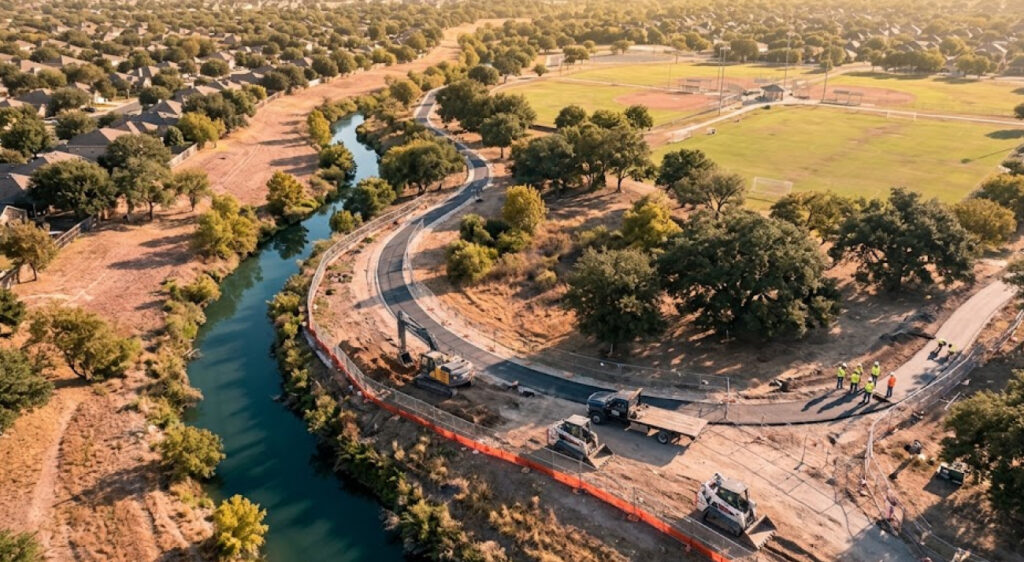
San Antonio’s Garza Park entered a significant period of change on September 8, 2026, when construction-related closures began as part of improvements connected to the Zarzamora Creek Greenway Trail Project. The work will temporarily restrict access to the Garza Park Loop Trail, Softball Field #2 and the Multi-Purpose Field while crews bring equipment and construction materials into the Westside park. For readers interested in broader recreation and sports-related consumer information, EveryGame sportsbook user ratings provide a separate perspective on how users evaluate an online sportsbook.
The closure is expected to continue until approximately January 2027. While the immediate effect is a temporary reduction in recreational access, the project represents a broader investment in how trails, parks and creek corridors function together in San Antonio. Planned improvements include an overlook, additional tree plantings and trail lighting, creating a more developed recreational environment around Zarzamora Creek.
The project is being managed through the City of San Antonio’s parks and greenway infrastructure program, with Guido Construction handling construction work. The decision to close portions of the park during construction reflects a practical safety concern: heavy equipment and construction traffic require separation from everyday park users.
For residents who use Garza Park regularly, however, the significance of the project extends beyond the construction period. Garza Park is already a neighborhood recreation resource with a paved trail, athletic fields, fitness stations, pickleball courts, tennis courts, a playground, picnic facilities and other amenities. The City lists the park at 1450 Mira Vista and identifies its paved trail as approximately half a mile long. Garza Park’s existing recreation amenities show why changes to the trail and surrounding landscape can influence more than walkers and cyclists.
A Greenway Project Is Changing More Than One Park
The Garza Park improvements are part of the larger Zarzamora Creek Greenway effort, a project that has been planned as an important component of San Antonio’s Westside trail network.
Zarzamora Creek is one of the waterways incorporated into the city’s Westside Creeks Greenway System. The City describes the system as a network of hike-and-bike corridors connecting neighborhoods, parks and creek environments. Existing and planned sections are intended to make recreational access more continuous rather than leaving individual parks isolated from one another.
That distinction matters because a greenway is fundamentally different from a standalone neighborhood trail. A short loop can provide exercise and local recreation, but a connected greenway can become transportation infrastructure as well. Residents can potentially use the same corridor for walking, cycling, running and access between parks and nearby destinations.
San Antonio has been pursuing this approach for years. Its 2022–2027 bond program identified the Zarzamora Creek Greenway from Ingram Road to Jane Dubel Park as a 1.8-mile trail project with an estimated cost of $6.45 million. City planning documents described the project as a way to connect Jane Dubel and Joan Price parks to the Westside Creeks Greenway Trail System.
The larger Zarzamora corridor has also been envisioned as a longer recreational connection. Earlier planning material identified a proposed Zarzamora Greenway stretching from the Leon Creek Greenway toward Tierra Del Sol Park, with a potential length of approximately 4.7 miles.
That history places the current Garza Park work in a much larger context. The construction visible in the park is one stage of an effort to make the Westside’s creek corridors more usable as an interconnected public recreation system.
For readers following how American cities are using parks to strengthen neighborhood connections, ITPR’s outdoor recreation coverage provides a useful broader context for projects where trails, public infrastructure and community access increasingly overlap.
The Overlook Adds A Different Kind Of Recreation Feature
One of the most notable planned additions at Garza Park is an overlook along the improved trail.
An overlook can appear relatively minor compared with a new bridge or an extended trail, but its role within an urban greenway can be significant. It creates a defined destination rather than treating the trail solely as a route from one point to another.
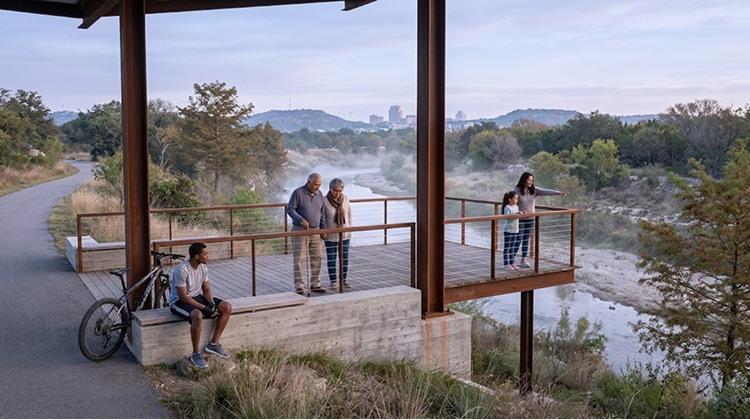
That distinction can influence how residents use a park. A trail designed only for movement primarily serves walkers, runners and cyclists passing through. A trail with gathering points, views, seating opportunities and landscaping can also encourage people to stop, spend time outdoors and interact with the surrounding landscape.
In Garza Park’s case, the overlook is particularly relevant because the project is associated with Zarzamora Creek. Creek corridors can provide a rare opportunity for urban residents to experience vegetation, water and open space without leaving the city.
The design therefore has the potential to give the creek a more visible role in everyday recreation. Instead of functioning primarily as drainage infrastructure running beside a neighborhood, the corridor can become part of the public landscape.
This approach also reflects a wider trend in municipal park planning. San Antonio’s own parks system planning documents have repeatedly identified trails, lighting, trees, connectivity and improved access as important community priorities. A city community-input report, for example, identified better lighting, trails, maintenance, walking and bike trails, shade, signage and connectivity among desired park improvements.
The Garza Park project brings several of those priorities together in one location.
Trail Lighting Extends The Value Of The Investment
Trail lighting is another planned improvement that could have a direct effect on how residents perceive and use the park.
Lighting can improve visibility and help define trail space during lower-light conditions, although it also requires careful design in an environment that borders a creek and potentially supports wildlife.
For urban recreation systems, lighting is often part of the conversation about whether a trail feels usable beyond a narrow portion of the day. A route that becomes difficult to see shortly after sunset offers fewer practical opportunities for commuters, evening walkers and residents with limited daytime availability.
San Antonio has previously included lighting among its broader greenway investments. The city’s 2022 bond program included a $3.55 million Westside Creeks Lighting Pilot Project, while a separate District 10 Greenway Trail Lighting Pilot Project was added at $1.2 million.
Garza Park’s lighting therefore fits within a broader municipal interest in making greenway infrastructure more functional.
The important question will be how the lighting is ultimately implemented. Effective trail lighting should support visibility and user comfort without unnecessarily overwhelming the natural environment. Placement, brightness, shielding and fixture design all influence whether lighting becomes a genuine safety and usability improvement or simply adds another layer of infrastructure.
Construction Will Temporarily Reduce Recreational Access
The improvements come with an unavoidable short-term cost: portions of Garza Park will be unavailable while construction is underway.
Beginning September 8, the Garza Park Loop Trail, Softball Field #2 and Multi-Purpose Field were affected by the closure. Local schools, including Esparza Elementary and Ross Middle School, were advised to identify alternative recreation locations during the construction period.
That disruption illustrates an important challenge in urban park investment. The facilities being improved are often the same facilities residents depend on every week.
Closing a trail for several months can interrupt walking routines. Closing athletic fields can affect organized and informal sports. For schools and neighborhood organizations, finding temporary alternatives may require additional transportation or scheduling adjustments.
Yet keeping these areas open during heavy construction could create a different set of problems. Large equipment, construction materials and active work zones introduce risks that are difficult to reconcile with unrestricted public access.
The temporary closure is therefore best understood as part of the cost of delivering a larger infrastructure improvement. The measure reduces conflicts between construction activity and everyday recreation while allowing crews to work within a controlled environment.
The success of the project will ultimately be measured after the barriers come down, when residents can determine whether the upgraded trail, lighting, vegetation and overlook provide enough additional value to justify the disruption.
Tree Plantings Can Change The Experience Of The Trail
Tree planting is another planned component of the Garza Park improvements, and its significance goes beyond appearance.
Urban trails can become uncomfortable during periods of intense heat when users are exposed to direct sunlight across paved surfaces. Trees can eventually provide shade, reduce surface temperatures and make walking or cycling more comfortable.
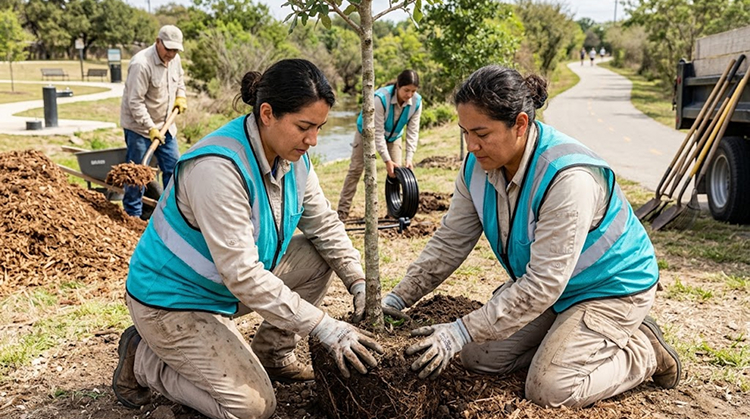
The benefits are long-term, however. Newly planted trees cannot immediately create a mature canopy. Their value increases as they establish, grow and become integrated with the surrounding landscape.
For a neighborhood park, that makes tree planting an investment in the future character of the trail rather than an immediate visual upgrade. The result several years from now could be substantially different from what residents see when the construction barriers are removed.
The creek setting also creates an opportunity to think about vegetation as part of the larger greenway ecosystem. Native and appropriately selected vegetation can provide habitat, stabilize soils and contribute to the visual identity of the corridor.
A 2024 San Antonio Linear Creekway Parks Advisory document specifically highlighted interest in developing Zarzamora Creek around Garza Park as a greenway, with goals including native tree planting, creek restoration, improved waterways and reduction of the urban heat-island effect.
That makes the current planting component particularly relevant. It is consistent with a longer-running vision for the corridor rather than an isolated landscaping decision.
Garza Park Sits Within A Larger Westside Recreation Network
The importance of the project becomes clearer when Garza Park is viewed as one piece of San Antonio’s broader greenway system.
The Westside Creeks Greenway System already includes multiple creek corridors, trailheads and connections across neighborhoods. The City identifies Zarzamora Creek as one of the system’s major corridors and has continued planning and construction to extend its recreational reach.
San Antonio’s approach is significant because greenways can serve several public purposes simultaneously. They provide recreational space, create walking and cycling routes, preserve portions of creek corridors and connect parks that might otherwise operate independently.
The strategy can also reduce the pressure on individual destination parks. When a network provides multiple entry points and connected routes, residents have more options for short walks, longer rides, exercise and outdoor activities.
For neighborhoods where access to large regional parks may require a car, those connections can be especially valuable.
The planned Zarzamora Creek improvements also align with San Antonio’s continued investment in greenway infrastructure. City capital documents have included multiple creek and trail projects, while the city’s infrastructure management program continues to identify work along Zarzamora Creek and other urban waterways.
This makes Garza Park part of an infrastructure strategy rather than simply a localized park renovation.
The Project Could Strengthen Everyday Outdoor Recreation
The strongest measure of the Garza Park improvements will not be the appearance of the finished construction site. It will be how frequently residents use the improved space once the project is complete.
A more attractive overlook may encourage residents to stay longer. Better lighting may make the trail more usable during evening hours. Tree planting may improve comfort as the canopy matures. A stronger connection to Zarzamora Creek may make the park feel more integrated into San Antonio’s greenway system.
Those changes can have cumulative effects.
A resident who previously visited the park only for organized sports may begin using the trail for walking. A cyclist may incorporate the corridor into a longer route. Families may use the overlook as a destination. Nearby students may eventually benefit from a safer and more attractive outdoor environment.
That is the larger opportunity presented by the project.
Garza Park already provides a substantial mix of recreational facilities, including athletic fields, courts, playground areas, fitness equipment and a paved walking trail. The current improvements have the potential to strengthen the relationship between those traditional park amenities and the creek-based greenway network surrounding them.
The temporary closure that began September 8 is therefore more than a short-term inconvenience. It marks the construction phase of a longer investment in Westside recreation infrastructure.
As work progresses toward the expected January 2027 completion, the project will provide a useful case study in how San Antonio is adapting neighborhood parks for a city where trails, creek corridors, shade, lighting and connectivity increasingly determine the practical value of public outdoor space.
The immediate priority remains safe construction. The longer-term test will be whether the completed Garza Park improvements turn a familiar neighborhood park into a stronger link within the Zarzamora Creek greenway network—and whether residents ultimately use that connection enough to make the investment part of their everyday outdoor routines.