


The Poway USD Budget update for 2026-27 showed a district trying to balance new state revenue, rising costs, campus facility needs and public engagement before final budget decisions. According to Poway Unified School District’s district budget update page, the Board held a required public hearing on June 11, 2026, after making the proposed annual budget available for public inspection beginning June 8, 2026.
Poway USD Budget Update And Public Review
Poway USD Budget Hearing Timeline
The June 11, 2026, hearing mattered because it marked the formal public stage for the proposed 2026-27 annual budget. The district reported that the proposal was available for public inspection starting June 8, 2026, giving families, employees and residents a short review window before the hearing. That public step is separate from private budget development work and gives the community a defined point to evaluate the numbers before adoption.
District materials also stated that the Board considered the 2026-27 Local Control and Accountability Plan update and the SELPA Annual Service and Budget Plan at a June 11, 2026, public hearing. Those items are important to residents because the district’s budget decisions are connected to student services, instructional priorities and special education planning.
What The District Put On The Table
Poway Unified officials reported that the budget included both improved revenue assumptions and continuing pressure on spending. The district identified a 4.31% Cost of Living Adjustment to the Local Control Funding Formula, which it said translated to about $15 million in added state revenue. The district also reported a separate gain of about $13.6 million in state special education funding.
The revenue gains did not remove all budget pressure. District materials said proposed expenditures reflected increased costs tied to labor agreements, employee health benefits and added instructional support, with special education and teaching assistant needs specifically identified. The district also said some costs were partly offset by retirement savings and staffing adjustments connected to declining enrollment.
Revenue Gains And Spending Pressures
State Funding Increases Were Significant But Limited
The official update showed that the district’s budget picture included several state funding categories. The Learning Recovery Emergency Block Grant and a projected Discretionary Block Grant were estimated at $18.4 million combined, while the district noted that final state approvals were still pending. That distinction is useful for families following the Poway USD Budget, because some revenue items had been projected but not fully finalized in the district’s materials.
| Budget Item Reported By District | Amount Or Status |
|---|---|
| Local Control Funding Formula COLA | 4.31%, about $15 million in added state revenue |
| State special education funding gain | About $13.6 million |
| Learning Recovery and projected Discretionary Block Grant funding | Estimated $18.4 million combined, pending final state approvals |
| Budget solutions for 2026-27 | About $13 million proposed |
| March 12, 2026, revenue projection | $541,482,843 |
| March 12, 2026, expenditure estimate | $579,250,770 |
Deficit Figures Framed The Board Discussion
At the March 12, 2026, Board meeting, the district projected total revenue of $541,482,843 and estimated expenditures of $579,250,770. District materials described this as reflecting a deficit in the unrestricted general fund. In response, the district proposed about $13 million in budget solutions to help balance costs for 2026-27.
For residents, the practical issue is not only whether revenue increased, but whether increases were large enough to absorb pay, benefits, special education and instructional support costs. The district’s materials indicated that both things were true at the same time: revenue assumptions improved, and expenditure pressure continued. That is the central civic tradeoff in the 2026-27 school finance discussion.
Readers comparing budget pressure across California districts may find ITPR’s coverage of SRVUSD budget pressure useful, though each district’s enrollment, labor agreements and reserves must be evaluated separately.
Campus Projects And Maintenance Priorities
Facility Needs Reached Multiple Campuses
Poway Unified’s 2026 materials listed several facility and maintenance priorities tied to school operations. The district reported a chiller replacement at Rancho Bernardo High School and Bernardo Heights Middle School. It also identified extensive support-needs classroom upgrades at Black Mountain Middle School and Meadowbrook Middle School.
The district’s facilities list also included summer 2026 maintenance and safety-and-security capital improvements. Reported work categories included HVAC control upgrades, gym floor resurfacing, exterior painting, flooring and carpet replacement, plumbing work and pour-in-place playground surface replacements at several elementary schools. The district materials did not present these items as optional amenities; they were described within maintenance, safety, security and operational needs.
School Projects Add Context To The Bond Pause
The district reported that it conducted community listening, surveys, advisory group feedback and open-ended input on facility priorities connected to a potential school bond. In a spring 2026 update titled A Deliberate Pause, district leadership said Poway Unified would not pursue a bond measure at that time. The district cited timing concerns while also acknowledging ongoing facility needs.
That decision is significant because facility needs remained part of the public record even after the district paused a bond measure. For families, staff and civic groups, the question shifts from whether a bond would appear immediately on a ballot to how the district prioritizes projects, communicates costs and explains the limits of available operating or capital funds. A related civic site in the same network, Saint Joseph Detroit, reflects the community’s interest in local issues and services.
Community Engagement And The Bond Pause
Input Channels Were Broader Than One Hearing
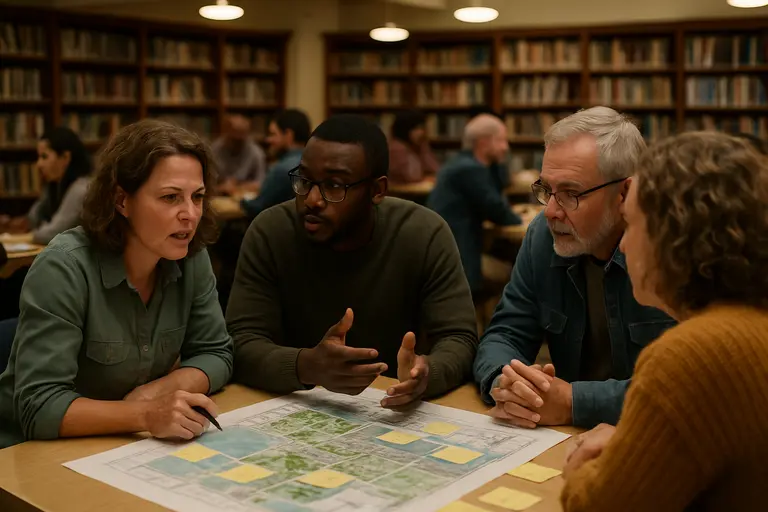
The public hearing on June 11, 2026, was one formal engagement point, but the district’s materials described a broader process around facility planning. Poway Unified reported surveys, advisory feedback and open-ended community input on school facility priorities. Those channels can help district officials document what residents value most, though the district’s published information should remain the reference point for verified decisions and dollar amounts.
For a school district, engagement has a practical budget function. It can identify whether families are most concerned about classroom upgrades, safety improvements, aging systems, playground surfaces, heating and cooling controls or instructional support. It also gives the Board a record of community priorities when budget solutions require tradeoffs.
Fiscal Services Reallocations Were Also Approved
In May 2026, the Board approved salary reallocations for seven Fiscal Services position classifications. District materials said the purpose was better internal compensation alignment, with retroactive adjustments from July 1, 2023. Affected classifications identified by the district included Accountant II, Budget Analyst, Food and Nutrition Procurement Specialist and Senior Accountant.
That action was narrower than the districtwide budget discussion, but it sits within the same fiscal structure. Administrative, instructional, facilities and support costs all feed into the district’s annual spending plan. The official update described both systemwide revenue and targeted personnel classification decisions, giving residents a more complete view of how budget decisions appear at different levels.
Poway USD Budget Signals Local Tradeoffs
What Residents Can Track Next
The Poway USD Budget record for 2026-27 points to several items residents can continue to monitor through official Board materials: whether pending state funding estimates are finalized, how the proposed $13 million in budget solutions is implemented, how special education and instructional support costs develop, and which facility projects move from planning or listing into completed work.
The most direct civic step for residents is to review district agendas, staff reports and budget updates before Board meetings and public hearings. Families and employees can also compare future updates against the figures the district reported in 2026, including the March 12 revenue and expenditure projections, the June 11 public hearing materials and the facility priorities identified through community input.
The district’s materials show that the budget update was not a single-number story. It combined state revenue changes, spending obligations, maintenance priorities, staff classification decisions and public input on a possible bond. The result is a local finance picture that requires residents to look at both the operating budget and the condition of school facilities when assessing the 2026-27 plan.