

Michigan State Parks Advance Inclusive Recreation Access Across the 2026 Season
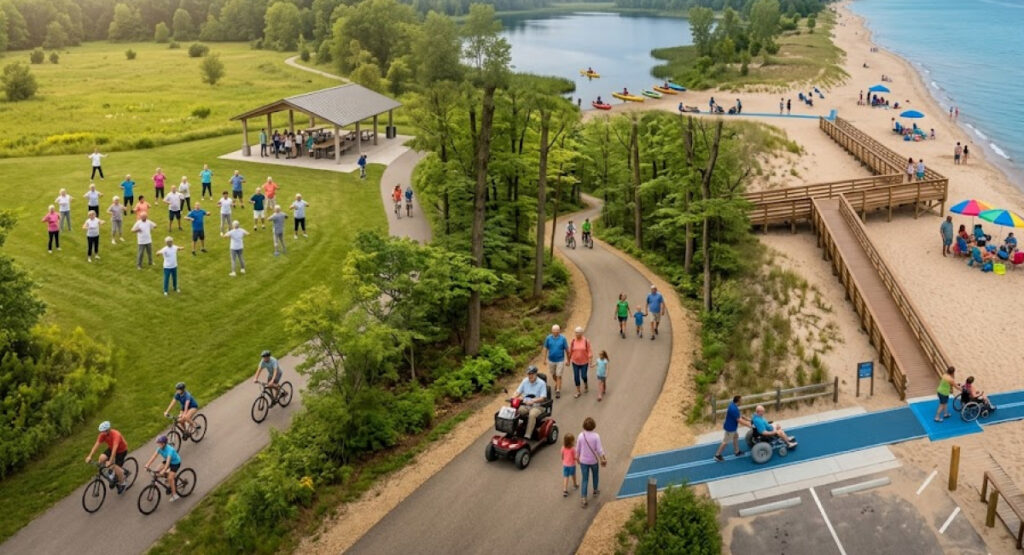
Michigan’s state park system enters the 2026 recreation season with a clear focus on widening access to outdoor spaces for residents across all ages and abilities. The Michigan Department of Natural Resources (DNR) has continued updating programming across major sites such as Holland State Park, Ludington State Park, Tahquamenon Falls State Park, and Sleeping Bear Dunes National Lakeshore, placing stronger emphasis on accessibility, wellness participation, and community-based outdoor engagement.
The shift reflects growing demand for public recreation environments that support mobility access, sensory-friendly programming, and intergenerational participation. Rather than treating accessibility as an add-on feature, several parks now integrate it into core programming structures, from trail design to seasonal events.
Public recreation specialists in Michigan have noted that participation in state park programming has been increasing steadily since 2023, especially among senior groups and families with young children. The 2026 season builds on that momentum with expanded interpretive programs, adaptive equipment availability, and structured wellness activities.
A broader policy direction from the DNR aligns with national recreation standards outlined by the National Recreation and Park Association (NRPA), which continues to emphasize equitable access and community health outcomes in public park systems.
Reference: NRPA Inclusive Recreation Standards
Accessibility Infrastructure Upgrades Across Key Michigan Parks
Infrastructure improvements remain central to the 2026 expansion strategy. Michigan state parks have introduced physical and programmatic changes that directly affect how residents experience outdoor environments.
At Holland State Park, upgraded beach access points now include improved mobility mats and redesigned entry pathways to support wheelchair access to shoreline areas. At Ludington State Park, trail segments near the Hamlin Lake area have been modified with smoother gradients and clearer signage to assist visitors with cognitive and mobility challenges.
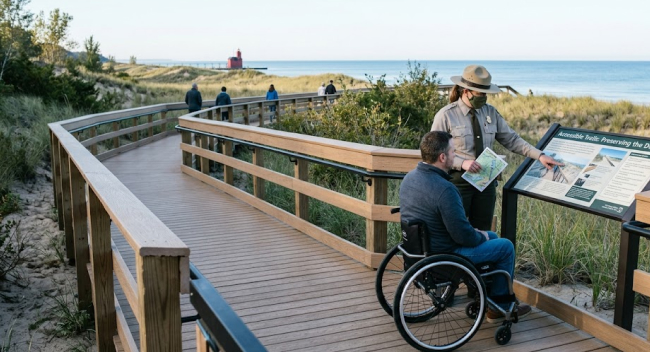
These changes are part of a broader statewide initiative to reduce physical barriers in high-traffic recreational zones. Park administrators have also focused on improving restroom accessibility and expanding parking accommodations near trailheads and activity hubs.
A key driver behind these improvements is increased visitation diversity. Michigan’s park system recorded millions of annual visitors prior to 2026, with demographic studies showing a steady rise in older adult participation and family-oriented group usage.
For broader context on public park accessibility standards and design frameworks, the Centers for Disease Control and Prevention (CDC) provides guidance on inclusive community environments and physical activity access.
Reference: CDC Inclusive Physical Activity Guidelines
Community Wellness Programming in Oakland County and Regional Parks
Beyond infrastructure, Michigan’s inclusive recreation expansion places strong emphasis on wellness programming delivered through county-level park systems. Oakland County Parks and Recreation has become a leading example of structured wellness engagement through public spaces.
Programs at Independence Oaks County Park, Waterford Oaks Waterpark, and Red Oaks Nature Center now include guided walking groups, outdoor yoga sessions, and senior mobility workshops. These programs are scheduled at consistent intervals to support long-term participation rather than one-time attendance.
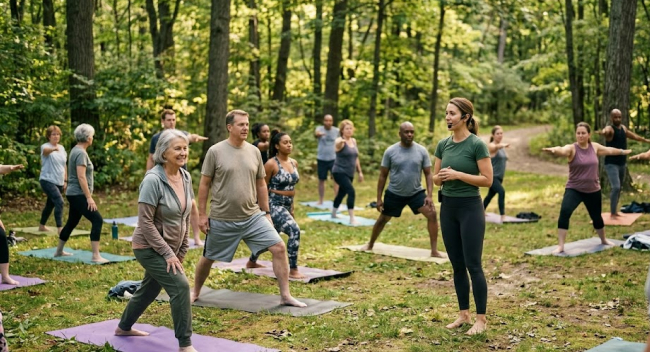
A simplified overview of current wellness program categories shows how participation is distributed across age groups:
| Program Type | Primary Audience | Typical Location | Participation Focus |
|---|---|---|---|
| Guided Walking Groups | Adults & seniors | Independence Oaks County Park | Mobility & cardiovascular health |
| Outdoor Yoga Sessions | Adults | Multiple Oakland County parks | Stress reduction & flexibility |
| Youth Fitness Camps | Children & teens | Regional recreation centers | Physical activity development |
| Senior Mobility Classes | Older adults | Nature centers & community parks | Balance & fall prevention |
This structured approach reflects a broader trend in municipal recreation planning, where parks function as public health extensions rather than purely leisure spaces.
Oakland County’s model also aligns with research published by the Trust for Public Land, which highlights how access to parks correlates with improved mental and physical health outcomes across communities.
Reference: Trust for Public Land Parks & Health Research
Seasonal Events and Intergenerational Programming in Michigan Communities
Community events remain a central pillar of inclusive recreation programming across Michigan. The 2026 season places renewed focus on intergenerational participation, where events are designed to attract mixed-age audiences rather than segmented groups.
Cities such as Ann Arbor, Royal Oak, and Grand Rapids continue to host structured summer programming in public parks, including outdoor concerts, cultural festivals, and family recreation nights. These events are coordinated between city recreation departments and local community organizations to increase accessibility and attendance consistency.
A key development this season is the expansion of multilingual event communication in select urban parks. Cities with diverse populations have introduced translated signage and event descriptions to improve participation rates among non-English-speaking residents.
One example of evolving engagement strategy can be seen in Grand Rapids Parks and Recreation’s summer concert series, which now integrates food vendors, youth activity zones, and community wellness booths into a single event structure.
For municipalities studying effective community engagement frameworks, the U.S. National Park Service (NPS) provides resources on public engagement strategies and inclusive program design for outdoor spaces.
Reference: NPS Community Engagement Resources
Funding Priorities and Long-Term Recreation Development Strategy
The expansion of inclusive recreation programming in Michigan state parks is closely tied to funding allocation strategies at both state and county levels. Budget distribution for 2026 reflects increased investment in accessibility infrastructure, staffing for wellness programming, and digital modernization of recreation services.
A simplified breakdown of investment priorities across Michigan’s park system illustrates current focus areas:
| Funding Area | Primary Objective | Impact Area |
|---|---|---|
| Accessibility Infrastructure | Trail, beach, and facility upgrades | Physical access improvements |
| Wellness Programming | Fitness, senior, and youth activities | Community health outcomes |
| Digital Recreation Systems | Online booking and program access | Service efficiency |
| Community Events | Festivals and seasonal programming | Civic engagement |
The emphasis on digital systems has also improved how residents interact with park services, including program registration, facility reservations, and event updates. This shift has reduced barriers for residents who previously relied on in-person registration methods.
Funding priorities reflect a broader recognition that parks serve multiple civic roles: recreation spaces, wellness hubs, and community engagement platforms.
Localized Impact Across Michigan’s Diverse Park Network
The 2026 inclusive recreation expansion is not uniform across the state. Northern Michigan parks such as Porcupine Mountains Wilderness State Park focus more on accessible nature experiences and guided interpretive programs, while southern urban parks emphasize structured wellness and community events.
This regional differentiation allows Michigan’s park system to serve both high-traffic urban populations and rural communities with distinct recreational needs.
Residents report increased participation in seasonal programming, particularly among seniors and families with young children. The combination of infrastructure upgrades and expanded programming schedules has created more predictable access points for participation throughout the year.
As Michigan continues refining its public recreation strategy, the integration of accessibility, wellness, and community engagement remains central to long-term planning across all state-managed parks.