
California is opening a new pathway for cities, counties, park districts, tribal governments and other eligible public agencies to secure major federal funding for outdoor recreation projects in communities with limited access to public parks. On July 30, 2026, California State Parks announced that eligible applicants can seek up to $15 million per project through the federal Outdoor Recreation Legacy Partnership (ORLP) program, with applications due August 28, 2026. The eighth round of the competitive program has approximately $120 million available nationwide, creating an unusually significant opportunity for communities seeking to acquire land, build new parks or substantially renovate existing outdoor recreation spaces.
The funding opportunity comes as California continues pursuing its broader Outdoors for All strategy, which places greater emphasis on reducing geographic, financial and infrastructure barriers to outdoor recreation. For local governments, the program offers an opportunity to address recreation deficits through substantial capital projects rather than relying exclusively on smaller local grants or municipal budgets. For residents, successful applications could translate into new parks, improved trails, renovated recreation areas and greater access to nature within communities where outdoor space has historically been limited.
A Major Federal Opportunity For California Communities
The ORLP program is administered nationally by the National Park Service (NPS) and funded through the Land and Water Conservation Fund (LWCF). Established in 2014, the program specifically targets communities that lack convenient access to publicly available outdoor recreation. Eligible projects can involve acquiring property for new parks, developing outdoor recreation facilities or substantially renovating obsolete public parks.
California State Parks is serving as the first competitive review layer for applications originating in the state. Local applicants submit their proposals to the California Department of Parks and Recreation’s Office of Grants and Local Services, known as OGALS. The strongest proposals are then advanced for the national NPS competition.
The structure is important because California applicants are competing twice: first against other eligible proposals within the state and subsequently against projects submitted nationwide.
| ORLP California Application Detail | Current Requirement |
|---|---|
| Maximum grant request | $15 million |
| Minimum grant request | $300,000 |
| California application deadline | August 28, 2026 |
| National funding available | Approximately $120 million |
| Program administrator | National Park Service |
| Funding source | Land and Water Conservation Fund |
| Eligible project areas | Qualifying urban areas and federally recognized tribal lands |
| Local match | At least 50% of total project cost |
The scale of the maximum award changes the potential scope of projects considerably. A community seeking the full $15 million could potentially structure a project with a total cost of at least $30 million, because ORLP can provide up to 50% of the total project cost and requires eligible matching funds for the remainder.
For communities already carrying significant park infrastructure needs, that matching requirement may be demanding. At the same time, it creates an incentive to combine local, state and private resources around projects with a clearly defined long-term public benefit.
Targeting Communities With Limited Outdoor Access
The defining feature of the current ORLP round is its focus on recreation gaps.
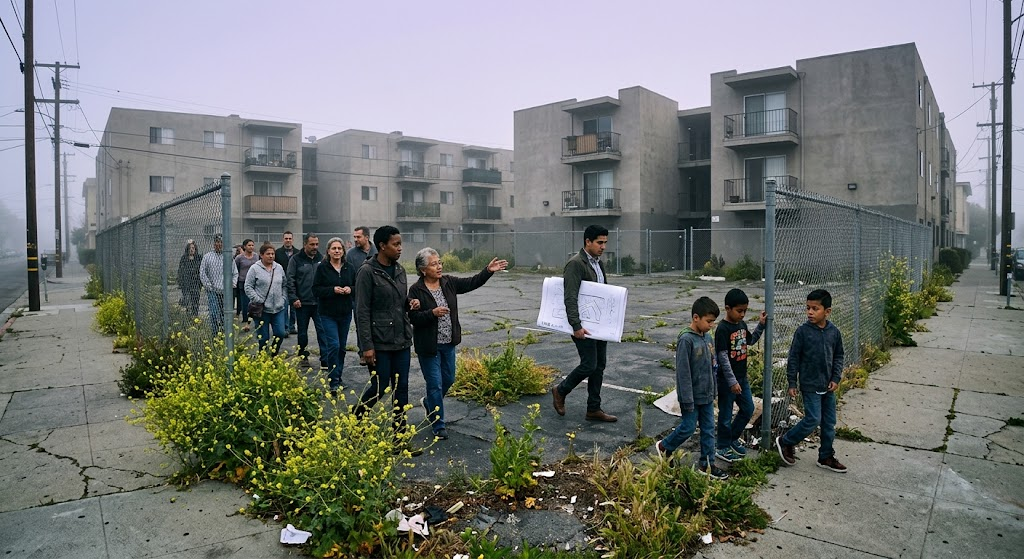
The program is designed for communities where residents have little or no convenient access to public outdoor recreation. California State Parks says the initiative is intended to reduce barriers faced by communities that have historically experienced challenges accessing nature and outdoor recreation.
That emphasis changes the way applicants must think about park development.
A project is not simply competing because it would produce an attractive new park. Applicants must demonstrate why the proposed investment is needed, who would benefit and how the project would address a measurable recreation deficiency.
The eligibility framework generally requires projects to be located within a qualifying urban area with at least 25,000 people, an adjacent urban area whose combined population reaches that threshold, or federally recognized tribal lands. The facilities must also be publicly accessible rather than restricted to a particular private or special-interest group.
This approach makes population density and proximity particularly important.
A neighborhood may contain thousands of residents but still have very limited access to usable green space. A park may technically exist nearby but offer few facilities, poor pedestrian connections or inadequate recreation opportunities. ORLP gives applicants a mechanism to frame those conditions as infrastructure and access challenges rather than simply quality-of-life concerns.
That perspective connects directly with community recreation planning, where the availability, design and location of public recreation infrastructure can influence how effectively communities support physical activity, social interaction and access to nature.
What The $15 Million Maximum Could Fund
The program’s broad eligible uses allow communities to pursue projects considerably larger than conventional neighborhood park improvements.
ORLP funds can support acquisition and development of new outdoor recreation areas as well as substantial renovations of existing public parks. That could include projects that transform underused land into community parks or replace outdated facilities with more accessible recreation environments.
The distinction between renovation and routine maintenance is important.
ORLP is intended for substantial capital improvements rather than ordinary operational expenses. Applicants therefore need to demonstrate a meaningful transformation of a park or recreation area.
Potential projects could include combinations of:
- New public park development and land acquisition.
- Major renovation of aging recreation spaces.
- Trails, walking routes and outdoor activity infrastructure.
- Public recreation facilities designed for broader community use.
- Improvements that create stronger connections between neighborhoods and outdoor spaces.
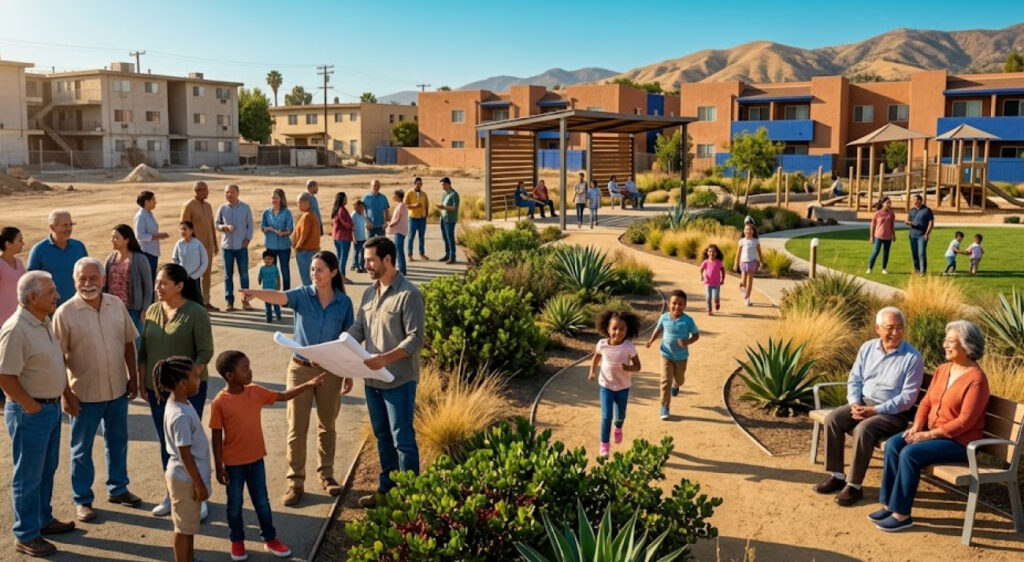
The strongest proposals are likely to be those that connect multiple needs rather than focusing on a single isolated amenity. A new park with walking routes, gathering areas, play facilities and nature-based programming, for example, can serve several age groups while addressing both recreation access and community wellness.
California’s Existing Park Investment Creates A Larger Context
The ORLP opportunity is arriving within a state that already has an extensive history of investing in community parks.
California State Parks reports that nearly 8,000 community parks have been created or improved through its grant funding since 1964. Since 2000, the department says it has administered approximately $4.4 billion in grant funding across California.
The current opportunity therefore represents another layer in a much larger public investment system.
California has also been using different grant programs to address recreation access. In May 2026, State Parks sought public input on a proposed $188.5 million round of its Statewide Park Development and Community Revitalization Program, which similarly focuses on communities needing additional parks and outdoor recreation opportunities.
The coexistence of these programs demonstrates that recreation access is increasingly being treated as an infrastructure issue.
Instead of relying exclusively on individual cities to finance parks through local revenues, California is combining state programs with federal resources and community partnerships. This creates more opportunities for communities to assemble the funding needed for projects that would otherwise remain financially out of reach.
Sweetwater Park Demonstrates The Potential
California already has a recent example of what ORLP funding can help produce.
Sweetwater Park in Chula Vista, developed with the assistance of ORLP funding received by the Port of San Diego, opened in April 2025. The 28.84-acre park includes walking and hiking trails, playgrounds, a boardwalk, wetland overlooks, picnic areas and interpretive gardens.
That project provides an important reference point for communities preparing applications in 2026.
The significance is not simply the size of the property. Sweetwater combines recreation, nature interpretation, family activity and access to a distinctive landscape. Such a model demonstrates how a park investment can provide multiple types of public value within one project.
For California communities considering ORLP proposals, the example also reinforces the importance of thinking beyond traditional athletic fields.

Outdoor recreation has expanded to encompass walking, nature observation, environmental education, accessible play, informal gathering and low-impact activities. A successful modern park can therefore function as both recreation infrastructure and a community environmental asset.
The Matching Requirement Raises The Bar
The opportunity is substantial, but securing the maximum award will require substantial local commitment.
California’s ORLP guidance states that the federal grant can provide up to 50% of total project costs. Applicants must have at least 50% of the project cost from eligible matching sources. State, local and private funds can qualify, while only certain federal programs can be used as match.
That requirement creates an important strategic distinction between communities that have a project idea and communities that are ready to execute one.
A $15 million federal award would not mean a $15 million project. At the maximum award level, an applicant would need to demonstrate the ability to fund a project costing at least $30 million.
That can require coordination among municipal governments, park districts, foundations, state agencies and other funding partners.
It also means that project readiness matters. California’s guidance requires applicants to have funding committed to fully fund the project at the time of application because ORLP operates on a reimbursement basis. Applicants must also demonstrate ownership of the relevant park property or, in acquisition projects, establish how the entire property will be acquired.
The August 28 Deadline Creates A Narrow Window
California’s application deadline is August 28, 2026, giving eligible agencies only a limited period to finalize competitive proposals.
State Parks hosted virtual workshops on August 5 and August 6 to explain the application process and help potential applicants understand the requirements. After the California deadline, OGALS will conduct its competitive review through September and October.
The process then moves to the federal level.
California’s selected applications must be submitted to the National Park Service by November 1, 2026. The national review committee is expected to select projects around May 2027, after which successful applicants must complete additional federal requirements before receiving a funding agreement.
This timeline illustrates that the August deadline is only the beginning of a multistage process.
| Stage | Expected Timing |
|---|---|
| California application deadline | August 28, 2026 |
| California competitive review | September–October 2026 |
| NPS application submission | November 1, 2026 |
| Estimated national selection | May 2027 |
| Federal post-selection requirements | Up to one year |
| Estimated funding agreement period | 2028–2034 |
| Project completion | Up to five years after agreement |
The extended timeline is significant for local planning because successful applicants will need to maintain financial, environmental and administrative readiness long after the initial application.
Park Access Becomes A Community Wellness Issue
The strongest rationale for the program may ultimately be its connection between physical infrastructure and community health.
A public park located close to where people live can make outdoor activity easier to incorporate into daily routines. Walking paths can support regular physical activity, playgrounds can provide space for children, and shaded gathering areas can encourage social interaction. Natural areas can also provide opportunities for environmental education and quieter forms of recreation.
California State Parks Director Armando Quintero specifically framed the ORLP opportunity around community health and wellness when announcing the current funding round.
That framing reflects a broader shift in how public recreation infrastructure is evaluated.
The question is increasingly not simply whether a community has a park, but whether residents can realistically access a high-quality outdoor space and whether that space supports the activities and populations that need it.
This distinction is especially relevant in urban and densely populated areas, where undeveloped land is scarce and the cost of creating new public recreation facilities can be prohibitive.
Federal Funding Could Reshape Local Park Planning
The current ORLP round gives California communities an opportunity to address recreation deficits at a scale that ordinary municipal budgets often cannot match.
With approximately $120 million available nationwide and individual awards reaching $15 million, the competition will be intense. California’s first-stage review means local applicants must demonstrate both project quality and alignment with the program’s specific access objectives before reaching the national competition.
The significance extends beyond the immediate application cycle.
If communities use the opportunity to establish stronger connections between neighborhoods and parks, renovate obsolete facilities and create new outdoor spaces where recreation opportunities are limited, the resulting projects can influence local development for decades.
The program also illustrates a broader evolution in public park planning: access, wellness, environmental quality and community infrastructure are increasingly being treated as interconnected objectives. California’s current funding opportunity places those principles into a concrete competitive process, with agencies now deciding which projects are ready to turn those objectives into permanent public spaces.