

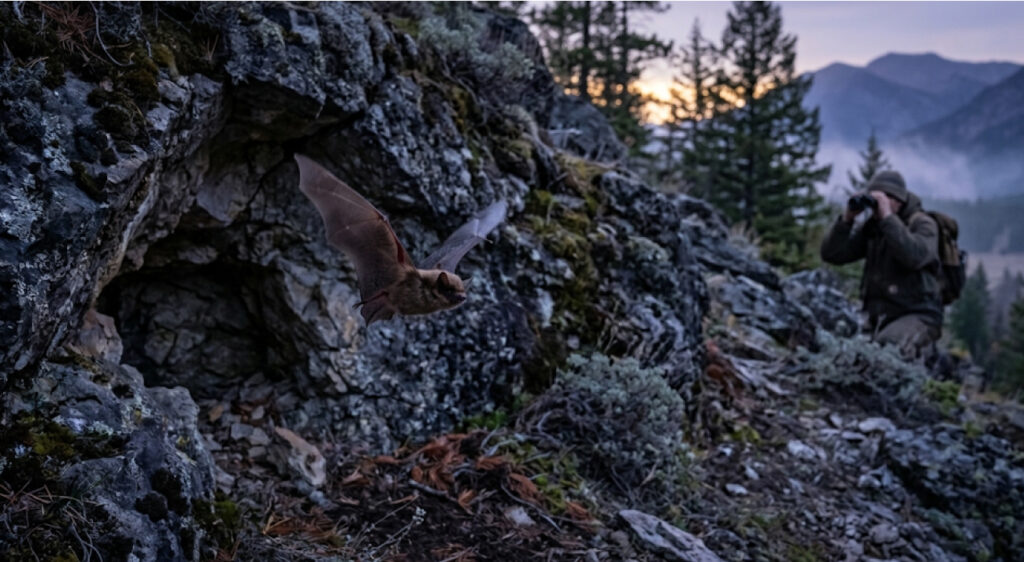
Glacier National Park has confirmed its first detection of white-nose syndrome in bats, marking a significant development for wildlife conservation in northwestern Montana. The National Park Service announced on October 21, 2026, that a deceased little brown bat found in the Saint Mary area had tested positive for the disease, while samples collected from live bats earlier in the summer confirmed the presence of the fungus responsible for white-nose syndrome.
The finding represents the first confirmed detection of both white-nose syndrome and its causative fungus, Pseudogymnoascus destructans, in Glacier National Park and Glacier County.
The discovery comes after more than a decade of bat monitoring in the park. Glacier biologists have documented 10 bat species and have been tracking their populations, health and habitat use since 2011. The monitoring program has become increasingly important as white-nose syndrome has spread across North America and caused severe declines among several hibernating bat species.
The new detection gives researchers an opportunity to study how the disease affects Glacier’s bat populations while continuing work on potential tools to protect them.
How White-Nose Syndrome Reached Glacier National Park
White-nose syndrome is caused by the cold-loving fungus Pseudogymnoascus destructans. The disease affects bats primarily during hibernation, when the animals depend on stored fat reserves to survive periods when food is unavailable.
The fungus can grow on the skin of hibernating bats, including their muzzles, ears and wings. Infection can disrupt normal hibernation behavior, causing bats to wake more frequently. Each arousal requires energy, forcing affected bats to consume fat reserves that would normally sustain them through the winter.
Over time, repeated arousals can contribute to dehydration, starvation and death.
The disease was first detected in New York in 2006 and has since spread across much of North America. The U.S. Geological Survey reported in August 2026 that white-nose syndrome has contributed to population declines of more than 90% in northern long-eared bats, little brown bats and tricolored bats.
The Glacier detection therefore represents more than a new disease record for the park. It places an established conservation concern directly within one of America’s major protected landscapes.
The National Park Service says white-nose syndrome has been confirmed in 42 states and nine Canadian provinces. Millions of bats have died since the disease emerged.
A Deceased Little Brown Bat Provided The First Confirmation
The first confirmed case in Glacier came from a little brown bat discovered dead in the Saint Mary area in May 2026.
Park officials collected samples from the animal and later confirmed the presence of white-nose syndrome. Additional testing provided evidence that the fungus was also present in multiple live bats on the park’s east side.
Those findings are significant because detecting the fungus in live animals provides researchers with information about the disease’s presence before large-scale population effects can necessarily be observed.
The little brown bat, Myotis lucifugus, is one of the species known to occur in Glacier National Park. The species has also experienced major declines in parts of North America affected by white-nose syndrome.
Glacier’s biologists have been building a long-term record of the park’s bat community since 2011. That history provides a valuable baseline against which future changes can be compared.
Instead of relying on a single observation, researchers can examine multiple years of information about species distribution, occupancy, health and survival.
That makes the park’s monitoring program particularly relevant now that the disease has been detected.
Glacier Has Documented 10 Bat Species
Glacier National Park’s bat community includes 10 documented species, according to the National Park Service. They include the big brown bat, silver-haired bat, eastern red bat, hoary bat, California myotis, long-eared myotis, little brown bat, long-legged myotis, Yuma myotis and western small-footed bat.
The diversity matters because different bat species can respond differently to disease, changes in habitat and environmental conditions.
Bats also perform an important ecological role in Glacier. All of the park’s bats feed on insects, while bats themselves provide prey for other wildlife, including raptors and weasels. A major reduction in bat numbers could therefore affect relationships between predators, prey and insect populations.
The ecological effects may extend beyond park boundaries as well.
Glacier National Park forms part of a larger landscape connecting protected areas and surrounding communities in Montana and Canada. Wildlife does not recognize park boundaries, meaning changes in animal populations can influence ecosystems across a much wider area.
The National Park Service has warned that significant bat declines could have consequences for both Glacier’s ecosystem and neighboring landscapes.
Scientists Have Been Preparing For The Disease
The confirmation did not come without years of preparation.
Glacier National Park has monitored bat diversity, occupancy and health since 2011 with support from the Glacier National Park Conservancy, the Natural Resource Fund Source and the National Fish and Wildlife Foundation. Researchers have used field surveys and other monitoring methods to establish information about the park’s bat populations.
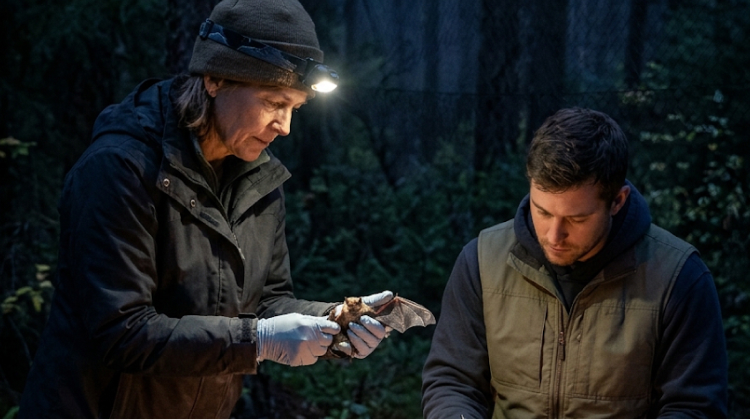
That work became especially valuable because scientists had been anticipating the possibility that white-nose syndrome would eventually reach the area.
The National Park Service has also conducted vaccine research involving bats in Glacier. Between 2024 and 2026, park biologists captured and processed 529 bats as part of a study evaluating a vaccine intended to protect bats from white-nose syndrome.
Of those animals, 265 received the vaccine and 264 received a placebo.
Each bat was fitted with a tag so researchers could monitor survival after the animals emerged from hibernation. Comparing the two groups can help scientists evaluate whether vaccination provides meaningful protection under wild conditions.
The timing of the study could prove particularly valuable now that white-nose syndrome has been detected in the park.
Researchers have already established vaccinated and control groups, creating an opportunity to gather information as the disease becomes part of Glacier’s natural environment.
The Vaccine Research Could Become More Important
White-nose syndrome remains difficult to control because the fungus can persist in cold, underground environments for long periods.
Researchers across the United States are therefore exploring strategies that could reduce mortality rather than relying solely on measures designed to prevent geographic spread.
The U.S. Geological Survey’s National Wildlife Health Center has been developing and testing vaccine approaches for wild bat populations. Its August 2026 update states that scientists are evaluating tools and management strategies intended to protect bats affected by white-nose syndrome.
Glacier National Park’s research contributes to that broader effort.
The park provides a valuable field environment because researchers can follow individual animals over time and compare survival patterns. The 529 bats processed during the 2024–2026 study provide a substantial group for continued monitoring.
The discovery of white-nose syndrome also changes the scientific questions researchers can ask.
Before the disease arrived, scientists could establish baseline conditions. Now they can examine how infection affects survival, behavior and population trends in a landscape where long-term monitoring was already underway.
That transition from prevention and preparation to active disease observation could make Glacier an important field location for future research.

White-Nose Syndrome Is Not A Human Health Threat
The confirmation may sound alarming to visitors, but the National Park Service emphasizes that white-nose syndrome does not infect humans or pets.
People should still avoid touching bats because bats can carry other diseases, including rabies, and because physical contact can place unnecessary stress on wildlife.
The bigger concern involving people is the accidental movement of fungal material between bat habitats.
The fungus can persist on contaminated clothing, footwear and caving equipment. Visitors who explore caves or other environments occupied by bats should follow applicable decontamination guidance to reduce the possibility of transporting fungal material to another location.
The National Park Service advises people never to handle or pick up a bat. Anyone who encounters a dead or sick bat in the park should report the animal to a ranger rather than approaching it.
For most Glacier visitors, the appropriate response is therefore simple: observe wildlife from a distance and allow trained biologists and park staff to handle monitoring and disease investigations.
Why Bats Matter To Glacier’s Ecosystem
Bats are sometimes overlooked because many species are active at night, but they play an important role in natural ecosystems.
The bats documented in Glacier consume insects, providing a natural form of insect control. Their presence also supports food webs because bats can serve as prey for other animals.
USGS research has highlighted the broader ecological value of bats. In addition to their role in natural ecosystems, insect-eating bats can consume agricultural pests and provide services that benefit farmers.
For Glacier, the significance is closely tied to maintaining ecological balance.
A reduction in bat populations would not necessarily produce an immediate visible change for visitors hiking through the park. Instead, impacts could emerge gradually through altered predator-prey relationships and changes in insect populations.
That is one reason long-term monitoring is essential.
A single dead bat does not reveal the full population impact of white-nose syndrome. Researchers need repeated observations across multiple seasons and years to determine whether the disease is causing measurable declines among Glacier’s bat species.
What Happens Next For Glacier’s Bats
The October 2026 confirmation gives Glacier National Park a new conservation challenge, but it also provides scientists with an opportunity to apply years of monitoring and research.
Park biologists are expected to continue tracking bat health and survival while participating in ongoing vaccine research. The information gathered from tagged animals could help researchers determine whether vaccinated bats experience different survival outcomes from animals that received a placebo.
Continued surveillance will also help establish how widespread the fungus is within the park and whether additional species become infected.
The results could become increasingly important as bats enter the winter period. White-nose syndrome primarily affects hibernating bats, making the months ahead an important period for researchers watching for changes in survival and behavior.
The park’s long-running monitoring program gives scientists a foundation for evaluating those changes.
Glacier National Park has spent years documenting its bat community before white-nose syndrome arrived. Now, researchers have to determine what happens after its arrival.
The first detection of white-nose syndrome is a serious development for Glacier’s wildlife, but the park is better positioned to study the disease because of the research infrastructure already in place. Continued monitoring, vaccine testing and responsible visitor behavior can all contribute to protecting the park’s 10 documented bat species.
For visitors, the message is straightforward: bats remain an important part of Glacier’s ecosystem, and the best way to help protect them is to give wildlife space, report unusual or dead animals to park staff and follow official guidance around bat habitat.
The disease has already transformed bat populations across much of North America. Glacier’s scientists now have an opportunity to document that transition carefully and contribute information that could help shape conservation strategies for bats far beyond Montana.