


Hā‘ena State Park on the north shore of Kauaʻi is reopening to visitors on Thursday, October 15, 2026, after more than five weeks of restricted access following Hurricane Lowell. The Hawaiʻi Department of Land and Natural Resources (DLNR) announced the reopening on October 13, confirming that park access, shuttle service, and selected hiking routes would resume while several activities remain suspended.
The park closed on September 6 as the storm approached. Officials extended the closure to give park staff time to assess hazards and complete repairs before allowing visitors back into an area known for its steep coastal terrain, beaches, tropical vegetation, and access to the Nāpali Coast.
The reopening brings relief to hikers, beachgoers, local residents, and businesses connected to outdoor tourism on Kauaʻi’s north shore. However, it does not mean every trail or overnight activity is available again. State officials are maintaining restrictions on parts of the Kalalau Trail and overnight camping while the recovery process continues.
According to the official DLNR announcement, Hā‘ena State Park will operate from 7 a.m. to 6:45 p.m. daily, including holidays, unless an emergency closure is issued. Visitors should confirm current conditions and reservation availability before traveling to the park.
Hā‘ena State Park Reopens After A Five-Week Closure
The September 6 closure was prompted by concerns about public safety as Hurricane Lowell approached Hawaiʻi. Rather than reopening immediately after the storm passed, DLNR extended restrictions to allow park personnel to conduct hazard assessments and carry out repairs.
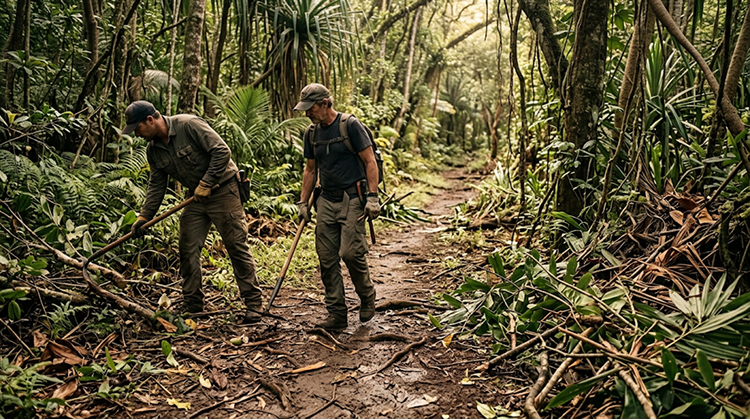
That decision reflects the practical demands of managing a popular coastal park after severe weather. Storm impacts can leave unstable trees, damaged paths, debris, and other hazards that are difficult to assess fully until staff can inspect affected areas. A reopening date therefore depends on more than the end of a storm warning: officials must also determine whether visitors can safely use the facilities and routes being returned to service.
The October 13 announcement named Alan Carpenter, State Parks administrator, among the officials overseeing the reopening effort. Carpenter credited park employees and community partners Hui Makaʻāinana o Makana and the Hanalei Initiative with helping clear downed and damaged trees and prepare the park for public use.
The reopening also comes with economic implications. Carpenter said approximately 50 local jobs are supported by Hā‘ena State Park. Park access contributes to visitor spending and supports services connected to transportation, guiding, food, lodging, and outdoor recreation in the surrounding area.
At the same time, officials must protect a landscape that attracts substantial visitor interest. The state’s approach combines reopening selected facilities with continued limits in locations where access has not yet been restored.
For current information, visitors can consult the Hawaiʻi Division of State Parks’ Hā‘ena page, which publishes park information and important notices.
Which Trails And Activities Are Open Again?
The October 15 reopening restores day-use hiking to Hanakāpīʻai Beach and Valley and to Hanakāpīʻai Falls. Shuttle service to Hā‘ena State Park is also resuming, allowing visitors to return to the park without relying entirely on private vehicles.
These routes are significant because Hā‘ena serves as a gateway to some of Kauaʻi’s most recognizable coastal scenery. Visitors can access Kē‘ē Beach and the beginning of the Kalalau Trail from the park. The route toward Hanakāpīʻai passes through a landscape of forested slopes, coastal views, stream crossings, and changing trail conditions.
However, visitors must pay attention to the distinction between day-use access and access to the more remote sections of the trail.
The Kalalau Trail extends approximately 11 miles along the Nāpali Coast. Its terrain and exposure make trail conditions especially important, and a general park reopening does not automatically authorize travel along its entire length. The state has confirmed that hiking beyond the two-mile point on the Kalalau Trail will remain closed until further notice. Overnight camping also remains unavailable.
Visitors should treat those restrictions as firm limits rather than estimates of when additional areas might reopen. The state has not announced a date for restoring the closed trail sections or overnight camping.
Before leaving, hikers should check the official Kalalau Trail information page and the park’s current notices. Conditions can change, and the reopening announcement does not guarantee that every route will be suitable for every visitor.
Reservation Rules And Park Hours For Visitors
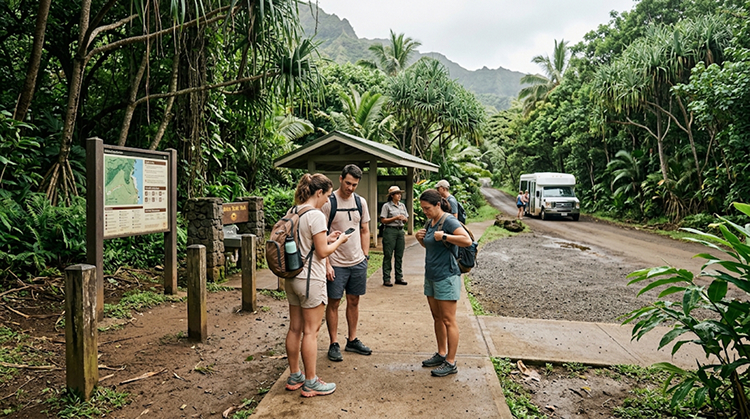
Hā‘ena State Park uses a reservation and transportation system to manage visitor numbers and reduce traffic pressure on Kauaʻi’s north shore. Those rules remain relevant as the park reopens.
The park’s published hours beginning October 15 are 7 a.m. to 6:45 p.m. daily, including holidays, unless an emergency closure occurs. Shuttle service is scheduled to resume on the same date.
For visitors who live outside Hawaiʻi, the state directs people to make reservations through the Go Hāʻena website. The DLNR announcement lists an entrance fee of $5 per person for out-of-state visitors, with children aged three and younger admitted free. Out-of-state parking reservations cost $10 per vehicle.
Hawaiʻi residents with a state driver’s license or state identification card can enter free of charge and do not need a reservation for day passes. Thirty parking stalls are reserved for residents. Everyone in the vehicle must show valid Hawaiʻi identification, according to the state’s reopening notice.
Visitors should review the booking requirements before setting out. Shuttle reservations, parking availability, and entry arrangements are distinct parts of the park’s access system. Having accommodation booked elsewhere on Kauaʻi does not guarantee entry to Hā‘ena on a preferred day.
The Go Hāʻena visitor information and frequently asked questions page provides details about reservations, shuttle arrangements, cancellations, and trail restrictions. Checking that information shortly before a visit is particularly useful during a post-storm reopening, when conditions or operational arrangements may change.
Why Visitor Management Matters At Hā‘ena
Hā‘ena’s reopening is part of a longer effort to balance public access with the protection of natural and cultural resources and the needs of nearby communities.
The park and neighboring Nāpali Coast State Wilderness Park experienced a major disruption after severe flooding in April 2018. Both areas remained closed from April 2018 until June 2019 while officials repaired infrastructure and introduced a different approach to visitor management.
That earlier closure was far longer than the current Hurricane Lowell-related shutdown. It also exposed how vulnerable the area’s roads, trails, parking facilities, and utility systems can be during severe weather.
In its account of the recovery, DLNR described damage to the park entrance and infrastructure, including a washed-out section of a stream crossing and a damaged water line. Repairs and improvements formed part of a broader plan to improve park management and reduce pressure on the surrounding community.
The state subsequently introduced advance reservations, visitor limits, and shuttle-based access. The goal was to manage demand while reducing congestion and the effects of large visitor numbers on a rural area with limited road access.
The department’s historical account of the Hā‘ena and Nāpali Coast reopening explains how the post-2018 recovery shaped the modern access system.
The current reopening follows the same broad principle: visitor access should resume when staff can support it safely, while restrictions remain where officials have not cleared activities to restart. The storm-related closure also highlights why visitors should avoid assuming that a destination’s previous operating arrangements will always remain unchanged.
For ITPR, Hā‘ena offers a useful example of how public recreation, disaster recovery, conservation, and local economic interests intersect. The park is an important destination, but its long-term accessibility depends on the condition of its infrastructure and the ability to manage use responsibly.
Local Jobs And Community Partnerships Shape The Reopening
Hā‘ena State Park’s recovery involves more than clearing trails and restoring visitor access. The surrounding community has a direct stake in how the park is managed and how quickly operations can safely resume.
Carpenter’s October 13 statement emphasized the contributions of Hui Makaʻāinana o Makana and the Hanalei Initiative, which worked with park personnel during preparations for reopening. Those partnerships reflect the importance of local knowledge and ongoing community participation in managing a culturally significant landscape.
The approximately 50 local jobs associated with the park, cited by Carpenter, help explain the economic importance of reopening. Visitor access supports work across several connected sectors, including transportation, hospitality, guiding, and recreation services.
Still, economic considerations must be weighed against safety and environmental conditions. Opening too early could expose visitors to hazards and complicate repair work; keeping the park closed longer than necessary can interrupt local livelihoods and access to a valued public destination.
The decision to reopen selected activities while maintaining restrictions reflects that balance. Visitors can return to the park and resume designated hikes, but overnight camping and hiking beyond the two-mile point of the Kalalau Trail remain prohibited until further notice.
That approach also places responsibility on visitors. Following reservation instructions, respecting barriers and closure signs, and checking official notices can help reduce pressure on park staff and local communities during recovery.
ITPR’s coverage of park access and conservation updates follows these issues across U.S. recreation areas, where maintaining public access often requires coordination between agencies, local organizations, and visitors.
What Visitors Should Check Before Traveling
Anyone planning a trip to Hā‘ena should verify the latest operating conditions before leaving their accommodation or heading toward Kauaʻi’s north shore. The October 15 announcement establishes the planned reopening arrangements, but emergency closures or new safety notices can still affect access.
Three checks are particularly useful:
- Confirm reservations and transportation. Out-of-state visitors should use Go Hāʻena to review available entry, parking, or shuttle options. Hawaiʻi residents should bring valid state identification to qualify for resident access and the reserved parking arrangements.
- Verify which trail sections are open. Day-use hiking to Hanakāpīʻai Beach and Valley and Hanakāpīʻai Falls is reopening, but hiking beyond the two-mile point on the Kalalau Trail and overnight camping remain closed.
- Review weather and trail conditions. Heavy rain, stream conditions, unstable terrain, and other hazards can affect coastal hiking. Visitors should follow posted warnings and directions from park staff rather than assuming conditions are safe because the park is open.
The official Hā‘ena park conditions page and the state’s important park notices are useful resources before departure.
Hikers should also bring suitable footwear, drinking water, sun protection, and enough time to complete their planned route within park hours. Anyone unfamiliar with the terrain should choose a hike that matches their experience and current conditions.
The reopening is welcome news for Kauaʻi’s north shore, but the continued closures make clear that recovery is still underway. Hā‘ena State Park is returning to public use with a defined set of activities and access rules—not a blanket declaration that every part of the area has returned to normal.
As visitors return on October 15, the most reliable approach is to plan around the confirmed openings, respect the remaining restrictions, and check official updates before every visit.
A Carefully Managed Return To Kauaʻi’s North Shore
Hā‘ena State Park’s October 15 reopening restores access to an important outdoor destination after a closure that began with Hurricane Lowell on September 6. The return of shuttle service and designated day hikes offers a clear step forward for visitors and the local economy.
Yet the continued restrictions on overnight camping and hiking beyond the first two miles of the Kalalau Trail show that recovery decisions remain tied to safety assessments and park operations. The state’s experience following the 2018 floods also demonstrates why access management, infrastructure, and community involvement are central to the park’s future.
Visitors who confirm reservations, review current trail notices, and follow the state’s rules can help support a safer return to Hā‘ena while park officials continue managing conditions after the storm.