

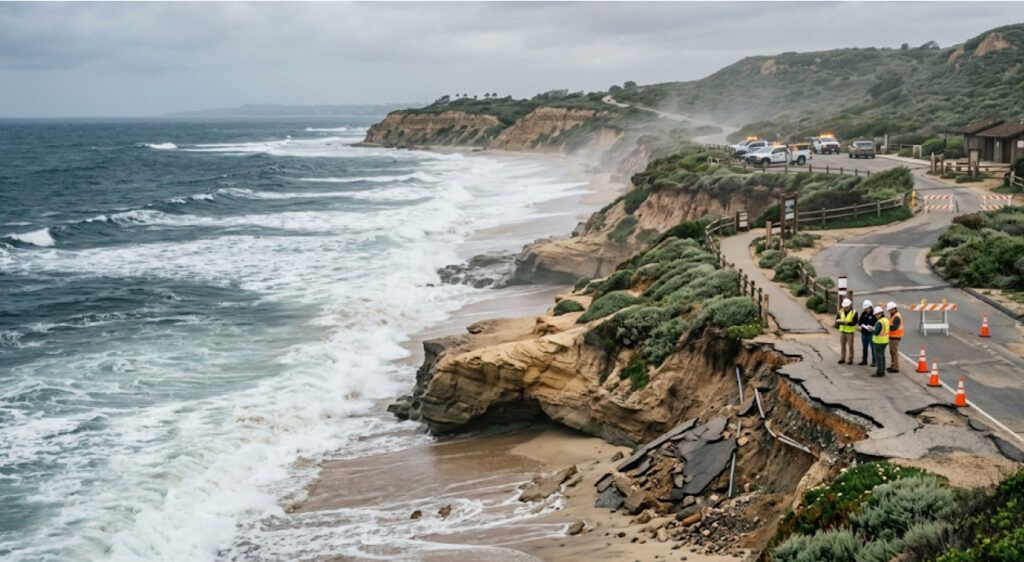
Tropical Storm Rachel brought powerful surf and elevated tides to Southern California in October 2026, damaging coastal roads, parking areas, utilities and shoreline infrastructure at two major public recreation destinations: Crystal Cove State Park in Orange County and San Onofre State Beach farther south. On October 9, California State Parks announced temporary closures and emergency work at both locations after waves and high tides accelerated coastal erosion. The response included evacuating 26 historic cottages at Crystal Cove, restricting vehicle access at San Onofre’s Surf Beach and preparing threatened facilities for removal or additional protection. California State Parks’ official announcement described the closures as necessary to protect visitors, limit further damage and give crews room to conduct emergency repairs.
The impacts extend beyond a temporary loss of beach access. Both parks depend on roads, parking facilities, water infrastructure and pedestrian routes positioned close to an active coastline. When strong surf removes sand from the shoreline or undermines the ground supporting these facilities, repairs can involve utility relocation, structural assessments and decisions about whether infrastructure can safely remain in its existing location.
The October storm also arrived after earlier coastal impacts in the region, highlighting the difficulty of maintaining public recreation facilities where high tides, waves and erosion repeatedly affect the same stretches of shoreline.
High Surf Damaged Infrastructure At Two California Parks
The October 9 announcement identified different but related problems at Crystal Cove and San Onofre. At Crystal Cove State Park, coastal erosion damaged portions of the roadway near the Historic District and threatened historic buildings, beach access points and utilities. At San Onofre State Beach, the Surf Beach shoreline suffered erosion that damaged roadway sections, parking areas and utility infrastructure.
These facilities support very different visitor experiences. Crystal Cove combines a natural seashore with a historic coastal settlement and beach access. San Onofre’s Surf Beach attracts surfers, walkers and cyclists, while its parking lots and restrooms support daily use of the shoreline.
In both places, infrastructure damage creates a chain reaction. A damaged road or parking area can restrict access even where parts of the beach remain usable. A broken water main can make restrooms unavailable. Construction equipment and repair crews may then require additional closures to maintain a safe working area.
The distinction between a closed facility and a closed park is important. California State Parks did not announce a complete shutdown of both destinations. Instead, it imposed restrictions on affected areas while allowing certain activities to continue outside designated work zones, subject to changing conditions.
The department also warned that the closures could change as the storm’s effects developed and inspections revealed the extent of the damage.
Crystal Cove Evacuated 26 Historic Beachfront Cottages
At Crystal Cove State Park, the most visible immediate concern involved the Historic District, a collection of vintage coastal cottages that reflects the area’s history as a seaside settlement.
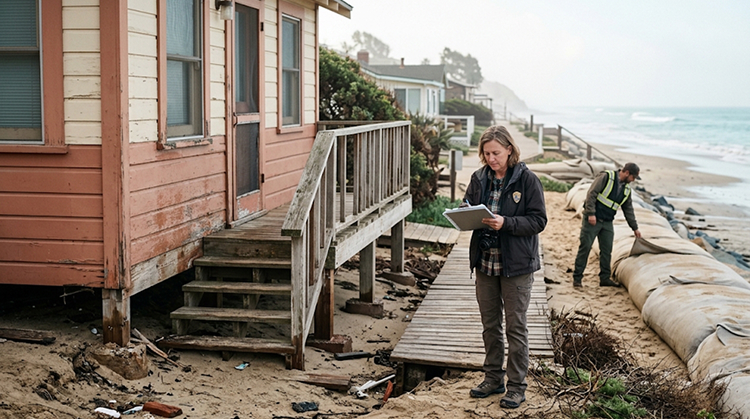
California State Parks ordered occupants of 26 cottages in vulnerable locations to evacuate as a precaution. Reservations were canceled through at least October 13, with extensions possible depending on conditions. Crews were assessing damage to historic facilities, beach access areas and utilities while considering temporary protection measures.
The Historic District contains 46 vintage rustic coastal cottages, originally built during the 1930s and 1940s. Their location close to the beach gives the district much of its historic character, but it also exposes buildings and supporting infrastructure to waves, coastal flooding and shoreline retreat. The official Crystal Cove State Park page provides information about the district and the park’s current restrictions.
To limit further damage, State Parks began installing temporary sand-filled barriers in vulnerable locations. These barriers are intended to absorb some wave energy, reduce erosion and provide a degree of short-term protection for threatened buildings and historic resources.
Such measures are emergency responses rather than guarantees against future damage. Their effectiveness depends on wave conditions, the amount of sand available, the shape of the shoreline and whether water can move around or behind the protected area.
For Crystal Cove, the immediate task is to stabilize vulnerable areas and determine which facilities can safely remain in use. Longer-term decisions will need to account for the historic value of the cottages as well as the physical risks associated with maintaining buildings and access routes beside an exposed coast.
Emergency Repairs Must Account For Continuing Coastal Erosion
California State Parks said it was assessing damage and considering emergency shoreline protection and restoration options at both parks. At San Onofre, the department was coordinating with relevant regulatory agencies and U.S. Marine Corps Base Camp Pendleton, which owns the land at the affected state beach.
That coordination reflects the practical demands of coastal emergency work. Repairs may involve park managers, construction contractors, utility specialists, environmental regulators and neighboring landowners. The work also has to accommodate active surf, shifting sand and limited access for heavy equipment.
The first priority is to protect people and stabilize damaged facilities. Crews must secure dangerous areas, assess road and utility conditions, remove debris and determine which structures pose an immediate risk. Only after those steps can managers evaluate the best way to restore public access.
Temporary barriers may reduce wave impacts at specific locations, but they cannot stop all coastal erosion. A high-energy wave event can move large amounts of sand, expose previously buried infrastructure and undermine ground that appeared stable before the storm.
For public parks, this creates a recurring management problem: restoring the facilities people rely on while recognizing that the coastline itself continues to change. Repairing a damaged road without assessing the erosion pattern around it may leave the replacement vulnerable to another high-water event.
The two parks’ experience offers a concrete example of why emergency maintenance and longer-term shoreline planning need to be considered together.
San Onofre’s Surf Beach Lost Water Service And Parking Access
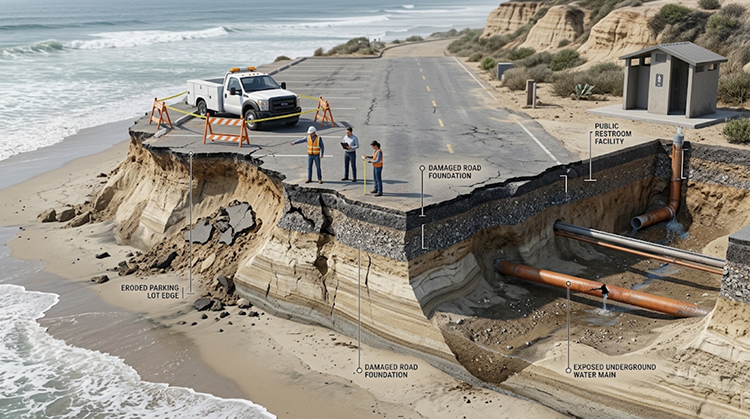
At San Onofre State Beach, the storm caused damage to the shoreline, roadway, parking areas and utilities at Surf Beach. One particularly consequential failure involved a water main serving the beach restrooms, which was exposed and broken by the surf. As a result, water service and restroom facilities became unavailable during the initial emergency response.
The department also identified a restroom building threatened by continuing erosion and included its removal among the emergency work planned for the affected area. This illustrates how coastal damage can force managers to address both the supporting infrastructure and the buildings that depend on it.
Parking restrictions were another immediate consequence. The current San Onofre State Beach conditions page, checked early on October 14, lists the lower dirt parking lots at Surf Beach as closed to vehicles until further notice. It also records the temporary closure of upper paved parking areas on October 9 while crews addressed storm damage. The beach remained open for surfing, walking and biking, subject to restrictions within designated work areas.
The distinction matters for visitors planning a trip. A beach may remain open for a particular activity while parking, restrooms, water service or specific access routes remain unavailable. Visitors should check the latest park notices rather than assume that a general open status means all facilities have returned to normal.
The repair challenge is also more complicated than clearing sand from a parking lot. Where surf has exposed or broken utility lines, crews must assess the surrounding ground, determine whether the infrastructure can be repaired in place and restore service without exposing workers or the public to additional hazards.
High Tides Can Disrupt Roads Even Beyond The Beach
The October event also demonstrated how coastal hazards can affect transportation and public safety beyond the immediate shoreline.
California State Parks warned that additional facilities at San Onofre remained threatened by erosion and that further removals or protective measures might be necessary. At Crystal Cove, staff continued assessing damage and monitoring conditions as elevated tides and large surf affected the Historic District.
When a coastal road is damaged, the effects can reach more than visitors heading to the beach. Maintenance crews may lose access to work sites, emergency vehicles may need alternate routes, and operators may have to restrict vehicle movements while construction machinery is active. Pedestrians and cyclists can also face risks around unstable edges, debris and work zones.
The response therefore involves more than determining whether waves are still reaching the road. Engineers and park staff must establish whether the supporting ground is stable, whether utilities have been exposed and whether the route can carry traffic safely.
Visitors can help by respecting barriers and following staff instructions even when the damaged area appears passable. Coastal erosion can create abrupt drops and concealed weaknesses, particularly after waves have removed sand from around pavement or structures.
For updates on public recreation infrastructure and recovery efforts, readers can explore ITPR’s California park infrastructure reporting.
The Parks Remained Open With Restrictions As Assessments Continued
As of October 14, the official park-condition pages showed that both destinations were operating with restrictions rather than being completely closed.
Crystal Cove’s current notice continued to report impacts in the Historic District from the swell event and high tides. San Onofre’s page listed ongoing restrictions at Surf Beach, including closed lower dirt parking lots and unavailable water and restroom service because of damage to the water main.
These status updates are important because initial emergency notices do not necessarily describe conditions several days later. Some work zones may reopen after inspections or repairs, while other restrictions can remain in place until a damaged utility or unstable section of shoreline is addressed.
California State Parks has said that reopening decisions depend on ocean conditions, damage assessments and completion of necessary emergency work. The department has also advised visitors to avoid closed areas, obey posted signs and consider other state parks while emergency operations continue.
For anyone planning a visit, the most reliable approach is to check the official Crystal Cove and San Onofre pages before leaving. Conditions at an exposed beach can change, and the availability of parking, restrooms or specific routes may differ from the general status of the park.
The Damage Raises Longer-Term Questions About Coastal Park Infrastructure
The immediate recovery at Crystal Cove and San Onofre centers on safety, emergency repairs and restoring essential services. The larger question is how park managers can maintain public access where roads, utilities and historic buildings sit close to a coastline affected by recurring high surf and erosion.
At Crystal Cove, the presence of historic cottages complicates the response because the district’s cultural value is tied to buildings and a settlement pattern that developed close to the shoreline. At San Onofre, the broken water main and damaged parking facilities show how basic visitor services can become vulnerable when erosion reaches buried infrastructure and developed beach areas.
There is no single solution for every site. Some damaged facilities can be repaired in place. Others may require protective measures, redesigned utility routes, modified access arrangements or relocation away from the most exposed ground. Those decisions depend on engineering assessments, environmental requirements, costs and the characteristics of each location.
The October 2026 storm has made those decisions immediate. State Parks must manage active restrictions while evaluating which emergency measures can protect vulnerable resources through the next period of elevated surf.
The outcome will matter beyond these two parks. California’s coastal state parks combine recreation, habitat, historic resources and public infrastructure in places where natural shoreline processes remain powerful. The damage at Crystal Cove and San Onofre shows how a storm can simultaneously threaten a historic district, a roadway, parking access and essential utilities.
Restoring access will be important, but the long-term measure of recovery will be whether the repaired facilities can serve visitors safely while responding to the coastal conditions that caused the damage in the first place.