

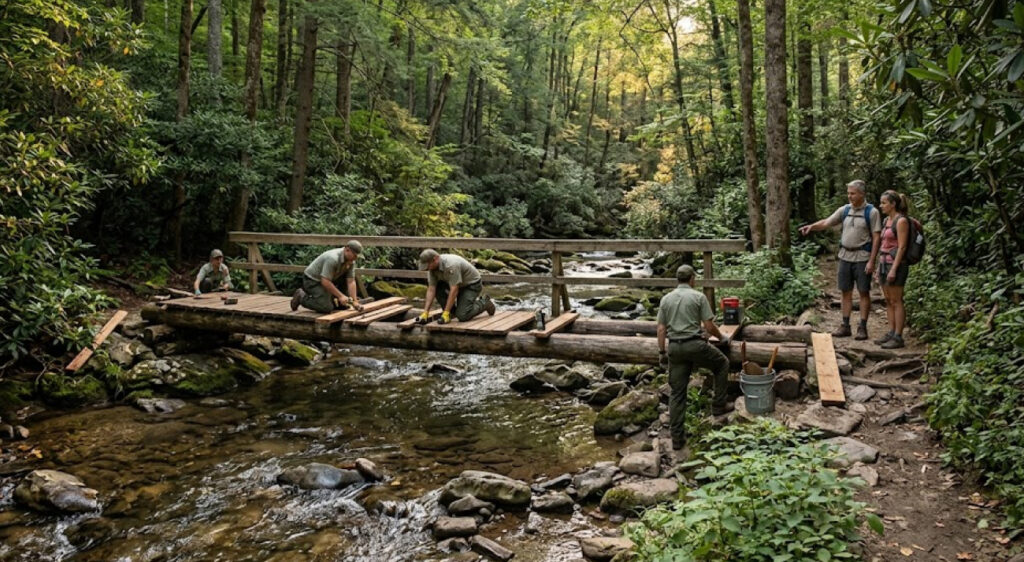
Great Smoky Mountains National Park is carrying out a targeted safety rehabilitation of the popular Abrams Falls Trail in Tennessee, with work beginning August 24, 2026. The project focuses on replacing four aging footlog bridges and handrails and adding new stairs at a steep, slick-rock section near Abrams Falls. The National Park Service expects the work to be completed by October 1, creating a temporary weekday closure while allowing hikers to continue using the trail on Fridays through Sundays and Labor Day.
The project is relatively small compared with major national-park infrastructure programs, but its location makes it strategically important. Abrams Falls is one of the most recognizable waterfall destinations in the Smokies, and the five-mile round-trip hike draws visitors through a forested corridor before reaching a 25-foot waterfall flowing over sandstone into a deep pool. The rehabilitation therefore addresses infrastructure at precisely the points where trail conditions, water crossings and visitor behavior can create elevated safety concerns.
Four Footlog Bridges Require Replacement
The central component of the project is the replacement of four aging footlog bridges along Abrams Falls Trail.
Footlogs are intentionally simple structures, allowing trails to cross streams while maintaining a relatively natural appearance. In a heavily visited mountain environment, however, these structures are exposed to moisture, changing water levels, falling trees and continual foot traffic. Their maintenance becomes particularly important when a trail carries visitors toward a major attraction such as Abrams Falls.
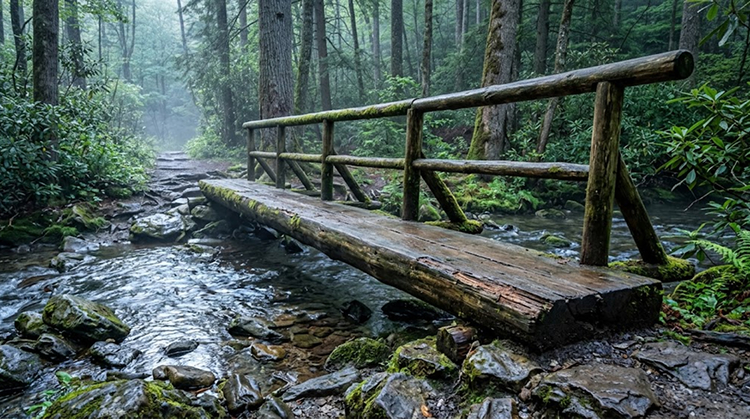
The National Park Service says crews will remove and replace the existing footlogs and handrails as part of the current project. Because the work requires rigging equipment throughout the trail, construction materials and replacement components cannot simply be brought in using conventional road-based machinery. The park’s animal packer team will assist with supply deliveries.
That detail illustrates the logistical challenges of maintaining recreation infrastructure inside a protected mountain landscape. The objective is to improve structures without turning a backcountry-style trail into a conventional construction corridor.
The work also demonstrates why visitor safety programs frequently involve infrastructure that may seem relatively minor from outside the park. A bridge, railing or set of stairs represents a specific point where an otherwise natural trail requires engineered intervention.
| Abrams Falls Safety Project | Current Details |
|---|---|
| Location | Abrams Falls Trail, Great Smoky Mountains National Park |
| Construction began | August 24, 2026 |
| Expected completion | October 1, 2026 |
| Footlog bridges | Four replacements |
| Additional work | Handrail replacement and new stairs |
| Weekday closure | Monday–Thursday |
| Weekend access | Friday–Sunday |
| Waterfall | 25 feet (7.6 meters) |
The National Park Service project announcement provides the latest construction schedule and visitor-access information.
Construction Requires A Different Kind Of Trail Logistics
The Abrams Falls project also provides an example of how national parks conduct infrastructure work in areas where conventional construction methods are impractical.
The National Park Service says replacement of the footlogs will require rigging equipment and deliveries by the park’s animal packer team. Crews will need to move materials along the trail while also removing the existing structures.
That creates a logistical balance between speed, safety and resource protection.
A large construction vehicle cannot simply drive along the hiking route. Bringing in oversized machinery could create additional impacts on vegetation, soils and stream corridors. Using pack animals and specialized rigging reduces the need for heavy vehicle access and allows crews to work within the physical limitations of the trail.
The temporary weekday closure is consequently more than an inconvenience for visitors. It creates a controlled working environment where employees can operate equipment and transport materials without hikers entering the active construction zone.
The National Park Service specifically says the closure is necessary to protect both visitors and employees while the footlog work is underway.
A Five-Mile Hike Leads To A 25-Foot Waterfall
Abrams Falls remains the destination driving much of the trail’s popularity.
The hike begins at the Abrams Falls Trailhead near the far end of the Cades Cove Loop Road, between roadway signposts 10 and 11. From there, visitors follow approximately five miles round trip through a forest dominated by rhododendron, hemlock and pine-oak vegetation.
The route eventually reaches Abrams Falls, where Abrams Creek drops approximately 25 feet over a sandstone ledge into a deep pool.
That combination of relatively manageable distance, forest scenery and a prominent waterfall helps explain why the trail is an important visitor-management priority.
The waterfall itself also creates a safety consideration that extends beyond the trail infrastructure. The National Park Service strongly discourages swimming at Abrams Falls because of slippery rocks and a dangerous undertow.
The distinction is important: improving a trail does not make the surrounding natural environment risk-free.
New stairs and replacement bridges can make movement more predictable, but visitors still encounter natural hazards associated with moving water, steep terrain, wet rock and changing mountain conditions.
The park’s waterfall safety guidance notes that water recreation in Great Smoky Mountains National Park is generally not recommended because of numerous hazards.
Weekday Closures Create A Controlled Construction Schedule
Rather than closing Abrams Falls Trail continuously through the project, the National Park Service is using a weekday construction schedule.
Beginning August 24, the trail is closed Monday through Thursday while work is underway. Visitors can hike the trail Friday through Sunday, as well as on Labor Day, September 7. The current closure schedule runs through September 30, with the project expected to be completed October 1.
This schedule creates a compromise between construction efficiency and continued recreational access.
Visitors who have flexibility can plan their hikes around the open days. At the same time, construction crews receive uninterrupted periods during the week when they can transport materials, operate rigging equipment and work on bridge structures without normal visitor traffic.
The approach also reflects the high demand for popular trails in Great Smoky Mountains National Park. A complete multi-week closure could significantly alter visitor plans during late summer and early fall, while unrestricted access during construction would create safety complications.
The result is a predictable schedule that allows both objectives to coexist temporarily.
New Stairs Address A Known Slick-Rock Hazard
Bridge replacement is only one part of the safety strategy.
Crews are also constructing new stairs at a steep, slick-rock section near Abrams Falls. The purpose is to improve footing where visitors encounter a combination of uneven rock, moisture and changing terrain.
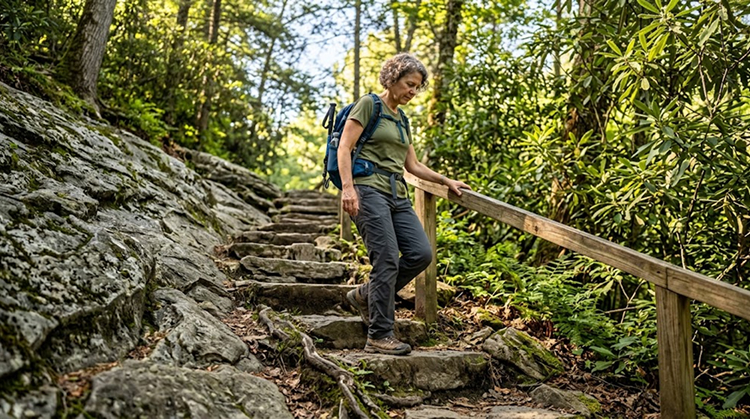
This is a particularly relevant improvement because the final portion of a waterfall hike can become one of its most demanding areas. Visitors approaching a scenic destination may focus on the waterfall ahead rather than the terrain beneath their feet. Wet rocks and irregular surfaces can increase the likelihood of slips and falls.
The park’s official trail information already identifies occasional roots and rocks as obstacles along the hike. The trail is classified as a five-mile round-trip hike, requiring visitors to travel approximately eight kilometers through forest before reaching the falls.
The new stairs are therefore not intended to eliminate the natural character of the trail. Instead, they provide a more predictable route through one particularly challenging section.
This approach is consistent with the broader philosophy of trail management in national parks: intervene where necessary while retaining the environmental and recreational qualities that make the route worth visiting.
Visitor Demand Makes Small Safety Projects Significant
Abrams Falls is located within one of the country’s most heavily visited national parks, making even relatively short trails significant components of the park’s overall recreation system.
Great Smoky Mountains National Park contains hundreds of miles of trails and attracts visitors seeking waterfalls, historic structures, wildlife, scenic drives and mountain landscapes. Popular waterfall routes can experience concentrated visitor demand, particularly because the destinations are easy to identify and highly photographable.
The National Park Service has noted that several of the park’s best-known waterfall hikes collectively receive substantial visitation. That concentration places additional pressure on parking, trail surfaces, bridges and viewing areas.
Abrams Falls illustrates the issue clearly.
A five-mile trail might appear modest compared with the park’s larger trail network, but every bridge along that route becomes part of a repeated visitor experience. Thousands of individual crossings over time can turn relatively small infrastructure weaknesses into significant maintenance priorities.
Replacing four footlogs simultaneously allows the park to address several potential weak points during one coordinated construction period.
The work also reduces the likelihood that individual bridge failures will require emergency closures at different times in the future.
Friends Of The Smokies Supports The Work
The Abrams Falls project is being funded by Friends of the Smokies, a nonprofit partner that supports projects inside Great Smoky Mountains National Park. The organization is also supporting rehabilitation work on the Bullhead Trail and Deep Creek trails during 2026.
That partnership highlights the role of nonprofit organizations in supporting trail infrastructure in national parks.
Federal agencies remain responsible for park management, but philanthropic partnerships can provide additional resources for projects that directly affect visitor access and resource protection.
For a park with such extensive recreational demand, this type of support can help accelerate improvements on trails that might otherwise compete with numerous maintenance needs.
The investment in Abrams Falls is therefore part of a larger pattern of trail rehabilitation rather than an isolated construction project.
Safety Improvements Do Not Remove The Need For Preparation
Visitors planning an Abrams Falls hike should still treat the route as a mountain trail even after the infrastructure improvements are complete.
The five-mile round trip requires physical effort, while the trail includes natural roots, rocks and changing surfaces. The waterfall area itself contains slippery rocks and hazardous water conditions.
During the current construction period, visitors also need to pay attention to the specific weekday closure schedule.
The National Park Service maintains current road and trail information because conditions can change. The park currently lists Abrams Falls Trail as temporarily closed Monday through Thursday through September 30 while construction continues.
Visitors should therefore verify conditions before traveling to Cades Cove rather than relying solely on older hiking guides or previously published itineraries.
The park also recommends alternative waterfall hikes during the weekday closures, including West Prong, Lynn Creek Waterfall Loop and Deep Creek Waterfall Loop.
A Focused Upgrade With Long-Term Visitor Benefits
The Abrams Falls rehabilitation is a targeted project, but its effects should extend well beyond the construction season.
Replacing four aging footlogs, improving handrails and adding stairs at a difficult rock section addresses specific points where visitor safety can be compromised. The work also provides an opportunity to maintain a popular trail without fundamentally changing its forested character.
That balance is especially important in Great Smoky Mountains National Park.
Visitors come to Abrams Falls for a natural experience, not an urbanized recreation facility. The most successful infrastructure improvements are therefore those that remain functional without dominating the landscape.
The project also demonstrates why trail management requires continuous attention. Bridges age, handrails deteriorate and high-traffic areas develop hazards even when a trail remains fundamentally sound.
By addressing those problems before they become larger failures, park managers can preserve access to one of the Smokies’ best-known waterfall destinations.
The current construction schedule means the short-term visitor experience will involve some restrictions, but the long-term objective is straightforward: a more reliable trail with safer crossings and better footing leading to Abrams Falls and its 25-foot waterfall.
As work progresses through September, the National Park Service’s combination of weekday closures and weekend access allows crews to complete technically demanding work while preserving limited recreational opportunities. Once construction is finished, visitors will inherit infrastructure intended to make the route safer without taking away the Appalachian landscape that defines the Abrams Falls experience.