

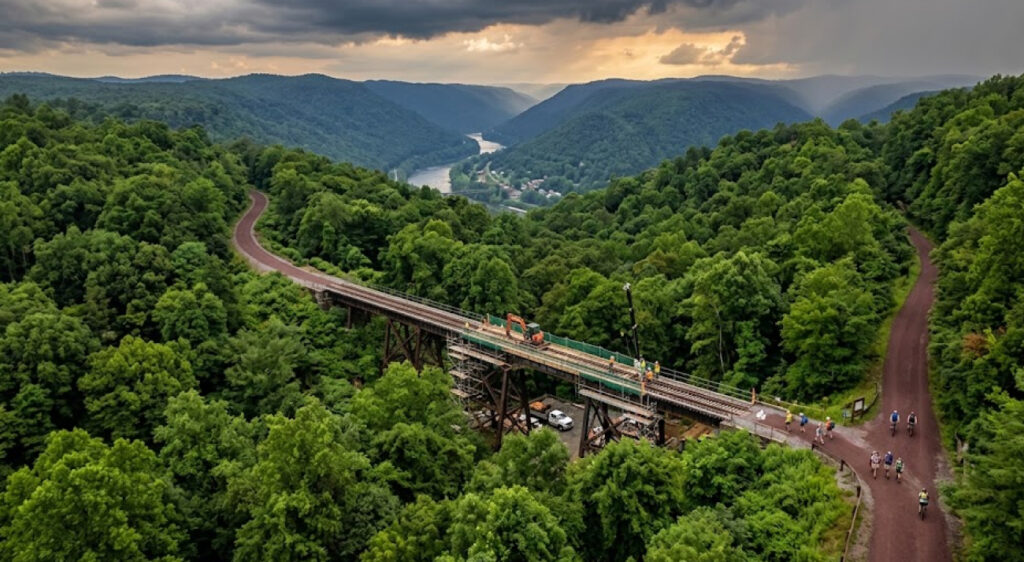
New River Gorge National Park and Preserve has begun an $11.8 million rehabilitation of the Rend Trail, launching a multi-year project that will transform one of the park’s historic rail-trails into a more accessible and resilient recreation corridor. The National Park Service began construction on August 3, 2026, using funding from the Great American Outdoors Act Legacy Restoration Fund to address the trail surface, five historic railroad trestles and visitor facilities at the Minden Trailhead. The entire trail is closed during construction, with reopening currently estimated for fall or winter 2027.
The project is significant because the Rend Trail is more than a hiking route. It follows a former railroad corridor constructed in 1906 to transport coal from the mines around Minden to the railroad network at Thurmond. The line was abandoned in 1972, eventually becoming a recreational route used by hikers and bicyclists. Its rehabilitation now connects historic preservation, accessibility, visitor infrastructure and the economic relationship between the national park and nearby communities.
$11.8 Million Investment Targets A Historic Rail-Trail
The scale of the Rend Trail project reflects the cost of maintaining infrastructure that combines recreation and historic resources.
Approximately $11.8 million is being invested through the Great American Outdoors Act Legacy Restoration Fund. According to the National Park Service, the project includes improvements along the full length of the trail, rather than addressing only the bridge problems that previously forced partial closures.
The Rend Trail is approximately 3.4 miles one way according to the National Park Service’s trail description, although current project information refers to a 3.2-mile construction corridor. Its relatively easy grade and broad surface have historically made it one of the more approachable recreation routes within New River Gorge.
That accessibility is important in a park better known for steep Appalachian terrain, dramatic overlooks and demanding hikes.
The trail follows an old railroad grade rather than climbing directly through the surrounding mountains. It crosses five railroad trestles and provides views toward Dunloup Creek, the New River and the historic community of Thurmond. The Minden end follows Arbuckle Creek, creating a recreation experience that combines industrial history with Appalachian scenery.
The current project therefore has two objectives that can sometimes compete with each other: preserve the character of a historic railroad landscape while making the corridor safer, more accessible and better equipped for modern recreation.
The Great American Outdoors Act has become an important source of federal funding for addressing deferred maintenance and infrastructure needs across public lands, making the Rend Trail project part of a much larger national effort.
Five Historic Trestles Are Central To The Rehabilitation
The most technically important portion of the project involves the trail’s five historic railroad trestles.
These structures date from the period when the corridor functioned as an active railroad route. Their continued presence gives the trail much of its historical character, but it also creates substantial maintenance responsibilities because bridges must meet contemporary safety expectations while retaining their historic significance.
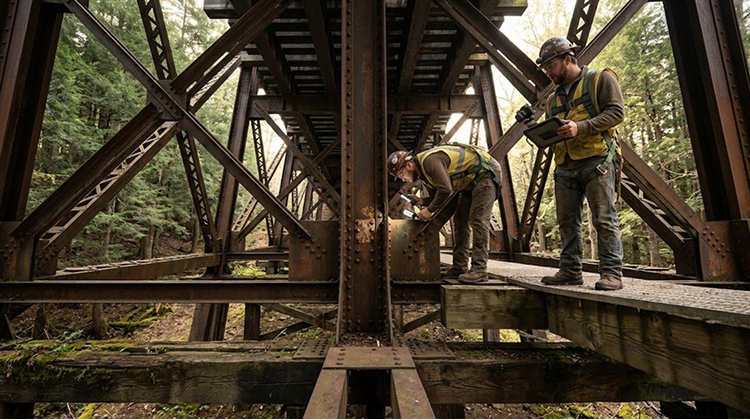
The need for this work became particularly clear when structural problems affected one of the bridges.
The National Park Service has previously documented structural damage to the second bridge from the Minden side, approximately 1.27 miles from the Minden Trailhead and 1.96 miles from the Thurmond Trailhead. That bridge was closed because its supporting cribbing had deteriorated and was considered unsafe.
The current rehabilitation provides an opportunity to address the broader trestle system instead of treating each structural issue as an isolated repair.
| Project Component | Planned Improvement |
|---|---|
| Trail surface | Full rehabilitation along the trail |
| Historic trestles | Structural improvements to five railroad trestles |
| Minden Trailhead | New parking area |
| Visitor facilities | New restroom and small picnic area |
| Accessibility | Large accessible ramp replacing the existing stairway |
| Construction period | August 2026 through estimated fall/winter 2027 |
The result should be a more reliable trail corridor while preserving physical connections to the region’s railroad and coal-mining history.
That distinction matters because the trail’s historic structures are not simply obstacles to modern recreation. They are part of the reason the route exists and part of what makes the experience different from a conventional greenway.
Accessibility Becomes A Defining Feature
One of the most important changes will occur at a section known locally as the “big rock.”
The National Park Service plans to construct a large accessible ramp that will replace a stairway in this section. When completed, the agency expects the project to create the only fully accessible earthen-surface trail within the park.
That designation gives the project significance beyond the Rend Trail itself.
Outdoor recreation accessibility often depends on more than whether a trail is technically open to the public. Surface conditions, grades, obstacles, crossings, rest areas and transitions can determine whether visitors with different mobility needs can realistically use a trail.
Replacing the stairway with a large ramp addresses one of those physical barriers directly.
The choice to improve an existing historic rail corridor is also strategically important. Former railroad grades often provide relatively gradual slopes compared with mountain trails, making them natural candidates for accessibility improvements. The Rend Trail already had an easy grade and wide, smooth surface before construction, according to the National Park Service.
The rehabilitation can therefore build accessibility into a landscape that already has favorable physical characteristics.
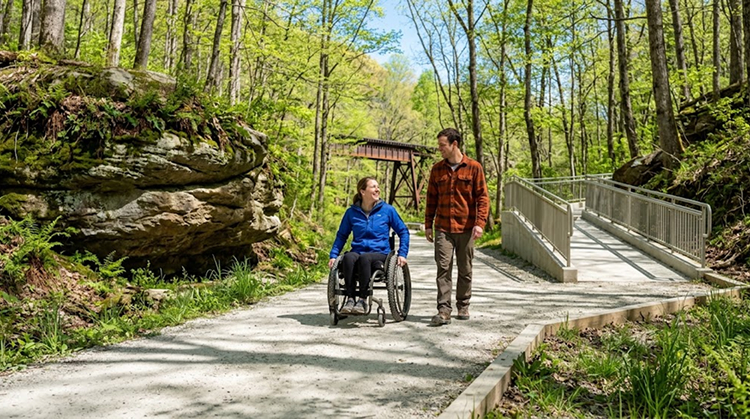
This is a different approach from attempting to make every type of mountain trail accessible. Instead, park managers can identify corridors where topography, historic use and visitor demand make substantial accessibility improvements practical.
Minden Trailhead Will Gain New Visitor Facilities
The project extends beyond the trail itself.
At the Minden Trailhead, construction includes a new parking area, a restroom and a small picnic area overlooking Arbuckle Creek.
Those facilities may appear modest compared with the $11.8 million project price, but trailheads are critical pieces of recreation infrastructure.
A trail’s capacity is influenced by what happens before visitors even begin hiking. Parking determines how many vehicles can arrive safely. Restrooms influence where visitors stop and how surrounding land is used. Picnic areas can concentrate activity in locations specifically designed to handle it.
A well-planned trailhead can therefore reduce informal parking, minimize resource damage and make the transition from vehicle travel to recreation more orderly.
At Minden, the new facilities also have an opportunity to frame the trail as a gateway into the larger historic landscape.
Visitors arriving at the trailhead will encounter a route that connects directly to the region’s railroad history, Arbuckle Creek and the broader Thurmond area. Rather than treating parking and restrooms as separate amenities, the rehabilitation can make the trailhead part of the overall interpretation of the landscape.
The New River Gorge National Park trail information highlights the park’s combination of forest trails, overlooks, historic scenery and routes that can be connected into longer recreation experiences.
The Rend Trail Connects Recreation With Thurmond’s History
The historical significance of the Rend Trail is one of its strongest characteristics.
The railroad route was originally built in 1906 to carry coal from Minden toward Thurmond. After the rail line was abandoned in 1972, the corridor eventually transitioned into a recreational trail.
That evolution mirrors a larger pattern across the United States, where abandoned industrial transportation corridors have become important public recreation assets.
The transformation is particularly meaningful in New River Gorge because the region’s history is inseparable from coal mining and railroad transportation.
Thurmond, located along the New River, developed as a railroad and coal community. Today, visitors can experience remnants of that history while traveling through the surrounding landscape by foot or bicycle.
The Rend Trail provides a physical connection between those two eras.
A visitor can walk along a former rail bed, cross historic trestles and look toward the same landscape that once supported an industrial transportation network. The recreation experience is therefore built directly into the region’s cultural history.
Rehabilitating the trail does not erase that history. If anything, preserving the trestles and railroad alignment makes the historic story more visible to visitors.
Full Closure Creates A Temporary Recreation Trade-Off
The most immediate consequence of the project is also the simplest: the Rend Trail is currently closed.
Unlike earlier periods when visitors could use portions of the trail around an isolated bridge closure, the 2026 project requires construction along the full corridor. The National Park Service says the entire 3.2-mile trail is closed during construction, with reopening estimated for fall or winter 2027.
The park’s current closure information lists the Rend Trail as closed from both the Thurmond and Minden sides, with the closure expected to remain in effect through approximately December 2027. The agency also notes that schedules can change because of weather and other unforeseen circumstances.
For regular hikers and cyclists, that creates a substantial temporary loss of access.
For park managers, however, keeping visitors out of active construction zones is necessary to allow crews to work safely and efficiently across bridges, trail surfaces and visitor facilities.
The closure also demonstrates why infrastructure rehabilitation requires long-term planning. A project that eventually produces a safer and more accessible trail can temporarily reduce recreation opportunities while construction is underway.
Visitors looking for alternatives can use other New River Gorge trails, including the Endless Wall Trail, Grandview Rim Trail, Long Point Trail, Southside Trail and Stone Cliff Trail, depending on current conditions and individual ability.
A Gateway Community Stands To Benefit
The National Park Service has specifically connected the project with the surrounding gateway community.
Acting Superintendent Eric LaPrice said the completed trail will reconnect the park with a gateway community while providing additional recreation opportunities for both visitors and residents.
That connection matters because outdoor recreation infrastructure can function beyond park boundaries.
When a trailhead is located near a community, visitors may purchase food, fuel, equipment or lodging before and after recreation activities. Residents can also use the same facilities for regular exercise and local outdoor activity.
The Rend Trail’s location between Minden and Thurmond gives the rehabilitation a particularly strong community dimension.
The trail is not being developed as an isolated destination disconnected from local history. It is being restored along a corridor that already connects historic communities, transportation infrastructure and natural resources.
Improving that corridor can therefore strengthen both recreational access and the physical relationship between the national park and surrounding communities.
New River Gorge Is Building A More Accessible Trail Network
The Rend Trail project should also be viewed within the broader trail network at New River Gorge.
The park supports trails for hiking and biking that range from relatively easy rail-trail experiences to steep mountain routes. The Rend Trail is among the easier options, while other routes provide significantly different terrain and experiences.
That diversity is one of the park’s strengths.
Not every visitor arrives looking for a strenuous Appalachian hike. Families, older visitors, beginning cyclists and people seeking a relatively gradual route need different recreation opportunities.
A fully accessible Rend Trail can fill an important gap in that network.
The project also demonstrates that accessibility does not have to mean removing the historic identity of a trail. The five railroad trestles, former rail alignment and views toward historic Thurmond remain central to the route.
Instead, modern accessibility improvements can allow more people to experience those features.
Why The Project Matters Beyond 2027
The Rend Trail rehabilitation is a long-term investment in infrastructure that serves several purposes at once.
It addresses structural problems that have limited access. It improves the trail surface. It adds visitor facilities. It creates a major accessibility improvement. It preserves historic railroad structures. And it strengthens the connection between New River Gorge National Park and nearby communities.
That combination makes the $11.8 million investment more significant than a conventional trail resurfacing project.
The project also illustrates the increasing role of federal recreation funding in maintaining aging public infrastructure. Historic parks often contain facilities that cannot simply be replaced with modern equivalents because their physical character is part of the resource being protected.
The challenge is to make those places safe and usable without stripping away the qualities that made them historically important.
At Rend Trail, that means rehabilitating a former coal railroad corridor while retaining its trestles, views and connection to Thurmond and Minden.
When construction is complete, the route is expected to provide a more accessible and better-equipped recreation experience than the one that existed before the closure. The National Park Service’s current target places reopening in fall or winter 2027, although visitors should monitor official updates because construction schedules remain subject to change.
The significance of the project will ultimately be measured not just by the amount of concrete, gravel or structural work completed, but by how effectively the rehabilitated trail connects people with Appalachian landscapes, railroad history, local communities and outdoor recreation.
For New River Gorge, the Rend Trail is becoming an example of how an old industrial corridor can be preserved and reimagined as a modern public recreation asset—one where accessibility, safety and historic character are intended to coexist rather than compete.