

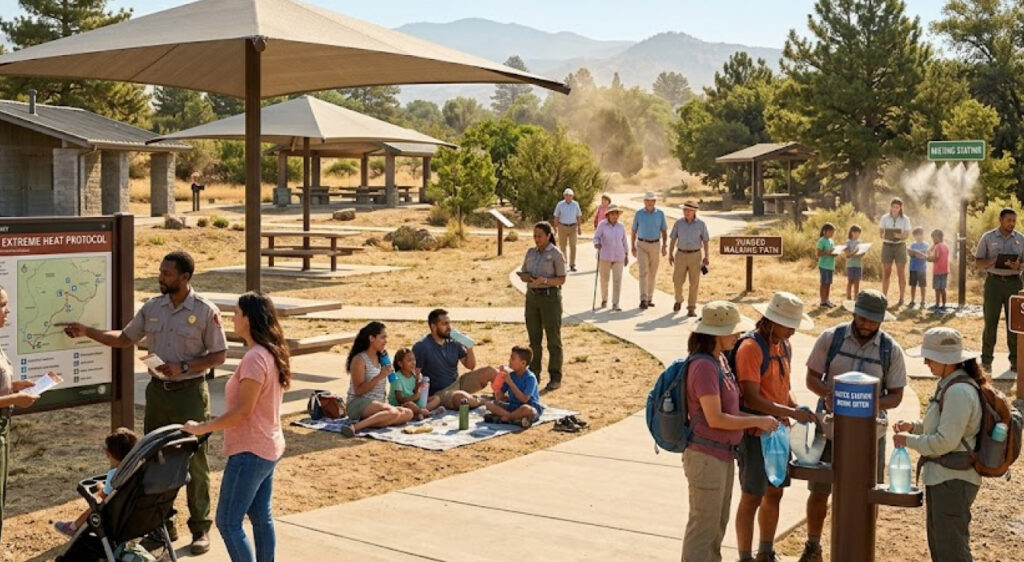
Public Parks Adjust Operations As Extreme Heat Creates New Visitor Safety Priorities
Summer recreation across the United States is increasingly influenced by rising temperatures, longer heat events, and changing visitor behavior. National recreation agencies, state park systems, and municipal departments are expanding heat safety programs to protect visitors while maintaining access to outdoor spaces.
Parks remain important destinations for physical activity, family recreation, tourism, and community programs. During periods of extreme heat, agencies are adapting operations through improved communication systems, revised programming schedules, hydration initiatives, cooling resources, and updated staff procedures.
The National Park Service, local recreation departments, and state agencies are incorporating heat preparedness into broader visitor management strategies. These efforts focus on helping residents and travelers make informed decisions while enjoying trails, playgrounds, sports facilities, and natural areas.
The National Weather Service heat safety resources continue providing public guidance used by recreation agencies when developing summer safety messaging and visitor education campaigns.
Extreme Heat Changes How Parks Manage Summer Recreation
Outdoor recreation has always required seasonal planning, but recent heat conditions have increased the need for more detailed safety strategies. Park agencies are reviewing operating procedures to address higher temperatures during peak visitor periods.
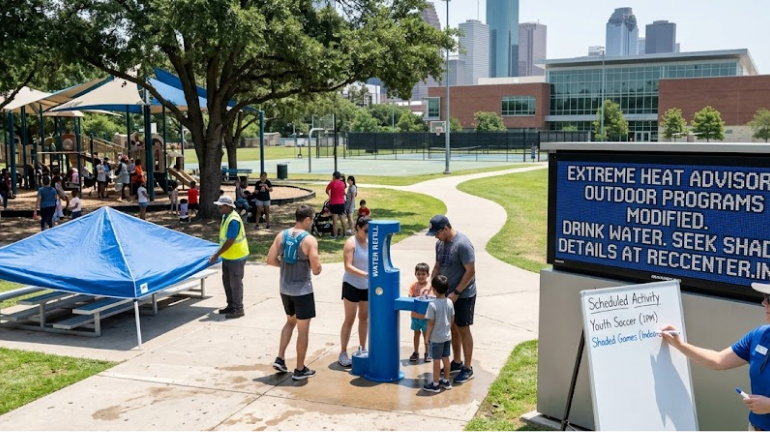
Many recreation departments are adjusting programs by moving physically demanding activities to cooler parts of the day, increasing access to shaded areas, and improving communication about weather conditions.
Common heat safety measures include:
- Early morning or evening scheduling for outdoor activities
- Increased availability of water stations
- Visitor alerts during extreme temperature periods
- Staff training for heat-related emergencies
- Additional signage at high-use recreation areas
These strategies are becoming part of standard park management because heat affects visitors across different age groups and activity levels.
Families using playgrounds, athletes participating in outdoor sports, older adults walking trails, and visitors exploring natural areas all face different challenges during high-temperature conditions.
| Heat Safety Strategy | Recreation Benefit |
|---|---|
| Visitor alerts | Helps guests make informed decisions |
| Water access improvements | Supports hydration during outdoor activities |
| Schedule adjustments | Reduces exposure during peak temperatures |
| Staff preparation | Improves emergency response |
National Park Service Expands Visitor Communication During Heat Events
The National Park Service manages more than 400 national park sites across the United States, many of which experience significant summer visitation.
Locations such as Joshua Tree National Park in California, Death Valley National Park in California and Nevada, and Grand Canyon National Park in Arizona regularly address extreme heat conditions during summer months.
Park officials use visitor alerts, social media updates, ranger communication, and website announcements to provide information about temperatures, trail conditions, hydration requirements, and safety recommendations.
Death Valley National Park has recorded some of the highest temperatures on Earth, making heat preparation a central part of visitor management. Park officials frequently remind visitors about the risks associated with hiking during the hottest hours of the day and the importance of carrying sufficient water.
At Grand Canyon National Park, summer heat creates additional concerns for visitors traveling below the rim, where temperatures can be significantly higher than at the canyon’s upper elevations.
The National Park Service visitor safety guidance provides information about preparing for outdoor conditions, emergency awareness, and responsible recreation.
Municipal Parks Increase Heat Preparedness In Urban Communities
Urban recreation departments face unique challenges during extreme heat because city parks often serve as primary outdoor spaces for residents without private recreational areas.
Cities such as Phoenix, Los Angeles, and New York are expanding heat response strategies within public parks to support community recreation during summer months.
The Phoenix Parks and Recreation Department operates in one of the hottest metropolitan regions in the United States. The city’s recreation programs include heat awareness efforts that encourage residents to plan activities around safer temperature conditions.
Los Angeles Department of Recreation and Parks manages hundreds of facilities serving neighborhoods throughout the city. Summer programming requires coordination between recreation centers, sports facilities, pools, and outdoor spaces to maintain safe participation.
Urban agencies are also investing in physical improvements that reduce heat exposure, including:
- Shade structures
- Tree planting projects
- Improved water access
- Cooler recreation surfaces
These improvements support both immediate visitor safety and long-term park planning.
Recreation Facilities Adapt To Changing Summer Conditions
Heat safety planning is influencing the design and operation of recreation infrastructure. Park agencies are reviewing how facilities perform during periods of high temperatures.
Modern improvements increasingly include features that support comfortable outdoor use:
| Infrastructure Improvement | Purpose |
|---|---|
| Shade structures | Reduces direct sun exposure |
| Native vegetation | Provides natural cooling benefits |
| Water features | Supports recreation and temperature management |
| Reflective surfaces | Helps reduce heat retention |
Playgrounds, walking paths, and athletic fields are receiving additional attention because surface temperatures can become significantly higher than surrounding air temperatures.
Many communities are evaluating materials and designs that allow residents to continue using parks during summer months without unnecessary risk.
These changes reflect a broader approach to recreation planning where safety, accessibility, and environmental conditions are considered together.
Heat Safety Programs Support Community Wellness Goals
Public parks play an important role in community wellness by providing locations for exercise, social interaction, and outdoor activities.

Heat safety programs help preserve these benefits by allowing residents to continue using recreation spaces under safer conditions.
For older adults, young children, and individuals with health considerations, extreme temperatures can create additional barriers to outdoor activity.
Recreation agencies are responding by creating programs that balance participation with safety. Examples include indoor alternatives during heat alerts, adjusted fitness schedules, and increased outreach to vulnerable populations.
The connection between outdoor recreation and wellness remains a priority for many municipalities. Agencies recognize that reducing heat-related risks allows communities to maintain access to parks throughout the summer season.
The Centers for Disease Control and Prevention heat health information highlights the relationship between high temperatures, public safety, and community preparedness.
State Parks Strengthen Heat Preparedness Through Visitor Management
State park systems are also updating their approaches to summer safety. States with large outdoor recreation networks are developing communication strategies and operational plans that address heat conditions.
California State Parks, Arizona State Parks, and Michigan State Parks are examples of agencies managing diverse recreation environments where summer conditions affect visitors differently.
California’s desert and coastal parks require different heat management approaches. Desert locations focus heavily on hydration, emergency preparedness, and visitor education, while coastal parks often manage high visitation levels during warm-weather weekends.
Arizona State Parks frequently communicates heat awareness information for visitors participating in hiking, camping, and outdoor activities.
Michigan State Parks experience different summer conditions but still incorporate weather communication and visitor safety practices across destinations such as Belle Isle Park and Waterloo Recreation Area.
These programs demonstrate that heat safety is becoming a standard component of recreation management nationwide.
Technology Improves Heat Awareness And Visitor Decision-Making
Digital communication has become an important part of modern park safety systems. Recreation agencies increasingly use websites, mobile alerts, social media, and digital signage to share real-time information.
Visitors can receive updates about:
- Temperature conditions
- Trail recommendations
- Facility availability
- Program schedule changes
- Safety reminders
This communication approach allows agencies to reach visitors before problems occur.
For popular destinations with large summer crowds, timely information can influence visitor decisions and reduce unnecessary exposure during dangerous conditions.
Technology does not replace traditional ranger communication or staff support, but it provides another tool for improving public awareness.
Future Recreation Planning Includes Climate Adaptation Strategies
Heat safety programs are becoming part of long-term planning for parks and recreation agencies across the United States.
As summer temperatures continue affecting outdoor activities, agencies are evaluating infrastructure, programming, communication systems, and visitor services.
Future projects may include more shaded recreation areas, improved cooling infrastructure, climate-conscious landscaping, and expanded public education programs.
The continued investment in heat preparedness shows how recreation systems are adapting to changing environmental conditions while protecting public access.
Parks remain essential community resources, and effective heat safety planning allows residents and visitors to continue enjoying outdoor spaces throughout the summer season.