

Rising Temperatures Are Changing How Parks Operate During the Summer Season
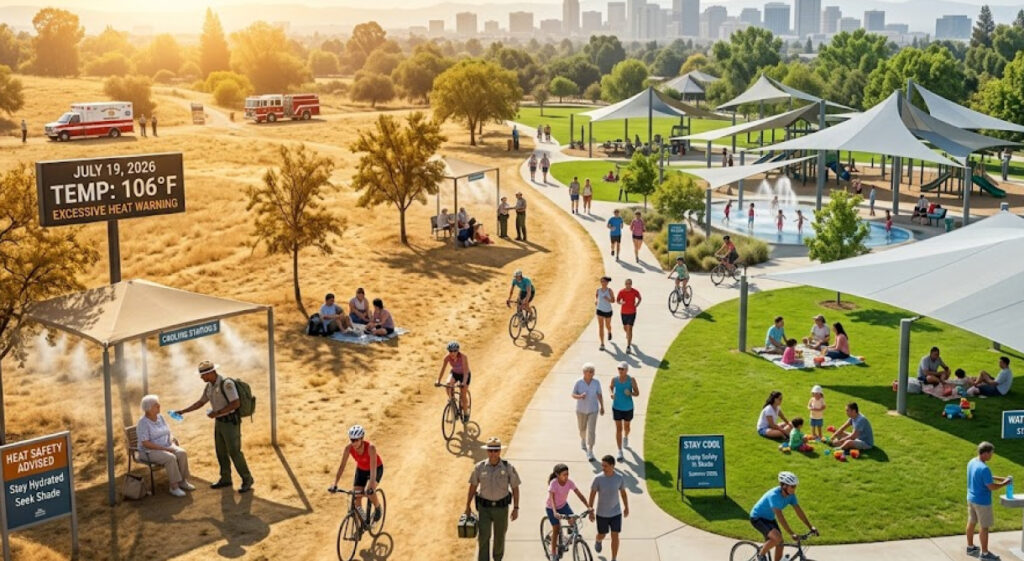
Extreme heat has become one of the defining operational challenges for parks and recreation agencies across the United States during the summer of 2026. From municipal parks to state recreation areas and national public lands, agencies are adapting schedules, visitor communication strategies, staffing plans, and emergency preparedness to address prolonged periods of dangerous temperatures.
The National Weather Service (NWS) issued multiple Heat Advisories and Extreme Heat Warnings across large portions of the country during June and early July 2026, affecting states including Texas, Arizona, California, Nevada, Connecticut, and Illinois. These conditions prompted many park systems to modify visitor services, increase public messaging, and expand access to cooling resources.
One example came from Millers Pond State Park in Durham, Connecticut, where the Connecticut Department of Energy and Environmental Protection (DEEP) temporarily closed access after the parking area reached capacity during an intense heat wave. Officials cited public safety and traffic management as primary reasons for limiting additional entry, illustrating how weather events now influence daily operational decisions.
These developments reflect a broader shift in public recreation management, where weather forecasting and emergency communication are becoming integral components of park operations rather than seasonal considerations.
For current national guidance on heat preparedness, the National Weather Service provides continuously updated recommendations through its Heat Safety Resources.
Heat Response Plans Are Becoming Standard Practice
Park agencies increasingly rely on formal heat response plans that combine weather monitoring, visitor education, operational flexibility, and coordination with local emergency services. Rather than reacting after temperatures reach hazardous levels, many organizations now activate preparedness protocols several days before forecasted heat events.
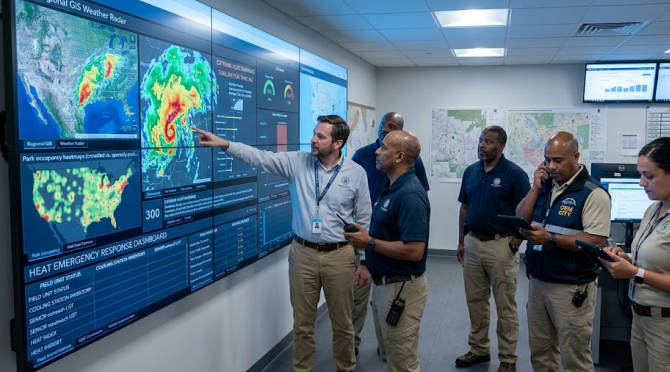
Across California, Arizona, and Nevada, park managers have adjusted maintenance schedules to early morning hours, reduced strenuous ranger activities during peak afternoon temperatures, and expanded hydration stations at visitor centers.
Municipal park departments have adopted similar approaches. Recreation programs that traditionally occurred during midday are now shifting toward morning and evening schedules, reducing heat exposure for children, older adults, and organized community groups.
The operational model generally follows four primary objectives:
- Protect visitors from heat-related illness.
- Reduce staff exposure during peak temperatures.
- Maintain access where conditions remain safe.
- Deliver timely public information before visitors arrive.
This proactive structure reflects recommendations issued by public health agencies that emphasize prevention through planning rather than emergency response alone.
Visitor Communication Is Becoming a Core Safety Tool
Effective communication has become one of the most valuable resources available to park managers during periods of extreme heat. Digital alerts, social media updates, mobile notifications, electronic entrance signs, and park websites now work together to inform visitors before they begin their trips.
Many agencies have adopted messaging that includes:
- Expected daily temperatures
- Recommended arrival times
- Water availability
- Trail closures
- Heat illness prevention guidance
The National Park Service has incorporated similar communication strategies across several high-visitation destinations where summer temperatures routinely exceed safe outdoor activity thresholds.
This evolution demonstrates how visitor safety increasingly depends on accurate, accessible information delivered before people reach trailheads, beaches, campgrounds, or recreation facilities.
The Centers for Disease Control and Prevention continues to publish recommendations for preventing heat-related illness through hydration, activity modification, and early recognition of warning signs. Their Heat and Health guidance has become a common reference for recreation agencies developing seasonal safety campaigns.
Local Parks Are Expanding Cooling Resources
Extreme heat has encouraged many municipalities to rethink how parks function during summer emergencies. Instead of serving only recreational purposes, many facilities now operate as community resilience assets.
Cities have expanded shaded seating areas, misting stations, refillable water stations, cooling shelters, and indoor recreation spaces that remain available during excessive heat events.
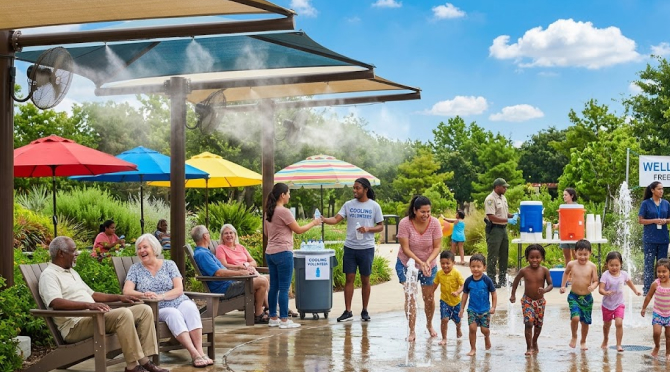
Several communities have coordinated these efforts with public libraries, senior centers, and community recreation buildings to create interconnected cooling networks for residents.
Recent heat events demonstrated that these resources benefit multiple populations, including:
| Community Group | Primary Need | Park-Based Response |
|---|---|---|
| Older adults | Heat protection | Indoor cooling facilities |
| Families with children | Safe recreation | Splash pads and shaded playgrounds |
| Outdoor recreation users | Hydration | Bottle refill stations |
| Event participants | Emergency support | Cooling tents and medical staff |
This broader approach reflects changing expectations for public parks, which now contribute directly to community resilience planning alongside traditional recreation services.
Communities that integrate recreation infrastructure into emergency planning often experience improved public awareness and stronger participation during weather-related events.
Operational Decisions Are Increasingly Driven by Weather Data
Modern park management depends heavily on weather forecasting, environmental monitoring, and predictive decision-making. Managers frequently evaluate hourly temperature forecasts, humidity levels, air quality conditions, and expected attendance before determining whether to modify programming.
At destinations experiencing sustained visitor demand, these decisions may include:
- Delayed trail openings
- Temporary trail closures
- Modified event schedules
- Increased ranger patrols
- Expanded first-aid staffing
The operational goal is to reduce preventable emergencies while preserving visitor access whenever conditions allow.
These planning decisions resemble broader emergency management practices used by transportation agencies and public safety organizations, demonstrating how recreation management has become increasingly data-driven.
The Federal Emergency Management Agency (FEMA) offers extensive preparedness resources that many local governments reference when developing community heat response plans.
Community Programs Continue Despite Higher Temperatures
Summer programming remains a priority for recreation departments across the country despite prolonged heat events. Concerts, outdoor fitness classes, youth camps, farmers markets, and educational programs continue to attract large audiences, requiring careful operational adjustments rather than widespread cancellations.
Many departments have adopted flexible scheduling that includes earlier start times, shorter activity periods, additional shaded rest breaks, and increased medical support.
These adjustments allow communities to preserve valuable recreation opportunities while responding to changing environmental conditions.
Organizations have also expanded volunteer training, enabling event staff to recognize early symptoms of heat exhaustion and coordinate assistance before medical emergencies develop.
This operational flexibility demonstrates that weather adaptation does not necessarily reduce recreational opportunities. Instead, it encourages more thoughtful planning that balances participation with public safety.
Readers interested in how parks are integrating broader health initiatives with outdoor recreation can explore our related coverage on California coastal wellness programs, which examines structured wellness programming in state parks.
Building Long-Term Heat Resilience Across Public Parks
Climate forecasts indicate that many regions of the United States will continue experiencing longer periods of elevated summer temperatures, making heat adaptation an ongoing operational priority for park agencies.
Long-term investments increasingly focus on permanent shade structures, drought-tolerant landscaping, expanded tree canopy coverage, resilient infrastructure, and improved visitor communication systems. Recreation planners are evaluating how these investments support both daily operations and emergency preparedness over many years.
Public agencies are collaborating with health departments, emergency management organizations, and environmental specialists to create integrated planning models that strengthen community resilience during future heat events.
Parks remain essential public spaces for recreation, education, and wellness. Their ability to adapt to changing environmental conditions will play a significant role in maintaining safe access for millions of visitors each summer while supporting healthier and more resilient communities across the United States.