

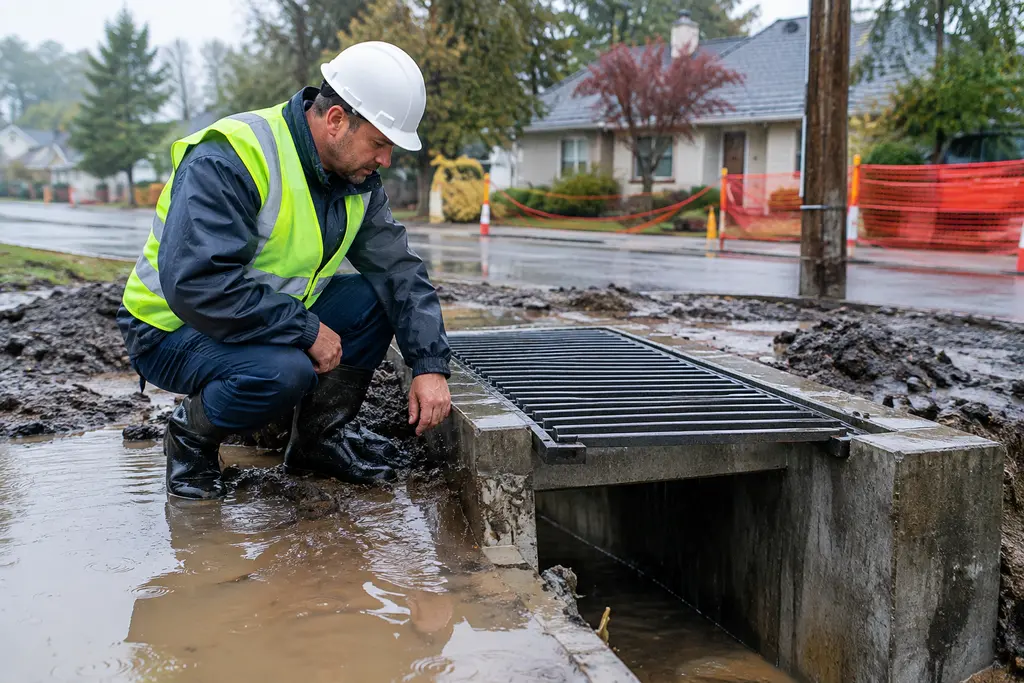
Milwaukee Flood Prevention moved into a defined planning stage after the Milwaukee Common Council acted on October 14, 2026. WTMJ reported that the council unanimously approved a resolution directing the city Department of Public Works to develop severe weather protocols for neighborhoods that have repeatedly flooded, with DPW given 90 days to bring forward proposed procedures WTMJ reported. As of November 6, 2026, that 90-day period was still open, making the near-term civic question less about finished construction and more about what standards the city will put in writing.
How Milwaukee Flood Prevention Changed On Oct. 14
What The Council Action Directed DPW To Do
According to WTMJ’s report on the October 14 council vote, the approved resolution told DPW to prepare severe weather protocols modeled on the city’s existing snow removal rules. The reported examples included clearing sewer grates ahead of storms and identifying vulnerable locations. Those details matter because they shift part of the flood response discussion from emergency cleanup after water enters homes or streets to operational steps that city crews may be able to take before heavy rain reaches the drainage system.
The council action did not, based on the cited report, publish a final protocol or a completed neighborhood-by-neighborhood work plan. The public record described in the report instead points to a planning assignment with a deadline. That distinction is useful for residents tracking city action: the vote set DPW in motion, but the specific rules, staffing needs, and communication steps still need to be presented by the department.
What Milwaukee Flood Prevention Protocols May Cover
Milwaukee Flood Prevention now rests in part on how DPW defines repeated flooding, vulnerable locations, and pre-storm duties. WTMJ reported that sewer grate clearing and location identification were among the measures that could be included. If those items appear in the final proposal, residents should be able to judge whether the plan names clear triggers, assigns responsibility to specific city functions, and explains how affected blocks will be notified before severe weather.
The cautious reading is that the resolution created a procedural pathway, not a guarantee that every drainage problem will be resolved within the 90-day review period. Flooding can involve street drainage, stormwater storage, private laterals, basement conditions, and regional sewer capacity. The council action reported by WTMJ addresses city protocol development, so residents should look for a DPW proposal that states which problems the city can address directly and which problems require coordination with other public agencies or property owners.
What Residents Can Track During The 90-Day Period
Public Benchmarks Before A DPW Proposal
The clearest benchmark reported after the October 14 vote is the 90-day deadline for DPW to propose severe weather protocols. That gives residents, neighborhood associations, and business districts a concrete timeline to monitor. The practical civic step is to watch for the department’s written proposal, any committee placement, and any public meeting where the proposal is discussed. The research available for this article did not identify a final hearing date, so assigning one would be premature.
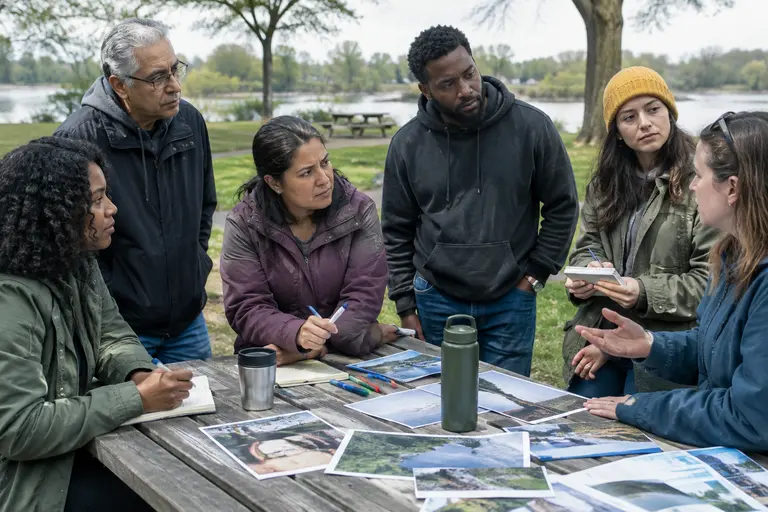
Residents can also prepare documented information before the DPW proposal appears. Useful records may include dates of flooding, photographs of blocked grates or street ponding, prior service-request numbers, and the locations where water repeatedly collects. That type of information can help align public testimony with the terms used in the city’s protocol discussion, especially if DPW creates a list of vulnerable locations. This is not a substitute for engineering review, but it can give city staff clearer location-level evidence.
Why Written Protocols Matter For Neighborhoods
Written protocols can reduce confusion during severe weather because they identify what public crews are expected to do and when. If the final DPW proposal follows the structure described in the WTMJ report, it may make flood preparation more comparable to snow operations, where residents can see citywide rules rather than relying only on ad hoc responses. The practical test for Milwaukee Flood Prevention will be whether the new procedures are specific enough for residents to understand and for departments to carry out.
The impact will likely be felt most clearly in places with repeat flooding complaints, but the public value is broader. A written protocol can help elected officials evaluate whether crews have enough staffing, whether priority locations are correctly mapped, and whether communication with residents happens early enough to be useful. Those measures do not remove the risk of intense rain, but they can improve accountability around city preparation.
County Flood Work In Franklin Adds A Facility Lens
Sports Complex Grant Targets Water Flow Questions
Flood planning in the Milwaukee area is not limited to residential streets. A Milwaukee County document dated February 26, 2026, said a nearly $76,000 Pre-Disaster Flood Resilience Grant was awarded to Milwaukee County Parks to assess flooding at the Milwaukee County Sports Complex in Franklin. The release said the work would analyze water flow issues, hydraulic infrastructure, and mitigation planning at the facility Milwaukee County said.
That grant points to a separate but related public concern: flood resilience at shared civic and recreation facilities. The county release focused on assessment and planning, not construction completion. That means the grant should be read as a study and mitigation-planning step. For residents and facility users, the key point is that county officials identified the Sports Complex as a site where water movement and infrastructure needed closer review before mitigation choices could be made.
City And County Roles Are Different
The city council action and the Franklin sports complex grant address different parts of the same public problem. The city action, as reported by WTMJ, assigned DPW to develop severe weather protocols for repeatedly flooded neighborhoods. The county grant document concerned a specific county parks facility and the need to assess drainage and hydraulic conditions there. Treating those actions as identical would blur which agency is responsible for which decision.
For the public, separating those roles is practical. City residents following street-level response should track DPW’s 90-day proposal. Residents and sports complex users interested in the Franklin site should track county parks planning tied to the grant. Readers following related civic updates in the same network may also visit Saint Joseph Detroit for community information.
Community Impact Depends On Specific Protocols
Household Effects Are Tied To Timing
The community impact of flood prevention work often depends on timing. Clearing a sewer grate after a storm may help recovery, but clearing it before heavy rain can be a different form of service. The WTMJ-reported proposal process is significant because it may place pre-storm tasks into a repeatable system. If DPW identifies known problem locations before severe weather arrives, residents may have a clearer understanding of which city steps are expected before streets flood.
The public should still be cautious about expecting written protocols to solve every property-level flooding issue. The council action described in the cited report concerns DPW operational procedures. It does not, by itself, replace private plumbing work, regional sewer investments, or site-specific engineering. A useful city proposal should clarify that boundary so residents know where city responsibility ends and where other programs or property-level work may be needed.
Equity Questions Require Public Records
Any protocol for repeatedly flooded neighborhoods will raise questions about how locations are selected. The most defensible approach would be one that uses documented flood history, drainage data, and service records rather than informal impressions. The research supplied for this article does not include the city’s final selection method, because DPW had not yet submitted the proposal as of November 6, 2026. That uncertainty should remain visible until the department releases its plan.
Residents can evaluate the proposal by asking whether it explains the evidence used to identify vulnerable locations, how often the list will be updated, and how residents can correct missing or outdated information. Those questions are not opposition to the plan; they are basic accountability measures for a city service that may affect which blocks receive attention before storms.
- Track the DPW proposal tied to the 90-day deadline reported after the October 14 vote.
- Document flood dates, street locations, photos, and prior service requests before public discussion begins.
- Ask whether the final protocol states who clears grates, when work begins, and how residents are notified.
- For the Franklin sports complex issue, follow Milwaukee County Parks actions tied to the flood resilience grant.
Milwaukee Flood Prevention And Public Follow-Through
The Next Civic Test Is Specificity
Milwaukee Flood Prevention will be judged by the details DPW brings back after the council’s October 14 directive. A proposal that only names broad goals would give residents little basis to measure performance. A stronger public document would define repeat-flooding locations, pre-storm maintenance duties, communication steps, and the process for revising the list after future storms. Those items would make it easier for residents and council members to compare the plan with actual city response.
The county’s February grant for the Milwaukee County Sports Complex shows that flood work also includes site assessments before mitigation decisions are made. Taken with the city’s 90-day DPW assignment, the public record available as of November 6, 2026, shows planning activity rather than a completed system. That is still meaningful. It gives residents clear documents to watch, clear agencies to question, and a defined period in which to prepare evidence from blocks and facilities affected by flooding.
The most useful public involvement now is practical and record-based: follow the DPW deadline, review the proposal when it is released, and bring location-specific information into any public discussion that follows. That approach keeps the focus on service standards, infrastructure evidence, and neighborhood conditions rather than unsupported claims.