


Indiana Infrastructure Grants entered a new local planning phase after Governor Mike Braun announced more than $84 million in Community Crossings matching infrastructure grants on June 30, 2026. The governor’s office said the awards went to 147 cities, towns and counties and were part of the FY 2026 call for projects according to the state announcement. For residents, the next civic step is not another completed award round, but the September 2026 application window that local governments may use to seek the next set of road and bridge funds.
What The June 30 Awards Changed
The June 30, 2026 announcement confirmed a large distribution of state matching funds for local transportation work. The governor’s office said the latest Community Crossings awards totaled over $84 million and were directed to local governments across Indiana. The same announcement said total FY 2026 awarded infrastructure funding for local road and bridge projects statewide was just over $165 million.
Those figures matter at the city, town and county level because Community Crossings is a matching program. Local governments do not simply receive unrestricted transportation money. They must identify eligible projects, meet program requirements and provide a required local share. The structure gives residents a reason to follow local project lists before applications are submitted, since the state program is tied to specific local road and bridge needs.
Community Crossings Grant Record
The governor’s office said Community Crossings has provided more than $2 billion to Indiana local governments for road improvement projects since 2016. That long-running total places the June 30 awards within a continuing state-local funding model rather than a one-time distribution. The official announcement also states that applications for the FY 2026 grants were submitted during an October 2025 call for projects.
That timing is useful for residents reviewing the next cycle. The June 2026 awards reflected applications submitted months earlier. By the time an award is announced, the local project choices have already passed through the application stage. The public input period that may matter most locally is therefore before the application deadline, when cities, towns and counties are deciding which roads, bridges or preservation needs to place in their requests.
Indiana Infrastructure Grants Move Into September
The next state call for Community Crossings projects is tied to State FY 2027. INDOT states that the call will open on Tuesday, September 1, 2026, and remain open until 5 p.m. EDST on Wednesday, September 30, 2026 on the Community Crossings program page. INDOT also states that legislative changes mean there will be only one call per state fiscal year beginning with FY 2027, and that the call will now consistently occur in September.
Indiana Infrastructure Grants Timeline
The September schedule narrows the formal application period. Under the information published by INDOT, local units have a defined month to submit for the FY 2027 call. That does not mean every city or county will hold a separate public forum, and the official state materials reviewed for this report do not list county-by-county public meeting dates or virtual forums tied to the September call.
For residents, that makes the September 1 through September 30, 2026 window the clearest dated period for asking local officials which projects are being considered. The state materials identify the application window; local governments decide what to submit. Residents who want to comment on a proposed road or bridge priority should check their own city, town or county public notices and meeting agendas during that period, because the official statewide sources do not provide a single public input calendar for all 147 prior award recipients or for future applicants.
| Program Point | Officially Stated Detail |
|---|---|
| June 30, 2026 awards | Over $84 million to 147 cities, towns and counties |
| FY 2026 statewide total | Just over $165 million for local road and bridge projects |
| Next call opens | Tuesday, September 1, 2026 |
| Next call closes | 5 p.m. EDST on Wednesday, September 30, 2026 |
| FY 2027 change | One call per state fiscal year, held in September |
How The Matching Rules Affect Local Choices
INDOT states that the total cap per local government is now $1 million per state fiscal year, reduced from $1.5 million. That cap is a practical limit for local planning. A city, town or county with several road segments in need of work may have to decide which eligible projects fit within the available request amount and the required local match.
INDOT also states that matching requirements vary by population. Smaller cities and towns with populations under 12,500, and counties with populations under 55,000, pay a 20 percent match. Larger jurisdictions are under a 50/50 match. Those match levels can shape which projects local governments can afford to submit, especially where local road budgets are already committed to maintenance, materials or other public works obligations.
Eligible Work Under The Program
INDOT lists eligible Community Crossings work as including road and bridge preservation, ADA-compliant improvements tied to preservation projects, and material costs for chip sealing and crack filling. This matters for public input because not every transportation concern will match the program’s eligible uses. A resident request for a project outside those categories may still be a local issue, but it may not fit this grant program as described by INDOT.
INDOT also states that local government units must submit an asset management plan to the Local Technical Assistance Program by December 1 each year for eligibility requirements. The state materials reviewed here do not provide a substitute local process for that planning requirement. That places more attention on local engineering, public works and elected-board discussions before grant applications are filed.
Public Input Starts With Local Project Lists
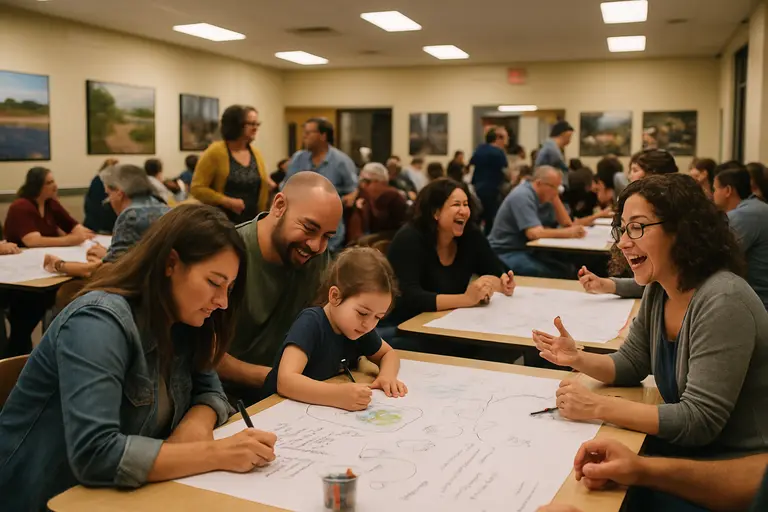
For Indiana Infrastructure Grants, the official state sources identify a funding program and an application period, not a statewide hearing schedule. That distinction is important. The public may see the grant total first, but the project list begins with local governments. A city council, town board, county commissioners or county highway department may discuss road priorities before an application is sent to the state, depending on the local process used by that unit.
Residents can prepare for those discussions by focusing comments on details that match the program: the road or bridge location, the preservation need, any ADA-compliant improvement tied to that preservation work, and whether the concern is suited to chip sealing, crack filling or other eligible material costs. The official sources do not rank local requests by neighborhood impact, traffic counts or resident complaints in the materials provided, so those details must be handled through local records and local decision-making.
- Ask whether the local government plans to apply during the September 1-30, 2026 call.
- Ask which road or bridge projects are being prepared for possible submission.
- Ask how the required local match would be funded if the application is awarded.
- Ask whether any ADA-compliant improvements are tied to a proposed preservation project.
For readers following regional civic programs across the same publishing network, additional community insights can be found on One United Michigan. The Indiana grant process, however, should be checked against INDOT’s Community Crossings materials and each local government’s own notices.
Indiana Infrastructure Grants And The September Civic Window
The key civic value of the September call is timing. The June 30, 2026 awards showed how large the program can be after applications are reviewed, but the September 1-30, 2026 window is the point at which local governments can place new FY 2027 requests before the state. INDOT’s one-call-per-year change means residents have fewer formal state application windows to track than in prior years.
For local officials, the September call requires project selection, match planning and eligibility review within a defined period. For residents, it creates a short period to ask whether their city, town or county is applying and which projects are being prioritized. The state’s official materials do not promise a local public meeting in every community, so residents should rely on their own local government calendars for any scheduled agenda item.
Indiana Infrastructure Grants are not simply a state budget line. As described by the governor’s office and INDOT, the program links state money, local matching funds and local project selection. The most practical public input opportunity now is the period before September 30, 2026, when proposed FY 2027 submissions can still be discussed at the local level before the application window closes.